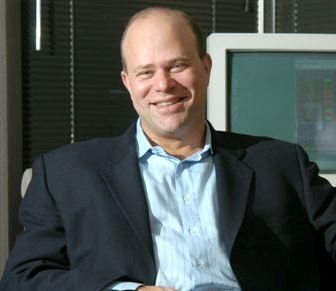
DAVID TEPPER
The distressed debt legend who made $7 billion in a single year by betting on bank stocks everyone else thought were going to zero.
In 2009, when every analyst on Wall Street was writing obituaries for Bank of America and Citigroup, David Tepper wrote checks. Enormous ones. His fund, Appaloosa Management, returned 132% that year — one of the greatest single-year runs in hedge fund history. He started Appaloosa with $57 million after Goldman Sachs passed on making him a partner. That rejection cost Goldman billions. Tepper is what happens when you give a Pittsburgh kid with a chip on his shoulder an edge in distressed debt and absolutely no patience for conventional thinking.
Net Worth
$21 billion
Nationality
American
Time Horizon
Medium-Term
Risk Appetite
9 / 10
Fund
Appaloosa Management LP
Net Worth Context
- · That's the GDP of a small country — around the size of Greenland.
- · Enough to buy an NBA team and keep $17B for snacks.
CAREER & BACKGROUND
David Tepper grew up in a Jewish middle-class family in Pittsburgh, Pennsylvania. His father was an accountant.
There was no old money, no family connections to Wall Street, no prep school network. What there was: a kid who liked numbers, got competitive about everything, and decided finance was the path out.
He went to the University of Pittsburgh, then got his MBA from Carnegie Mellon's Tepper School of Business — which, yes, is now named after him following a $67 million donation. He started his career at Equibank, then moved to Republic Steel's treasury department.
Neither of those is a glamorous origin story. He didn't care.
Goldman Sachs hired him in 1985 to work on the high-yield and distressed debt desk. He was exceptional at it.
Genuinely excellent — the kind of analyst who saw things in a credit structure that other people missed. By 1992 he was running the junk bond desk.
He expected to be made partner. Goldman said no.
Twice.
That was a mistake on Goldman's part that they will never fully live down. In 1993, Tepper left with $57 million in capital — including his own money — and started Appaloosa Management in Chatham, New Jersey.
The name came from his love of horses. The returns came from his love of finding companies and securities that the market had written off as dead.
Appaloosa's early years were strong but not spectacular by the fund's later standards. The real inflection points came during crises — and Tepper has an almost predatory instinct for crises.
When everything is burning and everyone is running, Tepper tends to stop and look for what's cheap.
The 2001–2002 period was a warm-up. He bought distressed telecom bonds when the sector was imploding after the dot-com bust.
Made serious money. Then came 2008 and 2009, which was his masterpiece.
After the financial crisis, Tepper made the call that the U.S. government would not let the major banks fail.
Everyone knew the banks were in trouble. The question was whether they'd be nationalized, wiped out, or bailed out.
Tepper decided the government would blink. He loaded up on Citigroup and Bank of America preferred securities — instruments that paid enormous yields if the banks survived, and would be worth almost nothing if they didn't.
The banks survived. Appaloosa returned 132% in 2009.
Tepper personally made around $4 billion that year. It remains one of the most profitable single-year bets in hedge fund history.
In 2012, he added a second major win by calling that European sovereign debt would not collapse — buying Spanish and Italian government bonds when the euro looked like it might unravel. Another enormous return.
By the mid-2010s, Appaloosa was managing around $20 billion. In 2019, Tepper converted the fund to a family office, returning outside capital to investors.
He didn't need their money anymore. His own capital was more than enough to run the strategy.
Since then, he's split his attention between running his personal money and owning the Carolina Panthers, which he bought in 2018 for $2.275 billion — a record price for an NFL franchise at the time. He's also part-owner of CF Charlotte, a Major League Soccer team.
Running a sports franchise turns out to be genuinely different from running a hedge fund, and Tepper has found that out the hard way on a few occasions.
COMPANIES & ROLES
Appaloosa Management is the thing. Founded in 1993 with $57 million, it grew into one of the most successful hedge funds of all time — specializing in distressed debt, which means buying the bonds and loans of companies that are in trouble, sometimes in bankruptcy.
The thesis is that when things get bad, the market overshoots on fear and prices go below what the assets are actually worth. Appaloosa finds that gap and bets on it with size.
At its peak, Appaloosa managed around $20 billion in outside capital. In 2019, Tepper converted it to a family office — meaning he now manages only his own money, which is more than enough.
The outside investors got their capital back and had to find somewhere else to put it.
The Carolina Panthers is the other major asset. Tepper bought the NFL franchise in 2018 for $2.275 billion, setting a record for the highest price ever paid for a professional sports team at that time.
The team has had a rocky few years under his ownership — some questionable coaching hires, some stadium drama in Charlotte, and Tepper making a splash in ways that weren't always flattering. He also owns CF Charlotte, the MLS expansion team he helped bring to the city.
He's also a major real estate developer in Charlotte, with plans for a new stadium district that have been both ambitious and contentious. Sports ownership is, it turns out, a different kind of investment than distressed bonds.
INVESTING STYLE & PHILOSOPHY
Tepper is a distressed investor at heart, which means he makes money from other people's panic. Not in a cynical, heartless way — in a very specific, disciplined way.
He looks for situations where the market has priced in catastrophe, where everyone has decided something is going to zero, and he asks: is that actually true? Or is the fear bigger than the reality?
Think of it like this. Imagine there's a house in a neighborhood that flooded.
Everyone says it's worthless. But Tepper walks through it and says — actually, the foundation is fine, the insurance will cover the damage, the water has already receded, and the house is going for ten cents on the dollar.
He buys it. The neighborhood recovers.
He makes ten times his money.
That's the framework. The execution requires two things most people can't do simultaneously: the analytical ability to figure out what something is actually worth, and the psychological ability to buy aggressively when everyone around you thinks you're insane.
Tepper has both. He's one of the best credit analysts alive — his ability to work through the structure of distressed debt, understand where you sit in the capital stack, and figure out what you'd recover in a worst-case scenario is elite.
But the thing that makes him genuinely exceptional is the conviction to act on that analysis at scale when the world is on fire.
He's also macro-aware in a way that pure fundamental analysts often aren't. The 2009 bank trade wasn't just about bank balance sheets — it was about reading the Fed, reading Treasury, reading what the U.S.
government was willing to do to prevent systemic collapse. He made a political and economic bet as much as a financial one.
And he was right.
He concentrates when he has conviction. Appaloosa's big wins came from big positions, not diversified portfolios hedged to mediocrity.
He's not trying to own a little bit of everything. He's trying to find the three or four things where the risk/reward is so lopsided in his favor that it's almost unfair, and then own a lot of them.
THE PLAYBOOK
Risk Approach
Tepper's relationship with risk is counterintuitive. He looks, from the outside, like someone who takes enormous risks — buying the bonds of bankrupt companies, loading up on financial stocks during a banking crisis, going big on European debt when people thought the eurozone was dissolving.
But he'd tell you the opposite: he takes calculated risks where the downside is bounded and the upside is huge.
The bank trade in 2009 is the clearest example. Yes, he bought Citigroup and Bank of America preferred securities when they looked like they might be worthless.
But his analysis was that the U.S. government could not let those banks fail without destroying the entire financial system.
The downside was bounded by the logic of the situation — not by optimism, by structural necessity. If he was wrong, he lost the position.
If he was right, he made ten or twenty times his money. That's not reckless gambling.
That's finding a bet with massive positive asymmetry.
He's described his approach as: figure out the worst case first. If the worst case is survivable — if you can take the loss and keep playing — then size appropriately for the upside.
What he will not do is take risks where he can't quantify the downside. Opaque, unknowable risks are the ones that kill funds.
Transparent, misunderstood risks are where you make money.
He's also known for being willing to be early. He'll buy something when it's still falling, add to the position as it falls further, and sit with an underwater trade for months.
That requires a level of psychological fortitude that most investors simply don't have. He's wired for it.
Money Habits
Tepper is wealthy in an almost cartoonish way — $21 billion will do that — but his spending is extravagant in specific, visible ways rather than the quiet way of old-money inherited wealth. He paid $2.275 billion for an NFL team.
He bought a mansion in Palm Beach, Florida and a large property in the Hamptons. He donated $67 million to Carnegie Mellon, which named the business school after him.
He relocated from New Jersey to Florida in 2016, which was not primarily a lifestyle decision — New Jersey had a high income tax, and Tepper's move was significant enough that New Jersey's governor had to revise the state's budget projections. One person leaving the state changed the math.
That's a level of wealth concentration that's almost abstract.
He's known around Pittsburgh for being genuinely unpretentious. He'll eat at a local restaurant, talk to people without the protective bubble of entourage and assistants, and has maintained relationships with people from his early life.
The Pittsburgh identity is real, not performed.
He's a competitive sports fan — his ownership of the Panthers is genuinely personal, not just a trophy asset. He gets emotionally invested in the team in a way that has occasionally gotten him into trouble publicly.
He lives between Florida and the Hamptons now. He plays golf.
He's known among peers for being genuinely funny and irreverent — not the stiff formality of many finance executives. He has a pair of lucky brass testicles on his desk at Appaloosa, which he calls his most important investment tool.
He's serious about the work and not serious about the image.
BIGGEST WIN
2009. Full stop.
Tepper's fund returned 132% in a single year — one of the greatest annual returns in hedge fund history for a fund of meaningful size. He personally made approximately $4 billion.
The total profit for Appaloosa was somewhere around $7 billion.
The trade: in early 2009, everyone was terrified that the U.S. government would nationalize the major banks, wiping out preferred shareholders and common equity holders.
Bank of America and Citigroup stocks had collapsed. Their preferred securities were trading at enormous discounts.
Tepper looked at the situation and concluded the government would not, could not, politically and economically afford to nationalize the banks the way Sweden had done in the 1990s. The U.S.
was not Sweden. The political optics of wiping out millions of retail shareholders would be toxic.
The banks would be bailed out, not nationalized.
He bought Citigroup and Bank of America preferred securities heavily when they were deeply distressed. He added to the positions as the market continued to panic.
By the time TARP had run its course and it became clear the government was going to backstop the banks rather than wipe them out, those positions had multiplied many times over.
What makes this win legendary isn't just the size — it's the clarity of the thesis and the courage to act on it when literally everyone else was running the opposite direction. Analysts were publishing reports saying the banks were uninvestable.
Tepper was writing checks.
BIGGEST MISTAKE
The closest thing to a genuine public stumble for Tepper was his handling of the Carolina Panthers ownership — particularly the stadium negotiations in Charlotte. He's burned real political capital with local government, made promises about a new stadium district that have moved slowly and contentiously, and has had a series of coaching and front-office decisions that produced poor results on the field.
In investment terms, he's also had painful macro calls. He got caught short in 2013 when the market kept going up despite his concerns about valuations — he covered the shorts and acknowledged he'd been wrong.
More significantly, he was publicly cautious about the market multiple times in the late 2010s when it continued to rally, and those cautious calls cost returns relative to staying fully invested.
He's been transparent that the conversion to a family office created some friction — returning $20 billion of outside capital means giving up management fees and performance fees that amounted to enormous sums annually. Whether that was the right call financially depends on how the next 20 years go, but he clearly felt the complexity of managing outside money was no longer worth it at his stage.
In the fund's history, the losses from distressed positions that didn't recover the way he modeled — some of the airline and energy distressed plays in the mid-2010s — were real but never fund-threatening. He's never had a Paulson-in-2011 type collapse where a single wrong thesis nearly undid the reputation.
He's been more consistently right than almost anyone.
FINANCIAL PHILOSOPHY
Keep it simple: find things the market is wrong about, have the guts to act on it, and size up when you're right.
Tepper genuinely believes markets are mostly efficient — but they break down during crises, when fear overrides analysis and prices go to places that don't reflect reality. That's the window.
You have to be ready for it before it opens, patient while it's opening, and decisive when it does.
He talks about understanding what the government will and won't do. In modern markets, central bank policy and government intervention are part of the investment calculus.
The 2009 trade was partly a bet on the Fed. The 2012 European trade was partly a bet that the ECB would do whatever it took to save the euro.
He was right both times because he read the political and institutional logic, not just the balance sheets.
He believes in concentration. Not the lazy concentration of someone who hasn't done the work, but the earned concentration of someone who has done more work than anyone else on an idea and believes they're right.
Most investors diversify because they're not confident enough in their individual ideas. Tepper takes concentrated positions because he does enough work to earn the confidence.
He also believes in staying humble about what you don't know. For all his conviction on specific trades, he's said that the biggest mistakes in investing come from falling in love with a position and ignoring new information.
He's willing to change his mind. He's done it publicly.
He doesn't think being wrong is embarrassing — he thinks holding a wrong position because you don't want to admit you were wrong is embarrassing.
FAMILY & PERSONAL LIFE
Tepper has three children from his marriage to Marlene Tepper — they divorced in 2014 after more than 20 years. He later became engaged to Nicole Bronish.
He's kept his family largely out of public view despite his own increasingly public profile, which is a deliberate choice.
He grew up in Pittsburgh's Stanton Heights neighborhood, and his roots there are genuine — he's made substantial donations to Pittsburgh-area institutions and has remained connected to the city. Carnegie Mellon's Tepper School of Business is named after him following a $67 million gift.
He also donated to his undergraduate alma mater, Pitt.
His father was an accountant, which gave Tepper an early grounding in financial statements and a clear-eyed view of money as something you earn through work rather than inherit through luck. He's talked about his father's influence on his quantitative mindset.
There was no family wealth to fall back on — which probably had something to do with how aggressive and focused he's been for his entire career.
EDUCATION
University of Pittsburgh for undergraduate economics. Then Carnegie Mellon for his MBA, which was called the GSIA — Graduate School of Industrial Administration — before it was renamed the Tepper School of Business after his $67 million donation.
Carnegie Mellon's finance program was rigorous and quantitative, which suited him. He's credited it for giving him the analytical toolkit that everything else built on.
The school naming is a useful reminder that success in finance eventually lets you put your name on the place that trained you.
BOOKS & RESOURCES
Tepper isnt a prolific recommender of books the way some investors are — he doesnt have a public reading list or an annual letter tradition
But the intellectual tradition he comes from has a few key texts
The foundational text for anyone in the value and distressed investing world. Tepper's work at Goldman and Appaloosa is rooted in the idea that you can determine what something is actually worth and buy it when the price is below that number. Graham is where that idea lives
Tells the story of Long-Term Capital Management's collapse — a cautionary tale about leverage, model risk, and what happens when extremely smart people become overconfident in their own frameworks. Relevant to anyone in the hedge fund world
Captures the Goldman Sachs and Salomon Brothers era that shaped Tepper's early career. The culture, the incentives, the personalities — it's the world he entered in 1985 and it helps explain how he was formed
As an Amazon Associate, Netfigo earns from qualifying purchases. Book links above may be affiliate links.
QUOTES (6)
The best investors are the ones who are most comfortable being uncomfortable.
I don't have a crystal ball. Nobody does. But I can figure out what's cheap and what's not, and I can figure out what governments will do when their backs are against the wall.
Markets are always right. But sometimes they're right for the wrong reasons, and that's where you make your money.
We're not afraid of volatility. Volatility is just opportunity wearing a scary mask.
The key is the asymmetry. Find trades where you can lose a dollar but make ten. Do enough of those and time takes care of the rest.
I'm not a genius. I just work harder than almost anyone else on the ideas I believe in, and I don't let fear make my decisions for me.
NETFIGO SCORE
Proprietary 5-dimension investor rating
Risk Appetite
Contrarian Index
Track Record
Accessibility
Time Horizon
Related Profiles
Investors
John Paulson
Paulson famously shorted the housing market in 2007-08; Tepper went long on the banks in 2009 — two sides of the greatest financial crisis trade of all time
Paul Tudor Jones
Both are macro-aware hedge fund legends who made their biggest fortunes by making bold contrarian calls during financial crises
Stanley Druckenmiller
Druckenmiller and Tepper are both macro-driven, concentrated-position hedge fund managers with exceptional long-term track records
Head-to-Head
Compare David Tepper vs another investor.