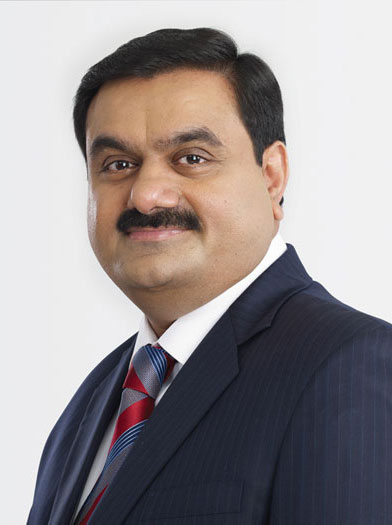
GAUTAM ADANI
The port trader from Ahmedabad who built India's largest private infrastructure empire and briefly became the world's second-richest person.
In early 2023, Gautam Adani was worth $120 billion and sitting at number two on the global rich list — ahead of Bill Gates, behind Elon Musk. Then a 100-page short-seller report from Hindenburg Research called his empire a 'brazen stock manipulation and accounting fraud scheme.' Within three weeks, $150 billion in market value evaporated. He's since clawed back to $84 billion, which tells you everything about how entrenched his businesses actually are. Whether Hindenburg was right or Adani was right, the guy controls India's ports, airports, power plants, and coal supply — and he started out trading commodities in his twenties with no degree and no safety net.
Net Worth
$84 billion
Nationality
Indian
Time Horizon
Generational
Risk Appetite
9 / 10
Net Worth Context
- · That's the GDP of a small country — around the size of Jamaica.
- · Enough to buy an NBA team and keep $80B for snacks.
CAREER & BACKGROUND
Gautam Adani grew up in Ahmedabad, Gujarat, in a middle-class Jain family. His father ran a textile business.
Adani dropped out of Gujarat University after one year and moved to Mumbai at 18 to work in the diamond trade — sorting gems for Mahendra Brothers. He got pretty good at it.
But he wasn't there for diamonds.
In 1981, his brother invited him back to Ahmedabad to manage a plastics unit. Adani saw the opportunity clearly: trading commodities was where the money was.
He founded Adani Enterprises in 1988 as a commodity trading firm. India's economy was still heavily controlled then — this was three years before liberalization.
He was betting on a future that hadn't arrived yet.
The bet that changed everything was Mundra Port. In 1995, Adani won a contract to develop and operate Mundra Port in Gujarat.
At the time, it was an underdeveloped stretch of coastline nobody was particularly excited about. He turned it into the largest commercial port in India.
Today it handles over 150 million metric tonnes of cargo annually. That port is the spine of his empire.
When India liberalized in 1991, Adani was already positioned. He expanded into power generation, coal mining, edible oils, gas distribution, and eventually airports, data centers, media, and green energy.
The playbook was consistent: find critical national infrastructure, build or acquire it, and become indispensable.
Adani Group went public in the 1990s and Adani used the capital markets aggressively. By 2020, the Adani stocks had become some of the hottest trades on the Indian market — seven listed companies, all surging, built on leverage and government contracts.
The stock rally made Adani the world's third, then second richest person by 2022.
Then came January 2023. Hindenburg Research — the American short-seller that had already torched Nikola and taken chunks out of other companies — released a report alleging that the Adani Group had engaged in stock manipulation through offshore shell companies, that related-party transactions were being obscured, and that the group's debt levels were dangerously high.
The report dropped two days before Adani's flagship $2.5 billion share sale. He pulled the share sale.
The stocks crashed. $150 billion gone in three weeks.
Adani released a 413-page rebuttal. Indian regulators investigated.
The Supreme Court of India weighed in. GQG Partners, a US fund manager, bought $1.87 billion of Adani Group stock at the lows — a major vote of confidence.
Slowly, the stocks recovered. Adani got back to work.
Today he's rebuilding with the same formula: big bets on Indian infrastructure, heavy leverage, long time horizons, and an operating relationship with government that critics call too cozy and supporters call visionary public-private partnership.
COMPANIES & ROLES
The Adani Group is a sprawling conglomerate of publicly listed companies, and understanding it requires knowing what it actually controls.
Adani Ports and SEZ is the flagship. It's the largest port operator in India, running 13 ports and handling roughly 25% of India's sea cargo.
Mundra Port alone is larger than any other Indian port. If goods move in or out of India by sea, there's a good chance Adani touched them.
Adani Green Energy is the group's bet on the future. He's committed to building 45 GW of renewable energy capacity by 2030 — one of the largest green energy targets ever announced by a private company.
Whether that's genuinely green ambition or a masterful pivot after coal criticism is debated, but the capex is real.
Adani Total Gas is a joint venture with TotalEnergies to distribute city gas across India. Adani Power is one of India's largest private thermal power producers.
Adani Transmission runs power distribution networks.
Adani Enterprises is the holding and incubator vehicle — it's where new businesses start before they're spun out. Recently that includes Adani Airport Holdings, which operates seven Indian airports including Mumbai, Ahmedabad, and Lucknow.
Running airports is a very different business from ports, but the underlying logic is the same: own the infrastructure that everyone must use.
Adani Media bought NDTV, one of India's most prominent news channels, in a hostile acquisition in 2022. That move raised serious questions about press independence.
Adani's supporters say he's a media investor. Critics say he's a businessman buying favorable coverage.
Adani also has significant exposure through Adani Wilmar, a food products joint venture that produces Fortune-branded edible oils — one of India's best-selling consumer brands. So yes, the man sells cooking oil too.
The through-line across all of it: infrastructure that India cannot do without. Ports.
Power. Gas.
Airports. That's not a diversified portfolio — it's a deliberate monopoly-building strategy at national scale.
INVESTING STYLE & PHILOSOPHY
Adani doesn't think like a stock picker. He doesn't sit in an office reading 10-Ks and looking for undervalued assets.
He thinks like an empire builder who happens to use capital markets as a financing tool.
The mental model is: find infrastructure that a growing country will need for the next 50 years. Build it, or buy it, or win the government contract to operate it.
Fund it with debt if needed — worry about the balance sheet once the asset is generating cash. Repeat.
This is not Warren Buffett 'buy a wonderful business at a fair price.' This is closer to: 'build the railroads before anyone knows railroads are the future, then collect the tolls forever.'
He's heavily leveraged, which is unusual for someone on the global rich list. Adani Group companies carry significant debt — this has been a persistent criticism.
But his defenders point out that infrastructure projects are always debt-financed; a port or a power plant takes a decade to build and another decade to reach its peak cash flow. Expecting these businesses to be debt-light is like expecting a real estate developer to buy buildings with cash.
He's also extraordinarily patient. The Mundra Port story took 20 years to become a genuinely world-class operation.
He doesn't flip assets. He builds them and holds them.
His time horizon is generational — he talks explicitly about building for his children and grandchildren.
The relationship with government is central to his model. Adani Group wins large government contracts and operates in heavily regulated industries.
That's not coincidental. His critics call it cronyism.
His defenders say building national infrastructure in India requires navigating government relationships, and that any serious infrastructure operator in any emerging market has to operate this way. Both can be true.
The one thing he's not is a passive investor. He has zero interest in minority stakes in other people's businesses.
Everything he does, he does to control.
THE PLAYBOOK
Risk Approach
Adani's relationship with risk is genuinely unusual. Most billionaires get rich by taking big risks early and then protecting what they've built.
Adani has never really stopped taking big risks — even at $100 billion net worth.
The Hindenburg episode is instructive. When a 100-page fraud allegation drops two days before your $2.5 billion share sale and wipes out $150 billion in market cap, most people would go into defensive mode.
Adani cancelled the share sale — that was the concession — but he didn't sell assets, he didn't reduce leverage dramatically, and he didn't stop making acquisitions. He kept buying ports, airports, and solar plants throughout 2023 while the stocks were still recovering.
He uses debt at a scale that makes even other infrastructure billionaires nervous. When you control enough of the essential infrastructure of a 1.4 billion-person economy, you can carry more leverage than most because the underlying assets don't disappear when sentiment turns.
That's the logic. It's not crazy.
But it requires the kind of confidence in your own reading of the situation that most people simply don't have — or would be too scared to act on.
He's also faced government scrutiny, regulatory challenges, and short-seller attacks without capitulating or dramatically restructuring. His response to the Hindenburg report — a 413-page rebuttal and then getting back to business — tells you what kind of character sits underneath the balance sheet.
The risk he genuinely cannot fully control is political. His businesses are deeply intertwined with Indian government policy.
A change in government priorities, a shift in how infrastructure contracts are awarded, or a rupture in his relationship with Delhi would be genuinely dangerous. He knows this.
The green energy pivot and the geographic diversification into ports outside India are partly about reducing that single point of failure.
Money Habits
For a man worth $84 billion, Gautam Adani is conspicuously unglamorous. He doesn't own a superyacht.
He doesn't have a Gulfstream fleet. He's not buying professional sports teams or showing up at art auctions.
He still lives in Ahmedabad, Gujarat — the city where he grew up. Not Mumbai, not Delhi, not a penthouse in London or a ranch in Montana.
Ahmedabad. He's been there his whole life.
The family home is a bungalow in Shantinagar, one of Ahmedabad's residential neighborhoods. It's comfortable but not conspicuous.
He wakes at 5:30am and meditates. He's described his morning routine as grounding — something he does whether he's in Ahmedabad or on a business trip.
He practices Jainism, the Indian religion with a strong emphasis on nonviolence and simple living, though running the largest coal import operation in India while professing Jain values has generated some pointed commentary.
He doesn't drink or smoke. His social life is built around family and business — there's very little separation between the two in the Adani world.
His wife, Priti Adani, runs the Adani Foundation, which claims to work across education, rural development, and healthcare and operates in over 5,500 villages. Whether that's genuine philanthropy or a reputational management operation is in the eye of the beholder, but the Foundation does run schools and hospitals.
The wealth is mostly locked up in Adani Group stock. He doesn't take huge dividends out of the business.
Cash flows get reinvested. This is partly philosophy — he genuinely seems more interested in building than in spending — and partly structure.
His net worth is a number on a spreadsheet tied to market prices, not a pile of liquid cash.
BIGGEST WIN
The Mundra Port story is the win that everything else was built on. In 1995, Adani won a concession to develop a port on a strip of underdeveloped coastline in Gujarat.
Nobody was fighting him for it. The land was arid, the infrastructure was minimal, and India's port sector was dominated by government-owned operations that moved slowly and expensively.
Adani spent the next decade building. He negotiated rail links.
He built berths for bulk cargo — coal, fertilizers, commodities. He made Mundra a special economic zone, which gave him additional regulatory flexibility.
He convinced international shipping lines that this was a real port worth calling at.
By 2010, Mundra was the largest port in India. By 2020, it was handling cargo volumes competitive with major global ports.
Adani Ports went public and became one of India's most valuable listed companies. The port concession that nobody else wanted in 1995 is now worth tens of billions of dollars and generates billions in annual revenue.
The secondary win layered on top of this is timing the India infrastructure story correctly at massive scale. When everyone else was looking at IT, software, and consumer internet in the late 1990s and 2000s, Adani was quietly building physical infrastructure.
India's manufacturing expansion, its import growth, its energy demand — all of it flows through assets he built before anyone understood how valuable they'd become.
At peak in 2022, Adani Group's combined market cap across listed entities exceeded $220 billion. That's not a win from being clever in a meeting room.
That's a win from 30 years of building the same thing over and over in a country that needed it.
BIGGEST MISTAKE
The NDTV acquisition in 2022 was the move that most clearly showed the gap between Adani the infrastructure builder and Adani the diversified conglomerate. He spent roughly $1.6 billion acquiring a controlling stake in NDTV, one of India's most credible and established news networks, through a hostile route that involved converting debt of a company that owned NDTV shares.
The acquisition was technically legal. It was also deeply unpopular — with journalists, with international press freedom organizations, and with a significant portion of the Indian public.
The damage wasn't primarily financial. NDTV's revenues were modest relative to the rest of the Adani empire.
The damage was reputational. Adani had spent decades building a narrative that his empire served India's development.
Buying a news channel in a manner that journalists described as a takeover looked like a businessman protecting himself from scrutiny. Whether that was the intent or not, that's the story that stuck.
The Hindenburg crisis in 2023 was partly fueled by the reputational damage from NDTV. Short sellers don't just bet on numbers — they bet on narratives.
The NDTV acquisition gave Hindenburg material to work with and gave international investors a reason to take the fraud allegations seriously instead of dismissing them.
To be fair, Adani has never publicly admitted this was a mistake. But the business case for owning a news channel has never been made coherently, and the reputational cost was very real.
The $150 billion in market cap that evaporated in three weeks in early 2023 wasn't solely caused by NDTV — but the narrative environment that made Hindenburg's report so damaging was partly created by it.
FINANCIAL PHILOSOPHY
Adani's philosophy is simpler than people expect from someone this complex. He has a few rules he's talked about publicly, and they're consistent across 30 years of building.
First: infrastructure is the safest long-term bet in a developing economy. India needs ports, power, gas, and airports.
That need doesn't go away in a recession, in a crisis, or in an election year. Build what the country cannot do without, and you will be needed regardless of what the market does.
Second: size is a moat. Small competitors can be disrupted.
If you're running 25% of a country's sea cargo through your own ports, you don't get disrupted — you become part of the supply chain. He has deliberately sought scale not just for growth but for irreplaceability.
Third: debt is a tool, not a trap. He's said in interviews that infrastructure inherently requires leverage, and that judging an infrastructure business by the same debt metrics you'd apply to a consumer goods company is a fundamental misunderstanding of the asset class.
The question isn't how much debt, it's whether the cash flows support the debt. His view: if the asset is essential, the cash flows are durable.
Fourth: operate in India. He's watched Indian billionaires move money offshore, list companies in New York, and hedge their India exposure.
He's done the opposite. His bet is India at full concentration.
When you ask him why, the answer is always some version of: 'I was born here. I believe in this country.
And I think you're going to be wrong if you bet against 1.4 billion people moving into the middle class.'
Fifth — and this one's rarely discussed — he believes in operating businesses, not financial engineering. The Adani empire generates real revenues from real cargo volumes, real electricity generation, real gas distribution.
It's not a holding company that shuffles paper. That operational rootedness is, in his view, what distinguishes durable wealth from spectacular collapses.
FAMILY & PERSONAL LIFE
Gautam Adani married Priti Adani in 1986. She runs the Adani Foundation, the group's philanthropic arm, which operates across education, healthcare, and rural development in India.
By some accounts it's genuinely substantial — the Foundation claims to reach over 3.7 million beneficiaries annually. Priti is not a silent chairman's wife; she's publicly identified as the leader of the Foundation and gives speeches about it.
They have two sons. Karan Adani runs Adani Ports and is widely seen as the heir to the operational side of the business.
Jeet Adani is involved in the group's financial operations, including managing funding and investor relations. Dynasty-building is not incidental to Adani's philosophy — it's explicit.
He has talked openly about building something that will outlast him by generations.
His elder brother, Vinod Adani, has been a significant and controversial figure in the Hindenburg report. Hindenburg alleged that Vinod was central to the offshore shell company network that allegedly manipulated Adani Group stock.
Adani's rebuttal disputed this characterization. The relationship between Gautam and Vinod and how their interests overlap is one of the more opaque parts of the Adani story.
Adani is a Jain, which shapes his lifestyle choices — he's vegetarian, doesn't drink, and takes simplicity seriously in his personal life even if his business ambitions are anything but simple. He once described being kidnapped in 1997 as a formative experience.
He and a business associate were abducted and held for ransom in Ahmedabad. He was released after negotiations.
He's rarely talked about it publicly, but people who know him say it made him considerably more comfortable with risk after the fact — as if he'd already faced the worst.
EDUCATION
Adani enrolled at Gujarat University to study commerce, then dropped out after his first year. He's said that formal education wasn't where he was going to learn what he needed to know.
He moved to Mumbai at 18 to work in the diamond trade, and that on-the-ground commercial apprenticeship turned out to be more useful than any degree. He's one of several Indian billionaires — Dhirubhai Ambani being the most famous example — who built extraordinary enterprises without conventional educational credentials.
He occasionally references this in speeches to young entrepreneurs, though he's careful not to make it sound like a recipe he'd recommend universally.
BOOKS & RESOURCES
Adani hasnt written a memoir or investment book — at least not yet
Given that he's still actively building, that's not entirely surprising. He's more operator than philosopher, more builder than writer
In interviews, hes referenced a few texts as formative
He's spoken about the influence of Jain philosophy on his thinking — the concept of non-attachment to outcomes while still being fully engaged in action maps pretty cleanly onto his business approach. He acts at enormous scale while seeming genuinely unbothered by the volatility it creates
Gives context for the India he's building into
Offers the historical framework for understanding how 19th-century industrial empire-builders operated — which is the tradition Adani most closely belongs to
If you want to understand the Adani controversy specifically, Hindenburg Researchs original report is publicly available and worth reading in full, as is Adanis 413-page rebuttal
Both are extraordinary documents — one trying to prove a fraud, one trying to disprove it. Reading both and making up your own mind is probably the most honest education you can get on the man
As an Amazon Associate, Netfigo earns from qualifying purchases. Book links above may be affiliate links.
QUOTES (6)
I have always believed that if you are honest, if you work hard, if you put in the effort, you will succeed. There are no shortcuts.
India is not a developing country — it is a redeveloping country. We were the world's largest economy for most of human history. We are simply returning to our rightful place.
Risk and reward are two sides of the same coin. If you are not willing to take risk, you should not be in business.
I never feared failure. If you fear failure, you will never attempt something great. I have failed many times. Each failure taught me something the classroom never could.
The infrastructure of a nation is the foundation of its prosperity. Everything else — technology, trade, culture — flows through physical infrastructure. That is why I build what I build.
Sustainability is not a choice for us. It is a business imperative. The world is moving to clean energy — we intend to lead that transition in India.
NETFIGO SCORE
Proprietary 5-dimension investor rating
Risk Appetite
Contrarian Index
Track Record
Accessibility
Time Horizon
Related Profiles
Investors
Masayoshi Son
Both built sprawling conglomerates using aggressive leverage, government relationships, and bets on developing-world growth. Both also faced spectacular market value collapses — Softbank in the dot-com bust and WeWork, Adani in the Hindenburg short attack.
Mukesh Ambani
India's two richest men and fierce rivals — Ambani built his empire through petrochemicals and telecom while Adani took infrastructure. Between them they define the shape of modern Indian capitalism.
Head-to-Head
Compare Gautam Adani vs another investor.