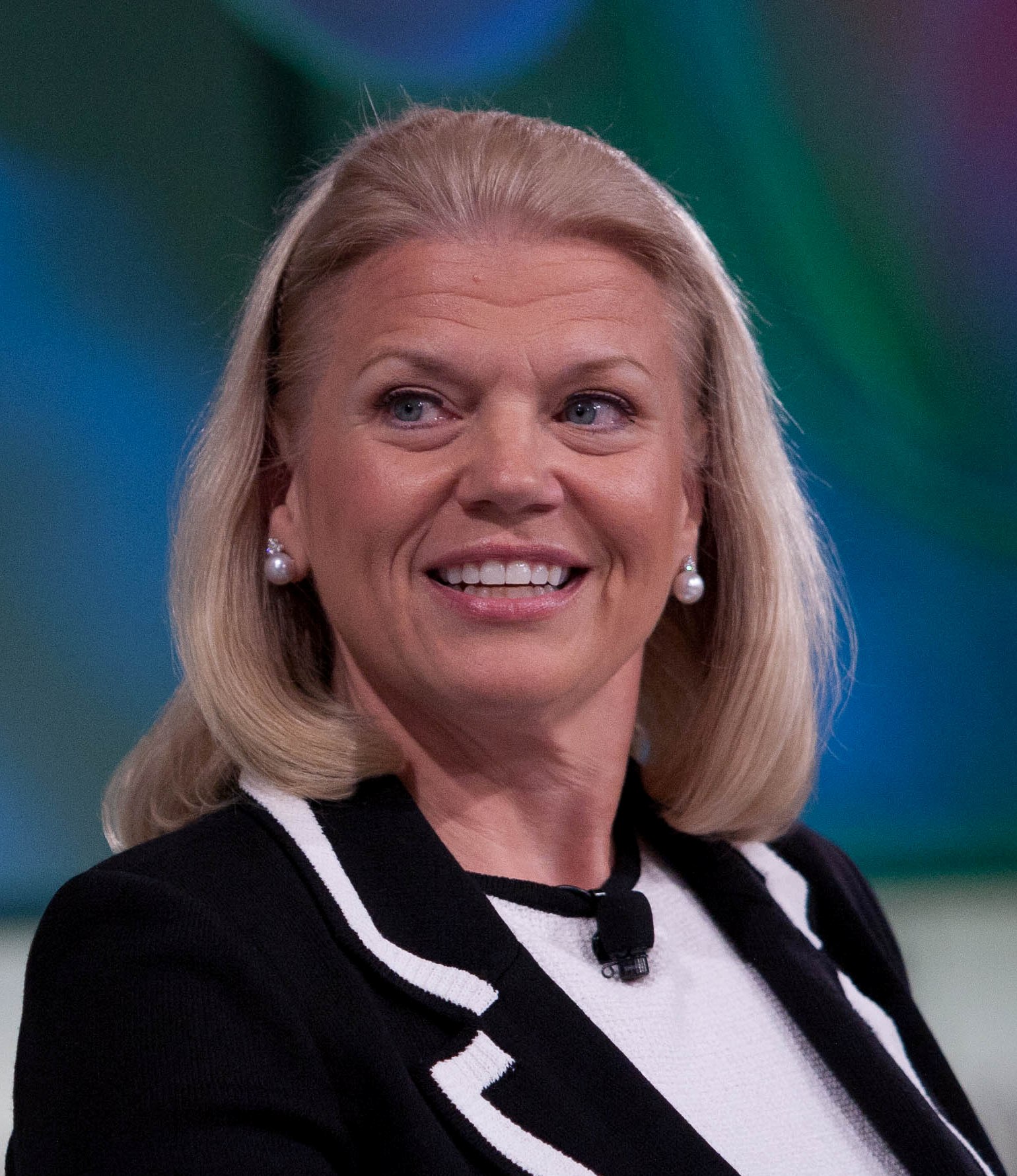
GINNI ROMETTY
First female CEO of IBM who bet the entire company on cloud and AI — and got beaten by Amazon and Google
Ginni Rometty was the first woman to run IBM in its 100+ year history. She took over in 2012 and immediately declared that IBM would pivot to cloud computing and artificial intelligence. The strategy was correct. The execution was not. While IBM talked about Watson AI, Amazon was building AWS into a $80 billion business. IBM's revenue declined for 22 consecutive quarters under Rometty. She sold off the PC and chip businesses, bought Red Hat for $34 billion (the largest software acquisition in history at the time), and tried to rebrand IBM as a hybrid cloud company. The Red Hat deal may ultimately vindicate her strategy, but by the time she left in 2020, IBM's stock had gone nowhere for eight years. She was right about where tech was heading. She was just too slow to get there.
Net Worth
$100 million
Nationality
American
Time Horizon
Long-Term
Risk Appetite
6 / 10
CAREER & BACKGROUND
Joined IBM in 1981 as a systems engineer. Rose through the ranks over three decades.
Led IBM's services division and was instrumental in the company's push into consulting. Became CEO in 2012 — the first woman in the role.
Declared a strategic pivot to cloud, AI (Watson), and data analytics. Revenue declined for 22 consecutive quarters from 2012 to 2017.
Sold off IBM's chip manufacturing business. Divested the low-margin managed infrastructure services business (became Kyndryl).
Acquired Red Hat for $34 billion in 2019 — the largest software acquisition in history at the time. Red Hat became the foundation of IBM's hybrid cloud strategy.
Stepped down as CEO in 2020, replaced by Arvind Krishna. IBM stock was essentially flat during her tenure.
Post-retirement, she became co-chair of the OneTen coalition to create 1 million Black jobs.
COMPANIES & ROLES
IBM (former Chairman/CEO), OneTen Coalition (co-chair)
INVESTING STYLE & PHILOSOPHY
Rometty is a large-scale corporate strategist who thinks in terms of multi-year technology transitions. She identified the right trends — cloud and AI — but struggled with execution speed in a company known for bureaucracy.
Her investment style at IBM was "big bet" acquisitions (Red Hat at $34B) combined with divestitures of legacy businesses. She preferred building new capabilities through M&A rather than organic development.
THE PLAYBOOK
Risk Approach
Moderate to high in terms of corporate transformation. Buying Red Hat for $34 billion was a massive bet.
Divesting profitable but declining legacy businesses required courage. But her approach was arguably too conservative in speed — she tried to transform IBM gradually while competitors were moving at startup pace.
Money Habits
Post-IBM, Rometty serves on corporate boards and is active in social impact work. She co-chairs OneTen, a coalition of companies committed to hiring 1 million Black Americans into family-sustaining jobs.
She has spoken openly about growing up in poverty after her father abandoned the family.
BIGGEST WIN
The Red Hat acquisition. Buying the world's largest open-source software company for $34 billion was bold and ultimately strategic.
Red Hat became the cornerstone of IBM's hybrid cloud platform. Under her successor Arvind Krishna, the Red Hat-driven strategy has shown signs of working.
Rometty may get credit for planting the seed that others harvested.
BIGGEST MISTAKE
The Watson AI hype. IBM marketed Watson as a revolutionary AI platform that would transform healthcare, finance, and every other industry.
The reality was underwhelming — Watson Health failed to deliver on its promises and was eventually sold. The gap between Watson's marketing and its actual capabilities damaged IBM's credibility in AI.
Meanwhile, companies like Google and OpenAI built the AI systems that actually changed the world.
FINANCIAL PHILOSOPHY
Rometty believes large enterprises should embrace technology transitions early, even at the cost of short-term revenue. She has spoken about the need for "self-disruption" — cannibalizing your own profitable businesses before competitors do.
She also believes in continuous learning and skills development, arguing that the future workforce needs to constantly retrain.
FAMILY & PERSONAL LIFE
Married to Mark Anthony Rometty. No children.
Has spoken publicly about growing up in a financially unstable household and how it shaped her work ethic.
EDUCATION
Bachelor's degree in Computer Science and Electrical Engineering from Northwestern University. She was the first in her family to attend college, funded by scholarships.
BOOKS & RESOURCES
Rometty published her memoir Good Power in 2023
She has cited Peter Drucker and Clayton Christensen as influences on her management thinking
QUOTES (6)
I was the first in my family to go to college. I paid for it with scholarships and part-time jobs. That shapes how you see the world.
The skills you have today will not be the skills you need tomorrow. Continuous learning is not optional. It is survival.
Red Hat was a 34 billion dollar bet on open source and hybrid cloud. History will judge whether it was brilliant or desperate. I believe it was brilliant.
I knew IBM had to transform. Revenue declined for 22 quarters. Everyone saw the problem. The challenge was having the courage to fix it while running the company.
NETFIGO SCORE
Proprietary 5-dimension investor rating
Risk Appetite
Contrarian Index
Track Record
Accessibility
Time Horizon
Related Profiles
Head-to-Head
Compare Ginni Rometty vs another investor.