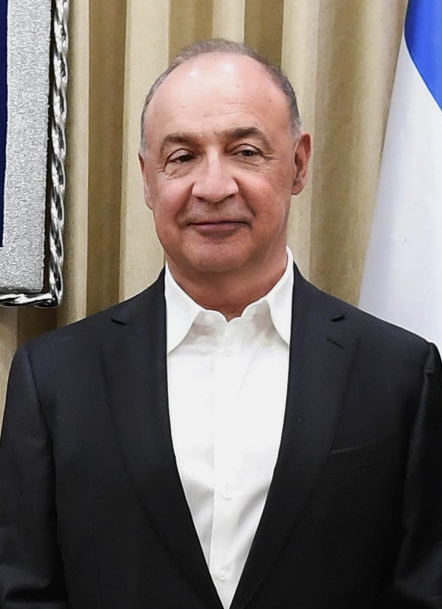
LEN BLAVATNIK
Built Access Industries into a $40B empire spanning oil, music, chemicals, and tech — owns Warner Music Group
Born in Soviet Ukraine. Moved to America with nothing. Now worth $35 billion and owns Warner Music Group, half the world's aluminum supply chain, and chunks of everything from chemicals to biotech. Len Blavatnik is the billionaire nobody talks about despite being richer than most of the ones everybody talks about. He bought Warner Music for $3.3 billion in 2011 when everyone said the music industry was dead. Streaming proved him spectacularly right.
Net Worth
$35 billion
Nationality
Ukrainian-American-British
Time Horizon
Long-Term
Risk Appetite
8 / 10
Net Worth Context
- · That's the GDP of a small country — around the size of Greenland.
- · Enough to buy an NBA team and keep $31B for snacks.
CAREER & BACKGROUND
Born in 1957 in Odessa, Ukrainian SSR (Soviet Union). Emigrated to the United States in 1978 with his family.
Arrived with almost nothing. Studied computer science at Columbia University, then got an MBA from Harvard Business School in 1989.
In the early 1990s, he saw the opportunity of a lifetime: the Soviet Union was collapsing, and state-owned enterprises were being privatized for pennies on the dollar. Blavatnik co-founded Access Industries in 1986 and invested heavily in Russian oil and aluminum during privatization.
His biggest early move was a stake in TNK (Tyumen Oil Company), which later merged with BP in the TNK-BP joint venture. When that partnership was dissolved in 2013, Blavatnik and his partners sold their stake for $14 billion.
That single deal made him a multi-billionaire.
In 2011, he bought Warner Music Group for $3.3 billion. Everyone said the music industry was dying.
Streaming hadn't taken off yet. Blavatnik bet that recorded music would come back.
It did. Warner Music went public in 2020 at a $13 billion valuation.
His investment quadrupled.
Access Industries now has over $40 billion in assets spanning oil, chemicals (LyondellBasell), music (Warner Music), biotech (DKMS, various investments), tech, and real estate.
COMPANIES & ROLES
Access Industries is the holding company — over $40 billion in assets. Warner Music Group — the third-largest music company in the world, home to Ed Sheeran, Bruno Mars, Lizzo, and Cardi B.
LyondellBasell — one of the world's largest plastics and chemicals companies (major shareholder). DKMS — the world's largest bone marrow donor center (philanthropy).
He also has significant stakes in Spotify and various biotech companies.
INVESTING STYLE & PHILOSOPHY
Blavatnik is a classic deep-value, contrarian investor. He buys assets when entire industries are being written off.
Music in 2011? Dead.
Russian oil in the 1990s? Uninvestable.
Chemicals after the 2008 crash? Toxic.
He went in on all of them. His edge is patience and the willingness to buy what everyone else is selling.
He holds for decades, not quarters.
THE PLAYBOOK
Risk Approach
Extremely high. Blavatnik invested in post-Soviet Russia during the chaotic 1990s when property rights barely existed.
He bought into the music industry when everyone was pirating MP3s. He takes massive concentrated bets on out-of-favor assets.
But he's not reckless — every bet is backed by deep fundamental analysis and a long holding period.
Money Habits
Blavatnik is one of the most generous billionaires in the world. He's donated over $1 billion to philanthropy, including $200 million to Oxford University (the Blavatnik School of Government), $50 million to Harvard, and major gifts to the Tate Modern in London and the Tel Aviv Museum of Art.
He owns homes in London, New York, and the Hamptons. He keeps an extremely low public profile despite being a top-10 richest person in the UK.
BIGGEST WIN
Warner Music Group. He bought it for $3.3 billion in 2011 when the music industry looked dead — piracy was rampant, CD sales had cratered, and Spotify was a Swedish startup nobody trusted.
By 2020, streaming had revived the entire industry. Warner Music went public at a $13 billion valuation.
Blavatnik's investment quadrupled in nine years. It was one of the greatest contrarian bets of the decade.
BIGGEST MISTAKE
The Russian business environment. While Blavatnik made billions from Russian oil and aluminum, navigating the oligarch era came with enormous reputational risk.
The TNK-BP partnership was plagued by corporate governance disputes, and British authorities investigated his donations to conservative politicians. He's spent years distancing himself from the more controversial aspects of post-Soviet business.
FINANCIAL PHILOSOPHY
Buy great assets when the world thinks they're worthless. Hold them until the world changes its mind.
Blavatnik doesn't trade. He doesn't flip.
He buys and builds. His philosophy is closest to Warren Buffett's — buy wonderful businesses at fair prices — but applied to much riskier, more contrarian situations.
FAMILY & PERSONAL LIFE
Very private. He has been married and has several children.
He became a British citizen in 2010 and was knighted (Sir Leonard) in 2017 for services to philanthropy and the arts. He splits time between London, New York, and various homes globally.
EDUCATION
Born in Odessa, Soviet Union (now Ukraine). Emigrated to the US in 1978.
Bachelor's in computer science from Columbia University. MBA from Harvard Business School, class of 1989.
Both degrees turned out to be useful — the CS background for tech investing, the MBA for everything else.
BOOKS & RESOURCES
Essential context for understanding the post-Soviet privatization era that made Blavatnik's fortune. Covers the wild 1990s in Russia
Streaming, Sharing, Stealing by Michael Smith and Rahul Telang
On how the music industry was disrupted and recovered. Directly relevant to the Warner Music thesis
While not about Blavatnik, it covers the world of ultra-high-net-worth investing and the risks of emerging market deals
As an Amazon Associate, Netfigo earns from qualifying purchases. Book links above may be affiliate links.
QUOTES (5)
Everyone said the music industry was dead. I saw an industry with incredible content and a broken distribution model. Streaming fixed the distribution.
The best investments are in things that people think are finished. They rarely are.
I came to America with nothing from the Soviet Union. Every investment since has been a bet on freedom and markets.
I don't invest in trends. I invest in assets that will exist in 50 years.
NETFIGO SCORE
Proprietary 5-dimension investor rating
Risk Appetite
Contrarian Index
Track Record
Accessibility
Time Horizon
Related Profiles
Head-to-Head
Compare Len Blavatnik vs another investor.