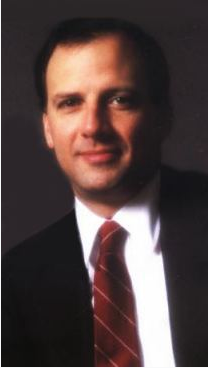
MARTIN ZWEIG
Predicting the 1987 Black Monday crash on live TV two days before it happened, and building a 40-year record of momentum-driven market timing
Martin Zweig is the investor who called the 1987 crash on national television two days before the Dow dropped 22%. He did it calmly, on PBS Wall Street Week, because his models were flashing red and he respected the signal. His two rules — don't fight the Fed, don't fight the tape — sound simple until you realize how hard they are to follow. The Zweig Forecast newsletter was ranked the top-performing advisory letter for over 15 years by Hulbert Financial Digest. He then put his money where his mouth was and bought a $70 million penthouse at The Pierre in Manhattan.
Net Worth
$600 million (at death, 2013)
Nationality
American
Time Horizon
Medium-Term
Risk Appetite
5 / 10
Net Worth Context
- · 600x the average American's lifetime earnings, stacked and waiting.
CAREER & BACKGROUND
Zweig grew up in Cleveland and showed an early obsession with numbers and markets. He studied at Wharton for his undergraduate degree, went to Indiana University for an MBA, and then did a PhD in finance at Michigan State — not the typical path for a future hedge fund manager, but the academic rigor shaped everything.
In 1971 he launched The Zweig Forecast, a market timing newsletter that used a combination of monetary indicators, market breadth, and sentiment readings. Hulbert Financial Digest tracked every major investment letter for decades and ranked the Zweig Forecast at or near the top for returns over a 15-year stretch.
That's a hard number, not a reputation.
The 1987 moment made him famous outside newsletter circles. On October 16, 1987, on the PBS show Wall Street Week with Louis Rukeyser, Zweig told the audience he was very uncomfortable with the market and had moved to a defensive position.
Two days later, on October 19, the Dow fell 22.6% in a single session — still the largest one-day percentage drop in history. Nobody else with that kind of public platform called it in advance.
He founded Zweig-DiMenna Associates with Joe DiMenna in 1984, running it as a long-short equity hedge fund. At its peak the fund managed several billion dollars.
He also launched a series of closed-end mutual funds. In 1999 he paid $70 million for a penthouse at The Pierre hotel in New York — a record at the time.
He died in February 2013.
COMPANIES & ROLES
Zweig spent most of his career building the Zweig Financial empire. The Zweig Forecast newsletter, launched in 1971, was the flagship.
It ran on a monetary model that tracked Fed rate changes and a momentum model that tracked breadth and price trends. When both lined up, he took strong positions.
Zweig-DiMenna Associates, co-founded with Joe DiMenna in 1984, was the institutional vehicle. The fund ran long-short equity and built a track record that attracted large institutional allocations.
Zweig also managed the Zweig Total Return Fund and the Zweig Fund, both publicly traded closed-end funds that gave retail investors access to his approach. These funds traded on the NYSE.
INVESTING STYLE & PHILOSOPHY
Zweig blended technical and fundamental analysis before anyone called it a blend. His core model had two sides: a monetary model that tracked Federal Reserve policy (rate cuts are bullish, rate hikes are bearish), and a market model that tracked breadth indicators and price momentum.
When both pointed the same direction, he committed. When they diverged, he reduced exposure.
He was not a stock picker in the Lynch mold — he was a market timer who also selected individual stocks based on earnings momentum. He looked for stocks with accelerating earnings growth, strong relative price strength, and P/E ratios not outrageously above the market.
He avoided fighting the prevailing trend at all costs.
THE PLAYBOOK
Risk Approach
Moderate. Zweig was a disciplined risk manager, not a cowboy.
He used stop-losses routinely and moved to cash when his models gave mixed signals. His famous 1987 call was fundamentally a risk management decision: the models said danger, so he got out.
He also carried deep respect for drawdowns — having studied market history extensively, he knew how fast things could fall and how long recoveries could take.
Money Habits
Zweig was meticulous in his research and kept detailed files on every market cycle he studied. He was not flashy day-to-day, but he swung big on real estate.
The $70 million Pierre penthouse purchase in 1999 — at a time when no apartment in New York had sold for that price — was either a bold lifestyle statement or a savvy hard-asset bet. He was also an avid collector of sports memorabilia, with one of the most extensive collections in the country.
BIGGEST WIN
The 1987 call. Full stop.
Zweig went on national television on October 16, 1987, told a mass audience he was uncomfortable and had moved defensive, and then watched the market fall 22.6% two days later. In markets, being right is one thing.
Being right publicly, with an auditable timestamp, on the most dramatic single-day crash in modern history — that is something else entirely. It validated his entire framework and made him one of the most recognized names in investment management.
BIGGEST MISTAKE
The post-2008 environment exposed the limits of a model built for normal rate cycles. When the Federal Reserve cut rates to zero and held them there for years, Zweig's monetary model lost much of its signal.
Rate cuts stopped being a bullish catalyst because they were perpetual. He died in 2013, so he never had to fully navigate that world, but his framework struggled in the late-QE era.
Any system calibrated for historical relationships will eventually hit a period where those relationships break down.
FINANCIAL PHILOSOPHY
Two rules anchored everything: don't fight the Fed and don't fight the tape. By the Fed rule: when the Federal Reserve is cutting rates, markets tend to rise — monetary easing fuels risk appetite.
When the Fed is hiking aggressively, markets struggle. By the tape rule: price trend is real information.
If the market is falling broadly, don't argue with it. Zweig also tracked corporate insider buying closely, viewing it as the most honest signal in markets.
FAMILY & PERSONAL LIFE
Zweig was married to Samantha Zweig. He had children, and his estate was managed by family members after his death in February 2013.
He was based in Manhattan for most of his professional life and was a well-known presence in New York financial circles.
EDUCATION
BS from the Wharton School of the University of Pennsylvania (finance). MBA from Indiana University Kelley School of Business.
PhD in finance from Michigan State University. The academic credentials shaped his rigorous, model-driven approach to markets.
BOOKS & RESOURCES
Zweig agreed with parts of it and disagreed with others. Understanding that debate helps you understand why his model was considered heterodox
If you want to go deeper on the monetary-policy-drives-markets idea, Martin Prings Technical Analysis Explained is the reference work for how the intermarket relationships Zweig used actually function
Zweig came to similar conclusions independently
As an Amazon Associate, Netfigo earns from qualifying purchases. Book links above may be affiliate links.
NETFIGO SCORE
Proprietary 5-dimension investor rating
Risk Appetite
Contrarian Index
Track Record
Accessibility
Time Horizon
Related Profiles
Investors
Paul Tudor Jones
Tudor Jones also called the 1987 crash — he shorted the market heavily on Black Monday. Like Zweig, he used macro signals and price trend as primary inputs. Two different frameworks, same conclusion that October.
Peter Lynch
Both Lynch and Zweig were defining fund managers of the 1980s. Lynch picked stocks from the ground up; Zweig combined market timing with momentum selection. Compare their approaches to understand the top-down vs bottom-up divide.
Head-to-Head
Compare Martin Zweig vs another investor.