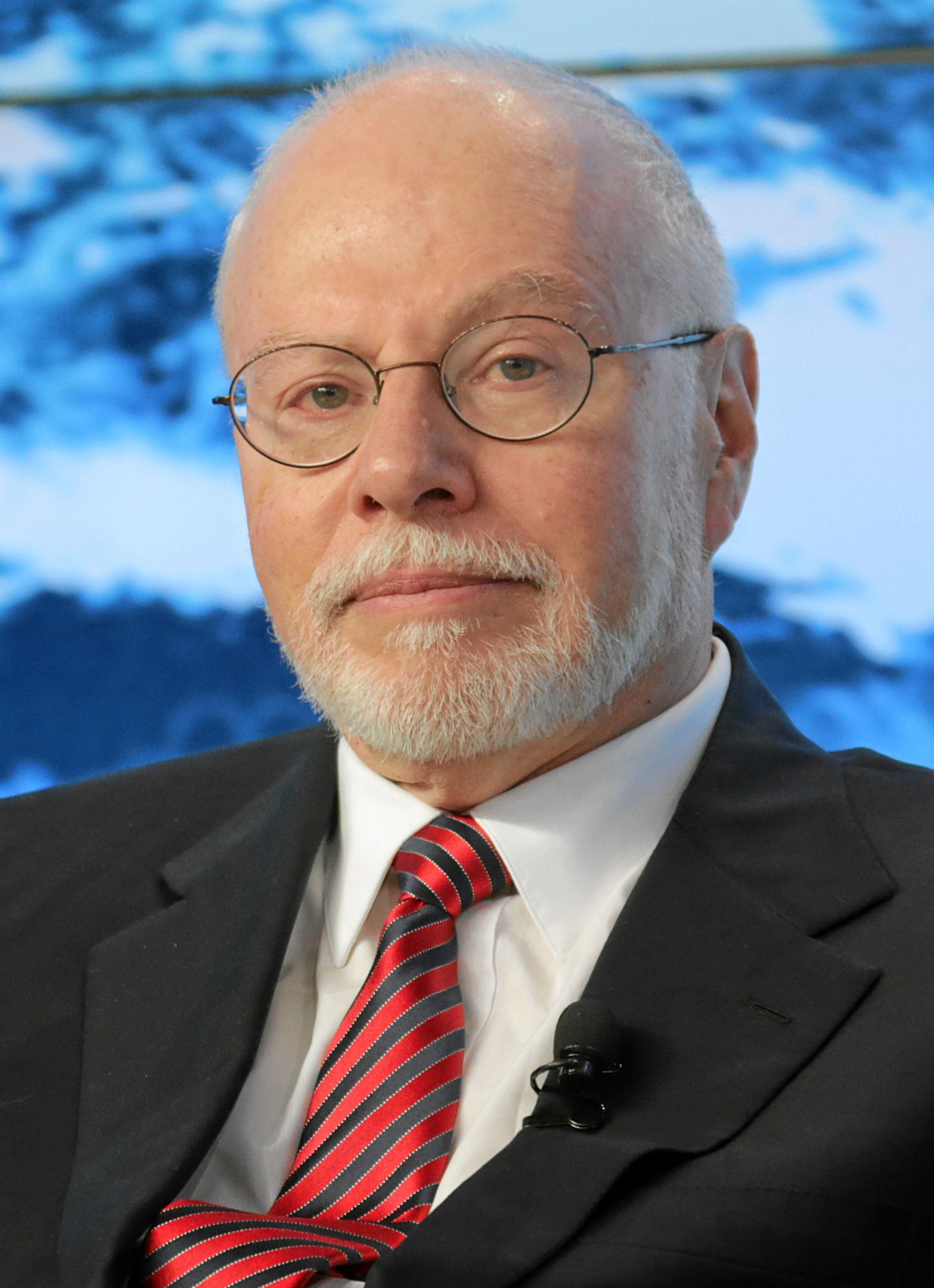
PAUL SINGER
The hedge fund manager who sued Argentina into a corner and made the entire country blink first.
Paul Singer is the man governments genuinely fear. He runs Elliott Management, one of the most feared activist hedge funds on the planet, and he has a track record of buying distressed debt for pennies and then collecting dollars — from countries, corporations, and anyone else who thought he'd go away quietly. He bought Argentine bonds after the country's 2001 default, sued for full repayment, and after 15 years of legal warfare, Argentina paid him $2.4 billion in 2016. He doesn't negotiate. He litigates. The lesson: if Paul Singer owns your debt, pay it.
Net Worth
$5.8 billion
Nationality
American
Time Horizon
Long-Term
Risk Appetite
7 / 10
Fund
Elliott Associates L.P.
Net Worth Context
- · Still a billionaire — just the quiet kind at the end of the table.
CAREER & BACKGROUND
Paul Singer grew up in New Jersey, the son of a pharmacist. He graduated from the University of Rochester in 1969 and got a law degree from Harvard in 1969 — no, that's not a typo, he finished both faster than most people finish one.
He practiced real estate law briefly before realizing that managing money was what he actually wanted to do.
In 1977, with $1.3 million — much of it from family and friends — Singer founded Elliott Associates in New York. The name came from his middle name.
The fund was small, quiet, and unremarkable at first. Then he found his edge: distressed debt.
Specifically, buying the bonds of bankrupt or near-bankrupt companies and countries at deep discounts, then using every legal tool available to recover full face value.
Through the 1980s and 1990s, Elliott sharpened its teeth on corporate bankruptcies. But Singer's reputation went global when he turned his attention to sovereign debt — the bonds issued by countries.
He bought up defaulted Peruvian debt in the early 1990s, sued Peru, and eventually got paid. He did the same with Congo-Brazzaville and Ecuador.
But these were warm-ups.
The Argentina saga became Singer's defining act. When Argentina defaulted on $100 billion in debt in 2001 — the largest sovereign default in history at the time — most bondholders accepted restructured deals at roughly 30 cents on the dollar.
Singer's Elliott, through its subsidiary NML Capital, did not. Elliott held out, bought more debt, and sued.
For 15 years. In multiple jurisdictions.
In 2012, Elliott actually convinced a Ghanaian court to seize an Argentine naval vessel docked in Accra as collateral. An actual warship.
Argentina ultimately settled in 2016 for $2.4 billion — roughly a 1,000% return on Elliott's original investment.
Meanwhile, Elliott expanded from distressed debt into full-blown activist investing. The fund started taking large stakes in publicly traded companies and then pushing — loudly and sometimes brutally — for change.
Management shakeups. Spinoffs.
Sales. Whatever would unlock value.
Victims and targets have included AT&T, Twitter, SoftBank, Hyundai, and dozens of others. Elliott now manages roughly $65 billion in assets.
COMPANIES & ROLES
Elliott Management is Singer's vehicle and his legacy. Founded in 1977 with $1.3 million, it now manages around $65 billion and employs a team of lawyers, analysts, and former government officials who give it a reputation as one of the most relentless forces in finance.
Elliott operates in two main modes: distressed debt investing — buying bonds of struggling governments and companies at a discount and fighting for full repayment — and activist equity investing, where it buys large stakes in public companies and agitates for change.
NML Capital is Elliott's subsidiary specifically set up to pursue sovereign debt claims. This is the entity that bought Argentine bonds and pursued the 15-year legal campaign that ended in a $2.4 billion payout.
NML became so notorious in Argentina that its name is basically a curse word in Buenos Aires.
Singer has also been a significant backer of various political causes and think tanks, particularly on the Republican side. He was a major donor to Mitt Romney's 2012 campaign and later became a major donor for various right-leaning policy organizations.
He backed Marco Rubio in 2016 before eventually supporting other candidates. His political influence is as deliberate as his investing — he picks targets, commits resources, and presses relentlessly.
Through Elliott, Singer has also made bets on technology companies and private equity-style investments. The fund's portfolio at any given time is a deliberately opaque mix of distressed bonds, equity positions, hedges, and derivatives — designed to perform in any market environment.
INVESTING STYLE & PHILOSOPHY
Singer's investing style can be summed up in one phrase: adversarial investing. Most investors want to find great assets and hold them while the world comes around to their view.
Singer wants to find undervalued or mispriced assets and then force the world to pay up — through litigation, activism, public pressure, or all three simultaneously.
In distressed debt, his approach is the opposite of passive. He buys bonds trading at deep discounts — sometimes five or ten cents on the dollar — from governments or companies that have defaulted or look likely to.
Where other investors would accept whatever restructured settlement is offered, Singer holds out. He hires the best lawyers.
He sues in every jurisdiction he can find. He seizes assets if he can get a court order.
He is spectacularly patient. The Argentina fight lasted 15 years.
He did not blink.
The logic is cold and simple: if you bought a bond at 10 cents and the contract says the issuer owes you a dollar, why accept 30 cents? The contract is the contract.
Singer's view is that sovereign immunity — the idea that countries can default without real consequences — is bad for the global financial system. Holdout creditors like him, he argues, actually discipline governments and encourage them to honor their debts.
Critics call it vulture capitalism. Singer calls it enforcing contracts.
In activist equity investing, the approach is similar in spirit but different in execution. Elliott takes a big enough stake in a company to demand a seat at the table, then presents its thesis for what the company should do differently — sell a division, replace the CEO, cut costs, return capital to shareholders.
Elliott's activist campaigns are famously thorough. They come in with a detailed analysis and a public letter and they don't stop until something changes.
Companies rarely ignore Elliott twice.
One key element of Singer's style is hedging. Elliott has reportedly never had a down year — not in 2008, not in 2020.
That's not luck. Singer runs a genuinely diversified book with significant hedges against market-wide crashes.
He has been vocal about the risks of central bank money printing, fiat currency debasement, and systemic financial instability. He holds gold.
The fund is designed to survive scenarios most managers don't model.
THE PLAYBOOK
Risk Approach
Singer is aggressive about individual positions — he'll pursue a sovereign debt claim through 15 years of litigation — but deeply conservative about the overall portfolio. He is obsessed with tail risk: the low-probability, catastrophic scenarios that wipe out funds and careers.
He has written about this obsessively in his letters to investors.
His view is that most investors dramatically underestimate the probability of extreme market events. The models they use — Value at Risk, standard deviation — assume a normal distribution of outcomes that doesn't reflect reality.
Singer thinks the world is much more fragile than the consensus believes. He has been warning about systemic risks — too much debt, overconfident central banks, financial engineering gone wrong — for decades.
Some of those warnings were early. Some were wrong in timing.
But the 2008 financial crisis vindicated enough of his worldview that he takes these concerns seriously.
The practical result is that Elliott runs with significant short positions and hedges at all times. Singer reportedly doesn't sleep well unless the fund has protection against the scenarios that would destroy everyone else.
This is why Elliott has never had a losing year. The returns in good years are lower than a pure long fund, but the protection in bad years is real.
On individual investments, though, Singer is very willing to be aggressive and to take concentrated positions where he has a legal or structural edge. He isn't betting on macroeconomic outcomes — he's enforcing contracts and unlocking corporate value.
Those are much more controllable bets than trying to predict the direction of markets.
Money Habits
Singer is not a flashy billionaire. He's not posting yacht photos on Instagram or giving TED talks about disruption.
He's from a generation of money managers who believed that the best advertisement was a phone call from an investor asking to get in.
He is, however, a very significant philanthropist. He has donated hundreds of millions to medical research — particularly for cystic fibrosis and neurological diseases — through the Paul E.
Singer Foundation. He has given to arts institutions, universities, and policy organizations.
He and his wife, Laurie, have been major supporters of gay rights causes, notably funding pro-same-sex marriage campaigns at a time when that was not a mainstream Republican position. He came out publicly in support of marriage equality years before most major Republican donors did.
He lives in New York and has homes in Palm Beach, among other places. He is known in financial circles for hosting private dinners and gatherings where policy and investment ideas are discussed — more intellectual salon than flashy party.
Singer plays tennis seriously. He was known at Harvard Law School as a skilled athlete.
He has stayed active and is reportedly competitive in most things he does — which will surprise no one who has watched Elliott in action.
He is known for writing extraordinarily detailed and direct letters to investors. These letters, which go out quarterly, are genuine reading — they cover macro risks, market observations, and Singer's often contrarian views on the global financial system.
They are not the standard boilerplate hedge fund update. They read like a person who genuinely believes what he's writing and wants you to understand why.
BIGGEST WIN
Argentina. Full stop.
In 2001, Argentina defaulted on roughly $100 billion in sovereign debt — the largest sovereign default in history at the time. Most bondholders accepted a restructured deal in 2005 and 2010 that paid roughly 30 cents on the dollar.
Singer's Elliott, through its NML Capital subsidiary, refused. Elliott had been accumulating Argentine bonds at heavy discounts, some reportedly purchased for less than 20 cents on the dollar.
What followed was 15 years of legal warfare across multiple continents. Elliott sued Argentina in US federal courts.
It got a favorable ruling from Judge Thomas Griesa in New York, who ordered Argentina to pay NML before paying restructured bondholders. Argentina refused and went into a technical default rather than pay.
In 2012, NML convinced a court in Ghana to seize the ARA Libertad — an Argentine naval frigate — as collateral on the debt. An actual warship.
It sat in a Ghanaian port for 11 weeks before being released.
For over a decade, Argentina called Singer a 'vulture fund operator' and passed a law making it illegal to negotiate with him. The saga consumed presidents and finance ministers.
Singer did not move.
In 2015, Argentina elected a new president, Mauricio Macri, on a platform of ending the conflict and rejoining international debt markets. In February 2016, Argentina settled with Elliott for $2.4 billion — representing approximately a 1,000% return on NML's original investment.
The deal unlocked Argentina's ability to issue new international bonds for the first time in 15 years.
It is one of the most extraordinary sustained campaigns in the history of finance. Singer proved that sovereign immunity is not absolute and that a determined creditor with a legal edge and unlimited patience can outlast a government.
BIGGEST MISTAKE
Singer is famously tight-lipped about losses, and Elliott's track record is genuinely unusual — the fund has reportedly never had a losing year in its nearly 50-year history. That said, not every campaign has gone as planned.
Elliott's most notable stumble may have been its activist campaign against Samsung in South Korea in 2015-2016. Elliott took a position in Samsung C&T and campaigned aggressively against Samsung's proposed merger of two subsidiaries, arguing the terms massively undervalued Samsung C&T shareholders.
Elliott was right about the economics. But it lost.
The merger went through because Korean institutional investors — many of them deeply connected to the chaebol system — voted in favor of it. Elliott sued in Korean courts and international arbitration, eventually winning a roughly $53 million arbitration award years later, but the original campaign was a rare public loss.
The Samsung episode exposed a real limitation of Singer's approach: it works best in legal systems where contracts are enforced and minority shareholder rights are respected. In markets where political relationships and national economic interests override legal logic, Elliott's edge shrinks significantly.
The lesson Singer took was probably to be more selective about jurisdictions where the legal framework favors his approach, and to be realistic about campaigns in markets where the rules are different. This didn't stop Elliott from pursuing Asian activism — the fund has continued campaigns in Japan and South Korea — but the Samsung experience was a reminder that even the best legal strategy can lose to politics.
FINANCIAL PHILOSOPHY
Singer's financial worldview is built on a few core ideas that most mainstream investors find uncomfortable.
First: contracts mean something. This is the bedrock of his distressed debt strategy.
When you buy a bond, you are entering a legal contract. If the issuer defaults, you have legal remedies.
Singer uses all of them. He doesn't believe in accepting whatever settlement a debtor offers out of politeness or social pressure.
The reason creditors get taken advantage of, in his view, is that they don't enforce their rights.
Second: the world is more fragile than the models say. Singer has been a persistent critic of the post-2008 financial system — low interest rates, quantitative easing, central banks printing money to solve every problem.
He thinks this creates hidden instability. When he writes in his investor letters about the risks of gold confiscation, hyperinflation, or a systemic breakdown of the financial system, people roll their eyes.
But he's been writing those warnings since the 1990s, and 2008 reminded a lot of people that catastrophic scenarios do happen.
Third: activism creates value. Singer genuinely believes that pushing companies to be more efficient, to return capital, to replace bad management, creates real economic value — not just for Elliott but for the broader market.
He isn't just extracting value from others; he's arguing he's creating it. Whether you believe that depends a lot on which side of an Elliott campaign you're sitting on.
Fourth: never be fully exposed. Singer has said that the biggest mistake investors make is optimizing for the good scenario and ignoring the bad one.
His fund is designed to survive black swans. This costs performance in bull markets.
He thinks that's a completely fair trade.
Fifth: price matters more than story. Elliott doesn't pay for narratives.
They pay for assets that are worth more than their price — and then they find ways to unlock that difference.
FAMILY & PERSONAL LIFE
Singer has been married to Laurie Singer for decades. They are deeply private about their family life, which is notable for someone as prominent as Paul Singer.
He has children, though he rarely discusses them publicly.
Singer's son Andrew is gay, and this had a significant effect on Singer's public evolution on LGBTQ rights. Singer became one of the most prominent Republican donors to support same-sex marriage, contributing heavily to pro-marriage equality campaigns in New York, which helped pass the Marriage Equality Act there in 2011.
He has said that his son's experience directly shaped his views. This is one of the more genuine pivots you'll find in modern finance — not a calculated PR move, but an actual change of position driven by personal experience.
Singer grew up in Tenafly, New Jersey. His father was a pharmacist.
He has spoken about his upbringing as solidly middle-class, and about learning the value of work early. There's nothing in his background that explains the aggression and precision of his investing style — he built that himself over decades.
He is known among New York's financial and philanthropic community as intellectually serious, privately warmer than his fund's reputation suggests, and genuinely curious about ideas beyond finance. He's a reader, a tennis player, and someone who takes the philanthropy as seriously as the investing.
EDUCATION
Singer graduated from the University of Rochester in 1969 with a degree in psychology. He then went to Harvard Law School, graduating in 1969 as well — yes, both in the same year, because he accelerated through his undergraduate degree.
Harvard Law gave him the legal framework that would become the backbone of his entire investing approach. When you spend your career litigating sovereign debt contracts across multiple jurisdictions, having a real legal education is not a minor advantage.
It's everything. He didn't go to business school.
He learned investing by doing it.
BOOKS & RESOURCES
Singer does not have a book of his own — hes too busy running a $65 billion fund and suing governments to write a memoir
But his quarterly investor letters are some of the most substantive writing in finance. They're not publicly available, but excerpts surface regularly and are worth tracking down. They cover systemic financial risks, monetary policy, and Singer's worldview in genuine depth
Covers the world Singer entered — leveraged buyouts and aggressive deal-making in the 1980s — and captures the culture that shaped him. 'The Big Short' by Michael Lewis isn't directly about Singer, but it's the best account of the same contrarian, adversarial worldview applied to markets: find what everyone else is ignoring, be right, and be willing to look insane for years before you're vindicated
For sovereign debt specifically, Emerging Markets and the New Global Economy gives context on why countries default and what happens next
But the real education on Singer's Argentina strategy is in the legal briefs and court decisions — NML Capital Ltd. v. Republic of Argentina is required reading for anyone serious about sovereign debt
Probably the closest published articulation of how Singer thinks about tail risk and the fragility of financial systems. Singer has referenced Taleb's ideas in his letters. If you want to understand why Elliott always runs with a hedge book, Taleb explains the intellectual framework
As an Amazon Associate, Netfigo earns from qualifying purchases. Book links above may be affiliate links.
QUOTES (6)
The job of an investor is not to be optimistic or pessimistic. It is to figure out what is true.
We are not a vulture fund. We are a fund that enforces contracts.
Most investors are optimistic because pessimism doesn't sell. We try to see the world as it actually is.
Gold is the one asset that retains value when everything else is being debased.
Sovereign immunity is not a license to steal. Contracts must mean something, or the global financial system breaks down.
The seeds of the next crisis are always planted in the solution to the last one.
NETFIGO SCORE
Proprietary 5-dimension investor rating
Risk Appetite
Contrarian Index
Track Record
Accessibility
Time Horizon
Related Profiles
Investors
Bill Ackman
Both are prominent activist hedge fund managers who take large stakes in companies and push for operational changes — often compared as the two most feared activists on Wall Street.
Carl Icahn
Icahn and Singer are the two defining figures of activist investing — both known for aggressive campaigns, legal pressure, and the willingness to outlast management teams who think they can wait them out.
John Paulson
Like Singer, Paulson made his biggest win by being right when almost everyone else was wrong and holding through years of doubt — a shared temperament even if the strategies differ.
Head-to-Head
Compare Paul Singer vs another investor.