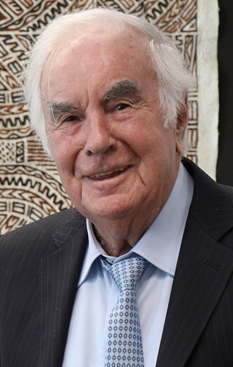
PIERRE CASTEL
Building Europe’s largest wine producer and taking beverage production to 23 African countries through a fiercely private family empire.
Pierre Castel turned a local French wine desk into a twelve billion dollar global beverage conglomerate. He did not rely on Wall Street or public markets. He bought vineyards, built breweries across Africa, and kept the company strictly under family control. The two thousand twenty-two Swiss tax penalty cost his group four hundred sixteen million dollars, but it barely dented a sixty-year compounding machine. You do not need a hedge fund to build generational wealth. You just need to own the physical product everyone drinks.
Net Worth
$12 billion
Nationality
French
Time Horizon
Generational
Risk Appetite
6 / 10
Net Worth Context
- · That's the GDP of a small country — around the size of Greenland.
- · Enough to buy an NBA team and keep $8B for snacks.
CAREER & BACKGROUND
He started working for his father in the family winemaking business long before he turned twenty. At nineteen he opened a small wine trading desk in Bordeaux.
Two years later he brought in his eight siblings to form Castel Frères. They moved product fast and handled their own distribution.
That vertical approach built the foundation. Over the next seven decades they expanded into soft drinks, beer, and premium spirits.
They looked east to Africa when most European beverage giants completely ignored the continent. He took the lead on that expansion.
He opened breweries, secured local partnerships, and adapted product lines for regional tastes.
He now chairs the Castel Group. He leads Patriarche as CEO and president.
He oversees Cassiopée Limited for international operations. He also served on the board of International Breweries PLC in Nigeria.
The teenager who moved wine crates in nineteen forty-nine now supervises a global supply chain.
COMPANIES & ROLES
Castel Group acts as the primary engine. It produces, trades, and distributes wine, beer, and carbonated drinks across multiple continents.
The portfolio includes dozens of vineyards and forty-five breweries. Most of those breweries operate in twenty-three African countries.
The group handles everything from grape harvesting to supermarket distribution.
Patriarche manages the high-end wine and spirits division. Cassiopée Limited serves as the global holding structure for international assets.
He formerly held a board seat at International Breweries PLC in Nigeria to anchor that market presence. The business model focuses on complete ownership of the production chain.
INVESTING STYLE & PHILOSOPHY
He does not trade public stocks or chase financial derivatives. He buys the actual companies that manufacture beverages.
His approach is simple physical ownership. He wants direct control of the supply chain rather than betting on market fluctuations.
Think of it like owning the farm, the factory, and the delivery fleet instead of guessing commodity prices. He hunts for geographic gaps.
European markets reached saturation decades ago. Africa offered open space for modern beverage infrastructure.
He moves slowly and reinvests operational profits back into expansion. He holds assets indefinitely.
THE PLAYBOOK
Risk Approach
He avoids public markets completely. The company remains privately held by the family.
That structure eliminates quarterly earnings pressure and stock market panic selling. His risk management relies on hard business diversification.
If wine sales slow in France, beer and soft drinks in West Africa keep the cash flow moving. He accepts operational complexity and political risk in emerging economies to completely remove equity volatility from his portfolio.
He keeps the capital structure private through holding entities in multiple jurisdictions. That shields the business from external speculation but requires constant navigation of local regulatory environments.
Money Habits
Public details are intentionally scarce. He manages his wealth through Geneva-resident holding structures with extensions into Liechtenstein and Singapore.
He avoids yacht registries and luxury sports team purchases. Capital flows back into production facilities and new market entries.
The family structure acts as a fortress around the fortune. When Swiss authorities demanded a massive back tax payment, the group handled it quietly and continued expanding.
The pattern shows a clear preference for scaling operations and maintaining absolute control rather than funding a public lifestyle.
BIGGEST WIN
Turning a regional French distributor into the dominant wine producer in Europe while simultaneously building a massive African footprint. He spotted the consumer surge in Africa before legacy competitors understood the logistics.
The group established forty-five breweries and secured distribution networks across twenty-three countries.
Family wealth peaked above fifteen billion dollars by twenty nineteen. Most multinational beverage companies tried to buy their way into Africa and struggled with local supply chains.
He built from scratch and adapted to regional consumption habits. That ground-up strategy captured millions of daily consumers.
The African expansion alone multiplied the initial family investment by orders of magnitude.
BIGGEST MISTAKE
The two thousand twenty-two Swiss tax investigation. Federal prosecutors mapped out complex ownership layers and found filings submitted under a different first name.
The court ordered a four hundred sixteen million dollar back tax payment. The ruling highlighted the hidden cost of extreme corporate privacy.
Swiss investigators traced labyrinths in Liechtenstein and Singapore starting in twenty seventeen. The group complied and paid the full amount.
The episode proved that even decades of careful structuring eventually face regulatory scrutiny. The lesson is blunt.
Secrecy protects against competitors but rarely holds up forever against determined tax authorities.
FINANCIAL PHILOSOPHY
Own the source. Control the distribution.
Keep the wealth in the family. He believes real value comes from physical assets that people consume daily.
Financial paper trades up and down on analyst moods. Bottles of wine get opened and replaced.
That cycle creates predictable revenue.
He also operates on a multigenerational timeline. You cannot open a vineyard or construct a brewery and expect immediate returns.
Infrastructure requires patience. He trusts operational execution over financial engineering.
Making the product, moving it to ten thousand retail locations, and maintaining healthy margins will always outperform short-term trading strategies.
FAMILY & PERSONAL LIFE
He constructed the entire enterprise alongside his eight siblings. The venture began as a literal family project in post-war Bordeaux.
Control and succession remain tightly clustered within that original sibling group. Wealth rankings consistently list the fortune as "Castel and family."
Details about his spouse and children stay entirely out of the public record. The leadership operates more like a traditional European dynasty than a modern corporate board.
Internal loyalty and operational experience dictate who runs each division. The family unit functions as both the ownership board and the executive team.
EDUCATION
Formal academic records do not appear in public filings. His real training happened on the warehouse floor.
He learned inventory, pricing, and logistics directly from his father's existing winemaking business. The early years involved manual labor and direct negotiations with local grocers.
Market demand and supply chain friction taught him the rest. He built operational knowledge through trial and error rather than classroom theory.
That hands-on apprenticeship explains his lifelong preference for physical assets over financial abstractions.
BOOKS & RESOURCES
Pierre Castel has never published a business book or released interview archives
That silence aligns perfectly with his strategy of staying invisible to competitors. But his empire-building approach shows up in a few titles
Captures the wine world's obsession with authenticity and provenance. Castel built Groupe Castel into Africa's largest beverage distributor by understanding that distribution matters more than the product itself
Parallels Castel's approach to brand building in unfamiliar markets. Schultz took coffee global. Castel took French wine and beer across 50 African countries
Covers the exact business environment where Castel made his fortune. Building consumer brands across fragmented African markets with unpredictable infrastructure and regulatory landscapes
As an Amazon Associate, Netfigo earns from qualifying purchases. Book links above may be affiliate links.
NETFIGO SCORE
Proprietary 5-dimension investor rating
Risk Appetite
Contrarian Index
Track Record
Accessibility
Time Horizon
Related Profiles
Investors
Bernard Arnault
Another French billionaire who scaled consumer goods through vertical acquisition and maintained tight family control over strategic decisions.
Nassef Sawiris
Shares a similar blueprint of dominating infrastructure-heavy industries and expanding aggressively into high-growth emerging markets.
Head-to-Head
Compare Pierre Castel vs another investor.