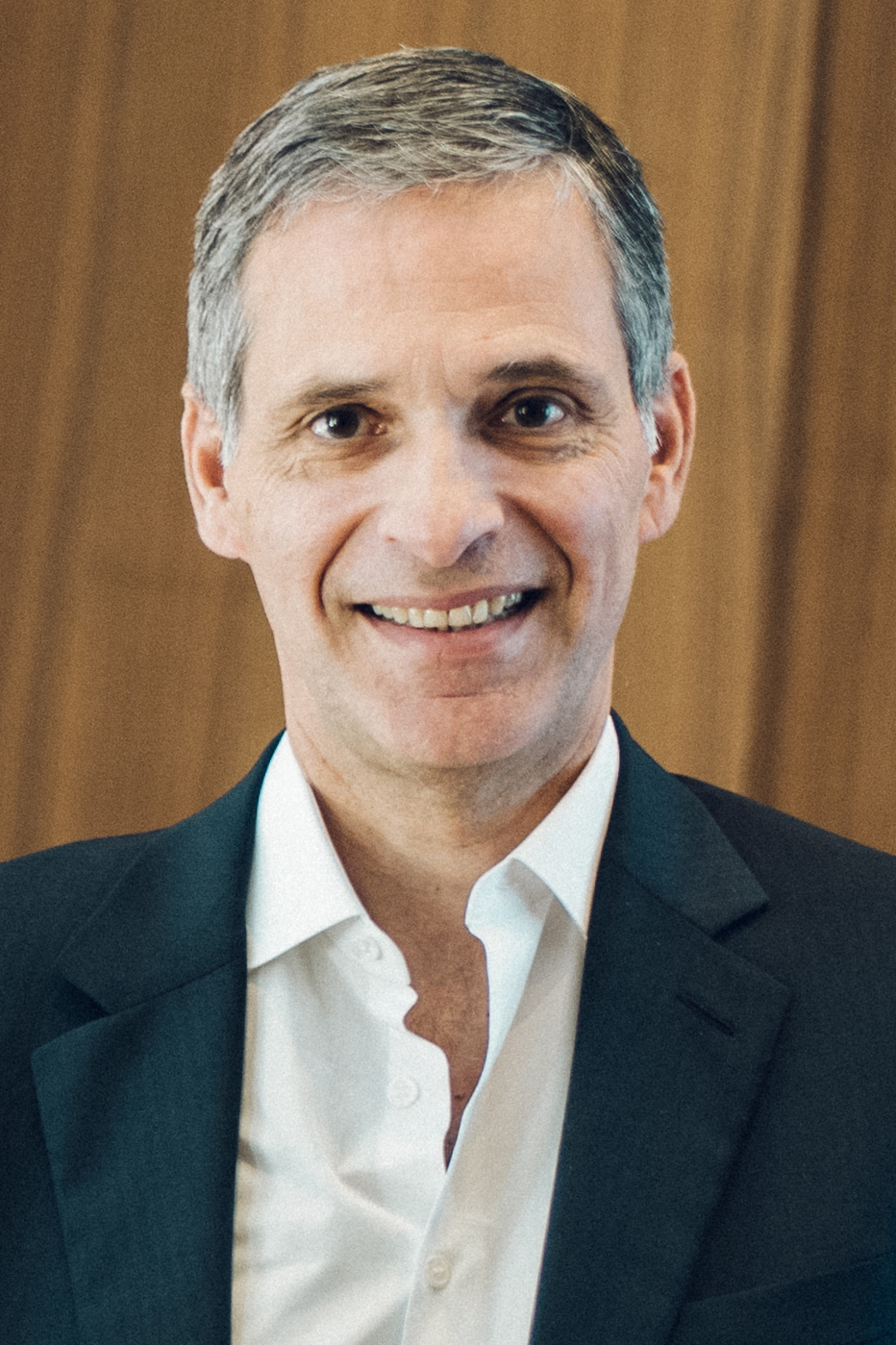
RODOLPHE SAADE
Turning his father's regional shipping line into one of the world's largest logistics empires through aggressive acquisitions and massive US market expansion.
He took a family shipping company and scaled it into a 600-vessel global logistics juggernaut. He spent billions buying ports, airlines, and freight networks instead of waiting for slow organic growth. Critics worry about the debt, but he quietly pocketed $50 billion in group profits when the pandemic broke global supply chains. He does not play in tech. He moves actual physical containers. And the global economy stalls when he says so.
Net Worth
$8.9 billion
Nationality
Franco-Lebanese
Time Horizon
Generational
Risk Appetite
8 / 10
Net Worth Context
- · That's the GDP of a small country — around the size of Jamaica.
- · Enough to buy an NBA team and keep $85B for snacks.
CAREER & BACKGROUND
Rodolphe did not walk straight into the family throne. He started by building a water dispenser company from scratch after finishing his degree at Concordia University in Montreal.
That early grind taught him how to build something without a safety net. His father called him over in 1994 and basically said to join the company if he had the skills.
He did not hesitate.
He started at the bottom and immediately got thrown into the deep end. New York and Hong Kong offices first.
He learned how shipping actually worked across oceans. By 2000, he was back at the Marseille headquarters running the transatlantic and transpacific lines.
He spent the next decade climbing through senior roles and learning exactly where the bottlenecks lived.
The real shift happened in 2010. His father appointed him Vice Chairman.
He immediately oversaw a massive financial restructuring that kept the company agile while competitors drowned in bad debt. His father passed away in June 2018, but Rodolphe had already been CEO since 2017.
He did not spend time mourning the transition. He just started buying.
COMPANIES & ROLES
CMA CGM Group is the crown jewel. It operates over 600 container ships hitting 520 ports globally.
But shipping containers is just the surface. He bought port terminals.
He bought freight forwarding agencies. He bought warehouses and inland trucking routes.
He even bought into airlines to move air cargo.
Then he went sideways into media, buying stakes in BFM-TV, RMC, and La Tribune. Most industrial tycoons stick to their lanes.
He does the opposite. He wants every piece of the puzzle.
If a shipping line is the artery, he wants to own the heart, the capillaries, and the blood. That means when a factory ships a pallet from Vietnam to Marseille, he captures value at the origin, the ocean crossing, customs clearance, and the final warehouse drop.
INVESTING STYLE & PHILOSOPHY
He does not pick stocks. He buys physical infrastructure.
Think of it like Monopoly with real containers. He wants to own the entire board so he never relies on someone else to move his pieces.
He looks for scale and vertical integration.
His moves are heavy, capital intensive, and deliberately unsexy. He pays billions upfront for terminals and logistics firms that will pay back over thirty years.
He bets that global trade will never shrink permanently. When markets panic about recession, he sees cheap ports.
When others sell, he buys the supply chain. It is a slow, grinding game of control.
THE PLAYBOOK
Risk Approach
He is highly comfortable with massive balance sheet leverage. He took on billions in debt to acquire Bolloré Logistics right as global trade dynamics were shifting.
That takes serious stomach. He knows shipping is brutally cyclical.
Freight rates can crash overnight. He accepts that risk because he believes owning the physical network gives him pricing power when rates recover.
He does not hedge his bets. He doubles down.
He assumes the long-term structural value of physical trade infrastructure will always outpace short-term economic noise. That means he will happily carry heavy debt loads through a downturn rather than sell assets for pennies.
He bets on his own endurance over market timing.
Money Habits
He keeps a very low personal profile for someone sitting on nearly nine billion dollars. He stays rooted in Marseille, the city where his empire is headquartered.
He does not flash private jets or billionaire real estate portfolios in the press. The wealth stays inside the business.
He spends his time differently. He is a passionate competitive sailor and actually races in regattas.
He funds cultural institutions across Marseille. He flies economy on commercial flights when he travels for work.
He drinks coffee, not champagne. His spending philosophy mirrors his shipping strategy.
Reinvest everything. Keep the engine running.
Avoid flashy distractions. The business is the trophy.
BIGGEST WIN
The €4.85 billion acquisition of Bolloré Logistics combined with a €2.5 billion purchase of two massive terminals at the Port of New York-New Jersey. He spent over €7 billion in a single aggressive push to lock down the US market.
Most analysts called it reckless. Then the pandemic hit.
Global shipping chaos drove freight rates to the moon. CMA CGM raked in roughly $50 billion in profits between 2020 and 2023.
His pre-emptive terminal buys meant his ships had priority dock space while competitors sat anchored offshore for weeks. The timing was flawless.
He bought control right before the world realized how fragile the supply chain actually was.
BIGGEST MISTAKE
Shipping runs on brutal boom and bust cycles. The same heavy debt load that funds explosive growth during cheap money periods becomes a massive anchor when rates normalize.
He leaned hard into leverage to buy terminals and logistics firms. That strategy prints money during boom times, but it gets ugly when trade volumes slow down and interest rates climb.
He has not suffered a public blow-up yet. His fleet and network are too valuable to collapse.
But the risk is real. A prolonged global recession or a sustained drop in container rates would force his cash flows to service billions in debt instead of building new capacity.
It is the classic shipping trap. You borrow to dominate the cycle.
Then you pray the cycle does not break your balance sheet first.
FINANCIAL PHILOSOPHY
His rules are brutally simple. Scale wins.
Control the chain. Do not rent when you can own.
He operates on a straightforward industrial premise. The company that touches the cargo the most times captures the most profit.
He refuses to let freight rates dictate his margins. Instead, he buys the logistics companies that handle the cargo after it hits the dock.
He avoids the trap of being a pure ocean carrier. Pure carriers get crushed during rate slumps.
Integrated giants survive them. He reinvests every possible dollar back into infrastructure, technology, and fleet upgrades.
Cash sits in ports and ships, not in a treasury account.
FAMILY & PERSONAL LIFE
His roots are entirely tied to the business. His father Jacques founded CMA CGM.
His mother Naila was born in Beirut. His uncle Farid Salem co-founded the original company with Jacques.
He has three children, though he keeps them completely out of the public eye. He does not parade them on social media or bring them on magazine covers.
He follows the strict family rule. You earn your place, or you do not get one.
The dynasty continues quietly.
EDUCATION
He studied business and marketing at Concordia University in Montreal. The choice of Canada was smart.
It forced him to operate outside the Mediterranean shipping bubble and understand North American trade routes, corporate culture, and marketing strategy before returning to France. That early exposure to international markets shaped his later expansion moves.
He did not need a decade of trial and error. He already knew how the global game was played.
BOOKS & RESOURCES
Rodolphe does not publish public reading lists or write memoirs
He prefers the boardroom and the shipping terminal over author bios. His actual playbook is written in acquisition contracts and fleet deployment schedules. That said, anyone trying to match his industrial mindset needs to understand the mechanics of global freight
The essential starting point. It explains exactly how container shipping rewired the modern economy
Offers the macro view on why terminals matter more than ships. These are the blueprints for his entire empire
As an Amazon Associate, Netfigo earns from qualifying purchases. Book links above may be affiliate links.
QUOTES (2)
NETFIGO SCORE
Proprietary 5-dimension investor rating
Risk Appetite
Contrarian Index
Track Record
Accessibility
Time Horizon
Related Profiles
Head-to-Head
Compare Rodolphe Saade vs another investor.