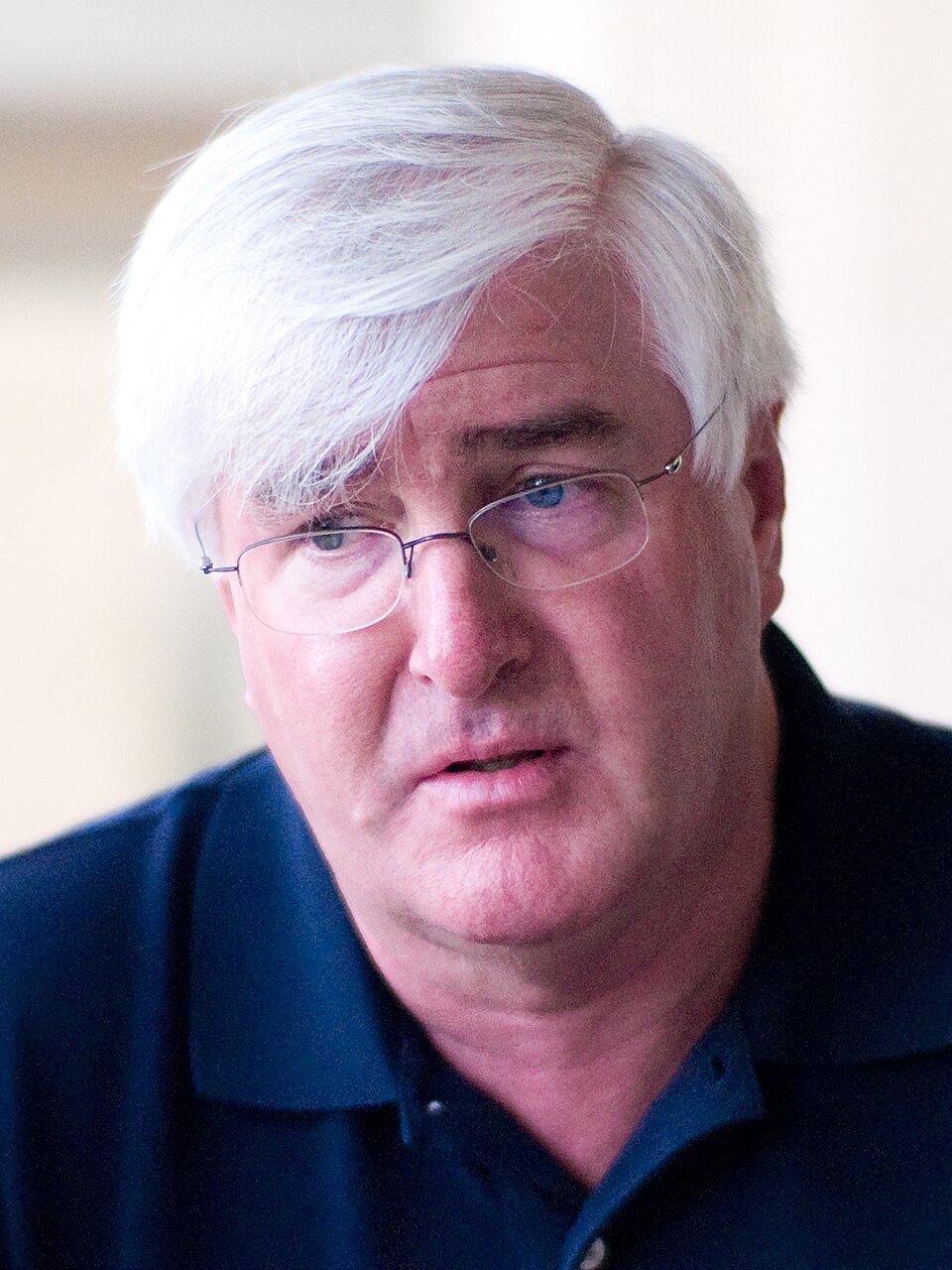
RON CONWAY
The godfather of Silicon Valley angel investing — the guy who backed Google, Facebook, Twitter, and hundreds more before anyone else would.
Ron Conway has been in the room at the start of more billion-dollar companies than almost anyone alive. He backed Google in 1998 when it was two Stanford students and a dorm room. He invested in Facebook when Zuckerberg was still in college. His secret isn't a fancy algorithm or a contrarian thesis — it's that founders call him first because he actually helps. In a world full of investors who write checks and disappear, Conway built an empire out of being useful.
Net Worth
$1.5 billion
Nationality
American
Time Horizon
Long-Term
Risk Appetite
8 / 10
Net Worth Context
- · Still a billionaire — just the quiet kind at the end of the table.
CAREER & BACKGROUND
Ron Conway didn't start in venture capital. He started in sales.
His first real job out of college was at National Semiconductor in the 1970s, selling chips at a time when Silicon Valley was just beginning to figure out what it was. He was good at it — not because he was technical, but because he was relentless and genuinely liked people.
That turned out to be the most important skill in the business he'd eventually build.
He moved into the startup world through a series of executive roles, eventually becoming CEO of Altos Computer Systems in the early 1980s. Altos was a mid-range computer company that sold networked workstations — not glamorous, but Conway learned the startup machinery from the inside out.
When Altos got acquired by Acer in 1990, he had both the money and the rolodex to do something different.
In the mid-1990s he started angel investing seriously. He wasn't the only one doing it, but he was faster and more connected than most.
His approach was volume. Where other angels agonized over due diligence, Conway bet on people early and often.
By the time the first internet boom was in full swing, he had stakes in hundreds of companies. Most failed.
A handful were life-changing.
He founded the Band of Angels in the late 1990s — one of the first angel investor networks in Silicon Valley — which institutionalized the idea of early-stage collaborative investing. Then came SV Angel, the fund he launched in 2009 that operates more like a traditional seed fund but with Conway's personal touch still running through everything.
SV Angel has backed companies including Pinterest, Stripe, Airbnb, Snapchat, and Twitter. The list reads like a roll call of the defining tech companies of the last two decades.
Beyond investing, Conway has become something of a civic figure in San Francisco. He co-founded sf.citi, an organization that tries to get tech companies engaged in local issues.
He was a visible supporter of Barack Obama's campaigns. When the city was dealing with the AIDS crisis in the 1980s and 1990s, he and his wife Gayle were involved in fundraising efforts long before it was fashionable for the tech community to care about anything outside its own zip code.
He's the kind of person who uses his network for things beyond deals — which, ironically, has made his network stronger.
COMPANIES & ROLES
Conway's investment portfolio is less a portfolio and more a list of companies that shaped modern life. He was an early backer of Google — invested in 1998 during the seed round, before the company had a business model worth mentioning.
He held that stake through Google's IPO in 2004 and beyond. The return was extraordinary, though Conway has never disclosed the exact figure publicly.
Facebook was another. Conway got access to the company early through his network, investing when Zuckerberg was still figuring out whether to drop out of Harvard.
He also backed Twitter, PayPal, and Zappos — the online shoe retailer that eventually sold to Amazon for $1.2 billion in 2009. In each case, the common thread wasn't a specific sector thesis.
It was a bet on the founder.
Through SV Angel, the hits continued. Stripe — the payments infrastructure company co-founded by Patrick and John Collison — was an early SV Angel investment.
So was Airbnb, where Conway backed Brian Chesky before most investors could get comfortable with the idea of strangers sleeping in other strangers' homes. Pinterest, Square, Instagram, and Snapchat all had Conway's fingerprints on early rounds.
Conway also invested in Kickstarter, Wish, and Dropbox. The Dropbox investment is interesting because Drew Houston had already been rejected by one prominent investor before Conway backed him.
That pattern — getting in when others pass — shows up repeatedly in Conway's history. Not because he's contrarian by nature, but because he simply does more at-bats than anyone else.
He also has a side that rarely gets written about: the investments that went nowhere. For every Google there were dozens of internet companies in the late 1990s that burned through money and folded.
Conway lost significant sums in the dot-com crash. His willingness to talk about those failures without ego is part of why founders trust him.
INVESTING STYLE & PHILOSOPHY
Conway's investing style is essentially: bet on the person, bet early, and add value after the check clears. That last part is what separates him from most investors.
He doesn't build elaborate financial models. He doesn't wait for revenue traction or proof of product-market fit.
He decides based on founder quality — which sounds vague until you understand what he means by it. He's looking for founders who have a specific kind of obsession: the ones who can't stop thinking about the problem they're trying to solve even when things are going badly.
That trait is very hard to fake in an early conversation, and Conway has been doing this long enough to spot it.
The volume approach is real and deliberate. Rather than making five big bets a year, SV Angel makes hundreds of small ones.
The logic is that the outcomes in early-stage investing follow a power law — a small number of companies return almost everything, and you can't reliably predict which ones those will be. So you maximize the number of shots.
It's the same logic that underpins most modern seed investing, but Conway was doing it before it had a name.
He's also explicitly not a contrarian. He'll happily invest in a crowded space if the founder is exceptional.
He doesn't need to be the only one who believes in something — he needs to believe in the person building it. This is almost the opposite of how a hedge fund manager thinks, and it works for a different reason: in early-stage startups, the market can be wrong about a sector but a specific founder can still win.
The thing that really distinguishes Conway is the network effect of his investing. When he backs a founder, that founder immediately gets access to a contact list that includes the CEOs of Google, Facebook, Twitter, and essentially every other major tech company.
He has spent thirty years building relationships with people who are now in positions to help. That's not just value-add — that's infrastructure.
Founders call Conway not just because of the check but because of what comes with it.
THE PLAYBOOK
Risk Approach
Conway has a higher tolerance for loss than almost anyone in finance, but it's not reckless — it's structural. He made peace early on with the idea that most of his investments would fail.
When you're writing seed checks into companies that are often pre-revenue and sometimes pre-product, failure isn't the exception. It's the expected outcome for the majority of the portfolio.
What he doesn't tolerate is irreversible personal financial risk. The capital he deploys through SV Angel is structured so that no single investment can threaten the fund itself.
He bets small on each company individually and relies on the rare outlier to make the whole portfolio work. In that sense, his risk management is actually quite disciplined — it's just expressed at the portfolio level rather than the individual investment level.
He's also said repeatedly that the risk he loses the most sleep over isn't financial. It's reputational.
In Silicon Valley, your reputation is your deal flow. If founders stop trusting you, they stop calling.
Conway has been meticulous about never burning a founder relationship, never leaking confidential information, and never taking a side in a dispute when he has investments on both sides. That reputation is worth more to him than any single return.
Money Habits
Conway is notably private about his personal finances, which is rare for someone in a world where conspicuous consumption is practically a status signal. He lives in San Francisco, not on a sprawling estate in Atherton or Woodside like many of his peers.
He's been in the same social circles long enough to know that the lifestyle competition in tech is real and pointless.
He and his wife Gayle have been significant philanthropists for decades. They've donated tens of millions to causes including AIDS research, San Francisco civic organizations, and education initiatives.
Conway doesn't talk about this in press interviews the way some tech donors do — he just does it. The sf.citi work, which mobilizes the tech industry around San Francisco's social challenges, is essentially a full-time volunteer project layered on top of his investing career.
He's known for spending an extraordinary amount of time on founder relationships — dinners, calls, introductions, problem-solving. For someone worth $1.5 billion, he spends remarkably little time managing the personal wealth side of things and a remarkable amount of time doing what he actually seems to love: connecting people and helping companies get started.
That's not a performance. People who've worked with him for years say it's genuinely how he operates.
BIGGEST WIN
Google. Full stop.
Conway invested in the seed round in 1998 — before the company had a name that anyone outside Stanford recognized, before the business model existed, before anyone had figured out that a search engine could be worth anything at all. The investment was small by today's standards, likely in the range of $100,000 to $250,000 at a valuation that would be laughable in hindsight.
When Google went public in 2004 at a valuation of $23 billion, Conway's stake had grown by orders of magnitude. He's never disclosed the precise return, but by most estimates the Google investment alone returned enough to make him genuinely wealthy independent of everything else he's done.
The wildly frustrating thing for anyone trying to replicate it is that the reason he got the deal had nothing to do with genius analysis. He was connected to the Stanford network.
He moved fast. He backed the founders before it was obvious.
That's it.
BIGGEST MISTAKE
The dot-com crash took a real toll on Conway's first fund. He had been deploying capital aggressively through the late 1990s on the assumption that internet adoption would continue on the trajectory it was on.
When the Nasdaq dropped 78% between 2000 and 2002, a large portion of that portfolio simply disappeared. Companies that had raised tens of millions evaporated in months.
Conway has acknowledged losing substantial sums — estimated in the hundreds of millions across the portfolio — and having to do a fundamental rethink of the investing approach.
The honest version of the lesson he drew from it: the volume strategy is fine, but backing companies whose entire value is predicated on infinite capital availability at zero cost is a different kind of risk than backing companies with real business models. His portfolio after the crash skewed toward companies that could survive without constant fundraising.
Facebook and Google, notably, both had paths to profitability that many of his dot-com era bets did not. He's said he got lucky that the internet thesis itself was correct, even though many of his specific bets on it were wrong.
FINANCIAL PHILOSOPHY
Conway's financial philosophy can be boiled down to one sentence he's used in multiple interviews: bet on the jockey, not the horse. Markets change.
Business models pivot. Technologies get disrupted.
The one constant in a successful company is usually a founder who refuses to quit.
He genuinely believes that talent is the scarce resource, not capital. There's more money chasing startups now than at any point in history.
What's hard to find is a founder who has the right combination of vision, resilience, and the ability to attract other talented people. Conway has spent decades calibrating his read on that, and he trusts his judgment on it over any quantitative filter.
He's also deeply skeptical of the idea that investors deserve most of the credit when startups succeed. His view is that founders and early employees do the actual work, and investors — especially early-stage investors — are providing a service to founders, not the other way around.
This is not a common view in venture capital, where partners tend to talk about companies they 'built' even when their contribution was writing a check and showing up to quarterly board meetings.
On the practical side: he believes in getting in early or not at all. Once a company's value is obvious, the price reflects it.
The edge in angel investing is seeing something before it's obvious — which means being willing to be wrong a lot. He's made his peace with that.
FAMILY & PERSONAL LIFE
Ron Conway has been married to Gayle Conway for decades. She's a significant partner in their philanthropic work — not a background figure.
They have children, though Conway keeps his family life conspicuously out of the press. He's not someone who posts about family milestones on LinkedIn or gives interviews that include his kids' names.
The Conways' home base is San Francisco, and they've genuinely committed to the city rather than retreating to the wealthier suburbs when tech wealth exploded in the 2010s. Gayle co-leads the philanthropic side of their work, and their charitable giving has spanned AIDS research, education, and civic improvement projects in the Bay Area over multiple decades.
It's one of those cases where the behind-the-scenes partner has meaningfully shaped the public figure's priorities.
EDUCATION
Conway attended San Jose State University, graduating in 1973 with a degree in political science. Not Stanford, not Harvard, not the Ivy League pipeline that feeds most of Silicon Valley's investor class.
He's spoken about this without any apparent chip on his shoulder — his view is that what you learn in the job matters more than the credential. His career largely proves that point.
The relationships he built were built by showing up and being useful, not by working the alumni network of a prestigious university.
BOOKS & RESOURCES
Conway hasnt written a book, which is notable given how many investors of his profile have
He's given speeches and interviews over the years, but the thinking is scattered rather than packaged. The best primary sources are the long-form profiles in Wired and Fortune from the mid-2000s and early 2010s, which capture his philosophy in his own words before it became conventional wisdom
Another one that reflects the founder-first philosophy Conway has always operated from. It's a book about what building a company actually feels like, not what it looks like in a pitch deck
Gives the clearest picture of how venture capital actually works, without the mythology
A longtime Conway ally — is a useful and readable breakdown of early-stage investing from someone who learned the craft by watching Conway operate
As an Amazon Associate, Netfigo earns from qualifying purchases. Book links above may be affiliate links.
QUOTES (6)
The most important thing is the quality of the entrepreneur. I always bet on the jockey, not the horse.
If you're not adding value to your portfolio companies, you're not doing your job. Writing a check is the easy part.
I've been wrong on most of my investments. The ones I was right on just happened to change the world.
Founders should call me before they call anyone else. Not because of my money — because I'll actually pick up the phone.
The valley runs on trust and reputation. You can lose it in one deal. I've spent thirty years not losing it.
Don't wait for the perfect company. Back the right person and help them build it.
NETFIGO SCORE
Proprietary 5-dimension investor rating
Risk Appetite
Contrarian Index
Track Record
Accessibility
Time Horizon
Related Profiles
Investors
Jason Calacanis
Calacanis learned angel investing by closely studying Conway's approach and has credited Conway as a major influence on how he built his own portfolio.
Paul Graham
Both are foundational figures in the Silicon Valley seed investing ecosystem — Conway and Graham shaped the modern angel and accelerator playbook from the same era.
Companies
Airbnb
Conway backed Airbnb early through SV Angel, investing in Brian Chesky before most investors were comfortable with the home-sharing concept.
Stripe
SV Angel was an early backer of Stripe — Conway invested in Patrick and John Collison before Stripe had become the infrastructure of the modern internet.
Head-to-Head
Compare Ron Conway vs another investor.