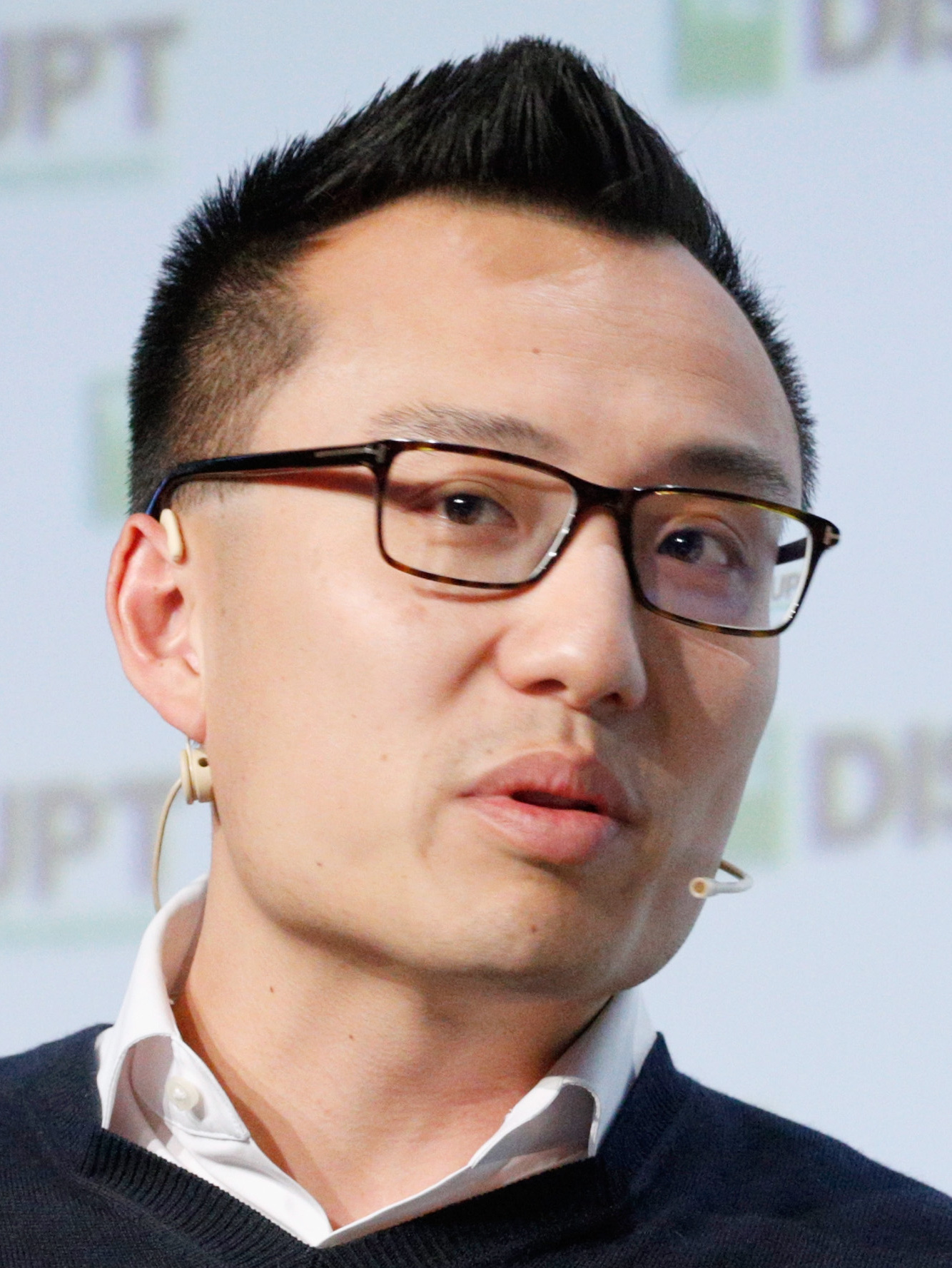
TONY XU
Co-founded DoorDash and turned it into America's #1 food delivery platform
Born in Nanjing, China. Moved to Illinois at age 5. Washed dishes in his mom's restaurant as a kid. Grew up to build DoorDash — the company that now controls 67% of US food delivery. The IPO valued it at $72 billion, making Xu one of the youngest self-made billionaires in America. The dishwasher became the guy who employs millions of delivery drivers.
Net Worth
$3 billion
Nationality
Chinese-American
Time Horizon
Long-Term
Risk Appetite
8 / 10
Net Worth Context
- · Still a billionaire — just the quiet kind at the end of the table.
CAREER & BACKGROUND
Born in 1985 in Nanjing, China. His family moved to Champaign, Illinois, when he was five.
His mother ran a Chinese restaurant. Xu spent his childhood washing dishes and watching her struggle with the business side of food service.
That experience stuck.
Went to UC Berkeley for industrial engineering, then got an MBA at Stanford. At Stanford, he and three classmates — Stanley Tang, Andy Fang, and Evan Moore — noticed that local restaurants had no way to deliver food.
They built a simple website called PaloAltoDelivery.com in 2013. That became DoorDash.
The early days were brutal. Xu personally made deliveries.
The company nearly died multiple times — in 2015, they almost ran out of money. GrubHub and Uber Eats were bigger.
Postmates had more buzz. But Xu made a counterintuitive bet: focus on suburbs, not cities.
Everyone else was fighting over Manhattan and San Francisco. DoorDash went to the places nobody cared about.
It worked. DoorDash became the #1 delivery app in the US by late 2019.
The pandemic supercharged everything. DoorDash went public in December 2020 at $102 per share.
The stock hit $257 on its first day. By 2024, DoorDash had 67% US market share.
COMPANIES & ROLES
DoorDash is the whole story. It's America's largest food delivery platform — 67% market share, millions of merchants, and operations across the US, Canada, Australia, Japan, and Germany.
Before DoorDash, Xu interned at McKinsey, eBay, and Square. He met Tony Fadell at Square and learned about building hardware/software products.
But restaurants were always his thing — growing up in his mom's restaurant gave him a visceral understanding of the problem.
INVESTING STYLE & PHILOSOPHY
Xu thinks like an operator, not a financial engineer. He's obsessed with logistics and execution.
His philosophy: pick an underserved market, out-execute everyone on the ground, and build the infrastructure that makes switching impossible. He doesn't care about being first or flashiest.
He cares about being the most reliable. That's how DoorDash won — not by having the best app, but by being the service that actually showed up.
THE PLAYBOOK
Risk Approach
Very high risk tolerance. Xu started a food delivery company when everyone said the unit economics were impossible.
He kept going when they nearly ran out of money in 2015. He bet on suburbs when the whole industry said cities were the only market.
Every major decision at DoorDash involved going against conventional wisdom and accepting the possibility of total failure.
Money Habits
Xu is low-key for a guy worth $3 billion. He still works long hours at DoorDash HQ.
He's not collecting art or buying islands. He's spoken about how growing up watching his mom work 18-hour days in her restaurant gave him a different relationship with money — it's about security and building something, not luxury.
He reportedly still orders DoorDash regularly to test the experience.
BIGGEST WIN
DoorDash's IPO. The company went public in December 2020 at a $72 billion valuation.
The stock more than doubled on its first day of trading. Xu's stake was worth over $5 billion at the peak.
More importantly, DoorDash had dethroned GrubHub and Uber Eats as the #1 delivery platform in America. The suburb strategy — which everyone mocked — turned out to be the winning move.
BIGGEST MISTAKE
The gig economy backlash. DoorDash spent $50 million supporting California's Proposition 22 in 2020, which classified drivers as independent contractors rather than employees.
It passed, but the fight was ugly and DoorDash became a symbol of gig economy exploitation. The company also faced a scandal in 2019 when the New York Times revealed that DoorDash was using customer tips to subsidize driver base pay.
Xu apologized and changed the policy, but the reputational hit was real.
FINANCIAL PHILOSOPHY
Focus on the underserved. Xu talks constantly about building for the "long tail" — the millions of small restaurants in suburbs and small towns that the big players ignored.
He believes the biggest opportunities are in markets that look boring to everyone else. Don't compete where everyone is competing.
Go where nobody is looking. Also: logistics is a moat.
If you can deliver faster and more reliably than anyone else, you win.
FAMILY & PERSONAL LIFE
Xu keeps his personal life very private. He's married and has children.
His mother still works in the restaurant industry. He's spoken about the immigrant experience as a core motivation — watching his parents sacrifice everything to build a life in America.
EDUCATION
Grew up in Champaign, Illinois. Bachelor's in industrial engineering from UC Berkeley.
MBA from Stanford Graduate School of Business. He started DoorDash during his Stanford MBA with three classmates.
BOOKS & RESOURCES
The idea of building monopolies in overlooked markets is basically the DoorDash playbook for suburbs
Xu has cited this as his go-to management book for scaling an operations-intensive business
The founder grind narrative resonates with the DoorDash story of near-death moments and perseverance
As an Amazon Associate, Netfigo earns from qualifying purchases. Book links above may be affiliate links.
QUOTES (5)
I spent my childhood watching my mom work 18-hour days in her restaurant. DoorDash exists because of those days.
In the early days, I was the delivery driver, the customer support rep, and the CEO. Sometimes all in the same hour.
The last mile is the hardest mile. Anyone can build an app. Building the logistics to get food from point A to point B in 30 minutes — that's the real product.
Everyone was fighting over Manhattan. We went to the suburbs. Turns out, that's where America actually lives.
NETFIGO SCORE
Proprietary 5-dimension investor rating
Risk Appetite
Contrarian Index
Track Record
Accessibility
Time Horizon
Related Profiles
Head-to-Head
Compare Tony Xu vs another investor.