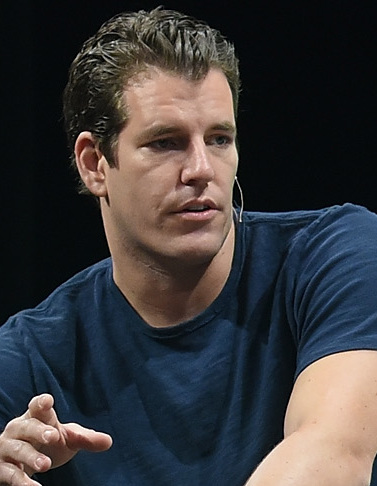
TYLER WINKLEVOSS
One half of the twin duo who sued Facebook, took the settlement in Bitcoin, and built one of America's first regulated crypto exchanges.
Tyler Winklevoss didn't invent Bitcoin, but he may have done more to legitimize it than almost anyone else. He and his twin brother Cameron took their $65 million Facebook settlement and, instead of buying yachts, bought Bitcoin — around 1% of the entire supply in circulation at the time. Then they built Gemini, a federally regulated crypto exchange, at a time when most people thought crypto was either a scam or a toy. The fact that Tyler once told regulators 'Bitcoin is the new gold' in a Senate hearing in 2013 — when Bitcoin was trading at $900 — and has never wavered since says everything about the man. He lost billions on paper when crypto crashed. He didn't sell.
Net Worth
$3 billion
Nationality
American
Time Horizon
Generational
Risk Appetite
8 / 10
Net Worth Context
- · Still a billionaire — just the quiet kind at the end of the table.
CAREER & BACKGROUND
Tyler Winklevoss grew up in Southampton, New York, the son of Howard Winklevoss, an actuary and benefits consultant who clearly passed on the gene for thinking in long time horizons. Tyler and his identical twin Cameron were elite rowers — not 'got a trophy at summer camp' rowers, but represented the United States at the 2008 Beijing Olympics rowers, finishing sixth in the men's pair event.
That's the kind of disciplined, grind-it-out background that doesn't get enough credit when people talk about where the Winklevoss story really started.
Before the Olympics, Tyler and Cameron were at Harvard, where they connected with Mark Zuckerberg to help build a social networking site called HarvardConnection — later renamed ConnectU. The rest of that story is famous: Zuckerberg launched Facebook, the twins sued, and in 2008 they settled for approximately $65 million, split roughly between cash and Facebook stock.
There's a scene in The Social Network where they're told to let it go. They didn't exactly let it go — they appealed multiple times — but they eventually did walk away with a settlement that most people in their shoes would have immediately diversified into bonds and beach houses.
Instead, in 2012, Tyler and Cameron heard about Bitcoin. They went deep.
They converted a reported $11 million of their settlement money into Bitcoin when it was trading around $10 per coin, which at the time represented roughly 1% of all Bitcoin in existence. The bet was simple: either this is worthless, or it's the hardest money ever invented.
They believed the latter.
In 2014, they tried to launch the Winklevoss Bitcoin ETF — the first Bitcoin ETF ever attempted. The SEC rejected it in 2017, then rejected it again.
They kept applying. In the meantime, they built Gemini Trust Company, a New York state-chartered trust company and federally regulated cryptocurrency exchange, in 2015.
Gemini was their answer to the chaos and opacity of early crypto exchanges — they wanted to build the exchange that institutions and regulators could actually trust. It was a contrarian bet in a different direction: instead of fighting the system, build something the system could approve of.
Gemini grew into one of the most reputable exchanges in the US, known for its regulatory compliance and security focus. It launched Gemini Dollar (GUSD), one of the first regulated stablecoins.
It acquired the NFT marketplace Nifty Gateway in 2019, right before the NFT explosion made that look very smart. Tyler serves as CEO, handling the regulatory and operational side while Cameron focuses more on brand and product.
The FTX collapse in 2022 hit the broader industry hard, and Gemini's Earn program — a partnership with Genesis Capital — froze customer withdrawals, resulting in significant legal and reputational damage. That's still playing out.
But Gemini survived when a lot of its competitors didn't.
COMPANIES & ROLES
Gemini Trust Company is the main event. Tyler co-founded it with Cameron in 2015, and it's a New York-regulated cryptocurrency exchange and custodian.
Think of it as the crypto exchange built specifically to make regulators comfortable — heavy compliance, institutional-grade custody, the whole thing. It's where serious investors who wanted regulated crypto exposure went before most of the big banks got involved.
Gemini Dollar (GUSD) is their stablecoin — a dollar-pegged token issued by Gemini and one of the first to be regulated by the New York Department of Financial Services. In a world full of stablecoins backed by mysterious reserves, GUSD was designed to be the boring, trustworthy one.
Nifty Gateway is an NFT marketplace Gemini acquired in 2019 from the Cock Foster brothers. The timing was extraordinary — NFTs exploded in 2021 and Nifty Gateway hosted some of the highest-profile drops in the space, including Beeple's early work.
That acquisition looked like a side project in 2019 and looked like genius in 2021.
The Winklevoss Capital Fund is their family office and venture vehicle, which has made early bets in crypto and blockchain infrastructure companies, including investments in Ripple, BitInstant, and other early-stage crypto plays. Tyler is also a co-author of Winklevoss IP, which covers patents related to cryptocurrency systems and processes.
And then there's the Bitcoin holding itself. The twins have never publicly confirmed selling a single coin since their original purchase.
At Bitcoin's peak near $69,000 in November 2021, their 1% stake would have been worth approximately $6 billion combined. It's not a company — it's a position.
But it's probably their most important asset.
INVESTING STYLE & PHILOSOPHY
Tyler Winklevoss is a conviction investor. He doesn't diversify out of uncertainty — he concentrates in things he believes in until he's right or completely wrong.
There's almost no in-between.
The framework is pretty simple: find an asset that the world underestimates, understand it better than anyone else, buy as much as you can when nobody wants it, and then hold through the pain. That's exactly what he did with Bitcoin.
When he and Cameron bought in 2012, Bitcoin was a niche internet experiment that most finance people thought was a Ponzi scheme or a tool for drug dealers. The Winklevosses looked at the math — fixed supply, 21 million coins ever, deflationary by design — and decided it was the hardest money ever created.
They went all in.
He's talked about Bitcoin as 'digital gold' and believes it will eventually outperform gold's entire market cap, which at the time of writing is about $13 trillion. That would put each Bitcoin above $600,000.
Whether that's right or delusional depends on who you ask, but it's a clear, reasoned thesis — not vibes.
What's interesting is that Gemini itself reflects a different kind of investing philosophy: if you believe an asset class is going to be huge, don't just own the asset — build the infrastructure around it. The Winklevosses essentially said, 'Crypto is the future, so let's build the regulated exchange that everyone will use when they get there.' It's the picks-and-shovels play on crypto.
Buy the gold, and also sell the shovels.
He's not a trader. He doesn't try to time cycles.
During the 2018 bear market, when Bitcoin dropped from $19,000 to $3,200, there's no public evidence the Winklevosses sold a single coin. During the 2022 collapse, same story.
The holding period appears to be forever, which is either visionary or the most expensive stubbornness in history, depending on where Bitcoin ends up.
THE PLAYBOOK
Risk Approach
Tyler Winklevoss has a genuinely unusual relationship with risk — not reckless, but willing to bet a life-changing sum on a single thesis and ride it to zero if necessary. When he and Cameron put $11 million into Bitcoin in 2012, that wasn't pocket change.
It was a substantial portion of their settlement. And the asset was, by any conventional measure, extraordinarily speculative.
His view on risk appears to be less about probability of loss and more about conviction in the asymmetry. Bitcoin either goes to zero or it goes to a number that makes the original stake irrelevant.
He clearly decided the downside was acceptable and the upside was enormous enough to justify the full position.
The Gemini Earn situation in 2022 exposed a different kind of risk — counterparty risk. Gemini had partnered with Genesis Capital to offer yield products to customers.
When Genesis collapsed as part of the broader FTX fallout, approximately $900 million in customer funds were frozen. Tyler and Cameron eventually sued DCG (Digital Currency Group, Genesis's parent) and spent over a year fighting to return funds.
It was expensive — legally, reputationally, and financially. That's a risk he presumably didn't fully price in.
He's talked publicly about the mental game of riding massive drawdowns. When your Bitcoin position drops 75% on paper, you have to have done the work beforehand to know why you're not selling.
He says that work was done in 2012. The conviction didn't waver.
Most people can't do that — not because they're wrong, but because the psychological pressure of watching billions evaporate on paper is genuinely extreme.
Money Habits
Tyler Winklevoss is not a conspicuous spender. For someone who has been a billionaire on paper multiple times, his lifestyle is remarkably low-key by tech billionaire standards.
He's been photographed in Soho and the West Village in New York, not in Monaco or on a 200-foot yacht.
He and Cameron reportedly spend substantially on physical training — both are still in elite athletic condition decades after their Olympic rowing careers, and maintaining that kind of fitness at a high level isn't cheap when you're running a company and have the resources to hire the best trainers and nutritionists.
Tyler lives and operates primarily out of New York, where Gemini is headquartered. He hasn't made the flashy relocation to Miami or Austin that became fashionable for crypto founders during the bull market.
He seems genuinely attached to New York and to the regulatory environment there — which tracks with his philosophy that building a regulated business in the hardest regulatory environment proves your legitimacy.
He's a surfer — seriously, not just casually. He and Cameron have talked about surfing as a form of active meditation.
It's the kind of hobby that costs almost nothing relative to his net worth and involves zero status signaling. You don't surf to impress people.
His biggest conspicuous purchase is arguably Gemini itself — the company, the lawyers, the compliance team, the regulatory battles. He's spent hundreds of millions building a business in one of the most legally complex industries in the world, in the most regulated state in the US.
That's where the money went. Not into art or sports teams or space companies.
Into making crypto legitimate.
BIGGEST WIN
Bitcoin. Full stop.
Tyler and Cameron reportedly purchased approximately 100,000 Bitcoin in 2012 for around $11 million — roughly $10 per coin — when the entire concept was still considered fringe at best. At Bitcoin's all-time high of approximately $69,000 in November 2021, their combined stake was worth somewhere in the neighborhood of $6.9 billion.
That's a 63,000% return on a single trade, on an asset that every serious financial institution in the world had dismissed.
The really impressive part isn't just the return — it's the holding. They didn't sell at $1,000.
They didn't sell at $10,000. They didn't sell at $69,000.
There's no public record of them liquidating a meaningful portion of that position at any point. They rode it from $10 to $69,000, then watched it fall back to $15,000, and stayed in.
That's not luck — or at least not just luck. That's a decade of conviction under genuinely extreme psychological pressure.
For context: at peak valuation, Tyler and Cameron's Bitcoin alone made them two of the wealthiest people in crypto. They had turned a settlement from a lawsuit about a college social network into one of the largest personal Bitcoin holdings on earth.
The lawsuit everyone told them to drop. The settlement everyone told them to diversify.
The coin everyone told them to sell. They didn't listen once.
BIGGEST MISTAKE
The Gemini Earn disaster is the honest answer. In 2021, Gemini launched an Earn program that allowed customers to lend their crypto and earn yield — up to 8% APY.
The yield came from lending through Genesis Capital, a subsidiary of Digital Currency Group run by Barry Silbert. It was pitched as a safe, institutional-grade product.
Approximately 340,000 customers put an estimated $900 million into the program.
When FTX collapsed in November 2022, the contagion spread to Genesis, which halted withdrawals. Gemini Earn froze.
Customers couldn't get their money back. Tyler and Cameron pointed the finger at DCG and Genesis.
DCG pointed it back. The legal battle turned into one of the ugliest public feuds in crypto, with Cameron writing open letters to Barry Silbert calling him out by name and accusing him of operating a Ponzi scheme.
Whatever the merits of that characterization, the outcome was real: nearly a billion dollars in customer money was stuck for over a year.
Gemini eventually reached a settlement in 2024, agreeing to return approximately $1.1 billion to affected customers. That outcome was better than many feared, but the reputational damage — for a company whose entire brand was built on being the regulated, trustworthy exchange — was enormous.
The whole proposition of Gemini was that you could trust it where you couldn't trust others. Earn became the biggest argument against that.
The lesson is about counterparty risk. You can control your own infrastructure.
You cannot fully control your partners'. Gemini took on the reputational liability of a product whose underlying risk lived at someone else's company.
That's a mistake a company with Gemini's compliance-first ethos should not have made.
FINANCIAL PHILOSOPHY
Tyler's financial worldview starts with a single premise: fiat currency is a flawed store of value, and Bitcoin is the best alternative humans have ever created. That's not a trading thesis — it's a belief about the nature of money itself.
He believes the dollar is debased by printing, that inflation is a hidden tax on savings, and that every generation that discovers this needs a better answer. For him, Bitcoin is that answer.
It's provably scarce. It's decentralized.
No government can print more of it. That's it.
That's the whole philosophy.
From that foundation, his approach to money is: earn in fiat, convert to Bitcoin, never sell. He's described holding Bitcoin as 'the greatest wealth transfer in history' — from those who don't understand it to those who do.
It's a bold claim, but he's made it consistently for over a decade, which at minimum gives him credit for not just saying it when it was convenient.
He also believes in building infrastructure, not just speculation. He's said repeatedly that regulation isn't the enemy of crypto — it's the thing that will bring institutions in at scale.
That's why Gemini was built the way it was. He spent years courting regulators, testifying before Congress, getting New York state licensure, because he genuinely believed the regulated path would win long-term.
In an industry full of 'move fast and break things' energy, Tyler was the guy telling regulators 'here are our reserve attestations, here is our compliance framework, please come audit us.'
He believes in first principles thinking. He's talked about stripping everything back to the basic question: what is money, what makes something a good store of value, and does this asset have those properties?
His answer, after that analysis, is Bitcoin. Everything else follows from there.
FAMILY & PERSONAL LIFE
Tyler is one half of one of the most famous twin pairs in modern business history. He and his identical twin brother Cameron were born on August 21, 1981, in Southampton, New York.
Their father, Howard Winklevoss, built a successful career as an actuary and academic — the kind of background that produces people who think about long-term compounding and risk in mathematical terms from childhood.
Tyler and Cameron are genuinely close in the way that only identical twins who have gone through lawsuits, Olympic competition, and running a controversial company together can be. They appear to share decision-making at Gemini in a way that's unusual for co-founders — most co-founded companies have a clear internal hierarchy even if both founders have equal titles.
The Winklevosses seem to operate as a genuine unit.
Both twins attended Phillips Exeter Academy before Harvard, which is worth noting: these are not tech bros who stumbled into money. They came from a high-achieving, academically rigorous background and chose to compete at the Olympic level simultaneously with pursuing business and legal battles.
That's a specific kind of intensity.
Tyler keeps his romantic life extremely private. Neither he nor Cameron has made a partner a significant part of their public persona.
For two people who are genuinely famous, the personal sphere is remarkably quiet. The brand is the business, not the lifestyle.
EDUCATION
Tyler attended Phillips Exeter Academy, one of the most competitive boarding schools in the US, before heading to Harvard University, where he studied economics. At Harvard, he and Cameron joined the rowing program and began working on HarvardConnection — the social network idea that would eventually become the most famous lawsuit in Silicon Valley history.
After Harvard, Tyler earned an MBA from Oxford's Said Business School, where he attended as a Skoll Scholar. The Oxford connection is more than a credential — it's where a lot of the early thinking about crypto and digital money took shape, and where the twins spent time framing Bitcoin as a macroeconomic thesis, not just a technology bet.
The education matters because it explains the approach: Tyler argues from first principles, uses economic frameworks, and testifies before congressional committees with prepared academic-style arguments. He's not winging it.
He did the homework.
BOOKS & RESOURCES
Tyler hasnt published a traditional investment book, though he and Cameron have discussed writing one multiple times
The closest thing to a primary text is the Winklevoss Bitcoin whitepaper they published in 2013, which made the case for Bitcoin as digital gold using economic and monetary theory. It was written before Bitcoin had any mainstream credibility and is worth reading in retrospect — the arguments hold up
As the most important explanation of why Bitcoin is the hardest money ever created. Ammous makes the case that scarcity is the fundamental property of good money, and that Bitcoin's fixed supply makes it superior to gold, fiat, or any other store of value. If you want to understand why Tyler has held through three 70%+ drawdowns without selling, this book is the explanation
The narrative history of Bitcoin's early years — the cypherpunks, the Silk Road, the first exchanges. Tyler and Cameron appear in it. It's the closest thing to a firsthand account of what Bitcoin looked like when they were buying it for $10 a coin, and why the decision was considered absurd at the time
Frequently cited in Tyler's circle as the book that frames the macro case for crypto: that digital technology will eventually undermine nation-state control of money and taxation. Written in 1997. Eerily prescient. It's the philosophical foundation for a lot of the Bitcoin maximalist worldview
As an Amazon Associate, Netfigo earns from qualifying purchases. Book links above may be affiliate links.
QUOTES (6)
Bitcoin is the new gold. It's a better form of gold.
We have elected to put our money and faith in a mathematical framework that is free of politics and human error.
Crypto is not going away. The technology is too compelling, too transformative.
Regulation isn't the enemy of crypto — it's the thing that will bring institutions in at scale.
We've been patient. We believe in the long game. Bitcoin is a marathon, not a sprint.
The best investment you can make is in something the world hasn't priced correctly yet.
NETFIGO SCORE
Proprietary 5-dimension investor rating
Risk Appetite
Contrarian Index
Track Record
Accessibility
Time Horizon
Related Profiles
Investors
Cameron Winklevoss
Identical twin and co-founder of Gemini — probably the closest business partnership in crypto
Changpeng Zhao
Founder of Binance — Gemini's biggest global competitor in the regulated exchange space
Michael Saylor
Fellow Bitcoin maximalist who made a similarly all-in bet on BTC and hasn't sold through multiple crashes
Head-to-Head
Compare Tyler Winklevoss vs another investor.