Compare / Mohnish Pabrai vs Bill Nygren
NETFIGO SCORE BATTLE
ORIGINAL DATARisk Appetite
Contrarian Index
Track Record
Accessibility
Time Horizon
AT A GLANCE
INVESTING STYLE
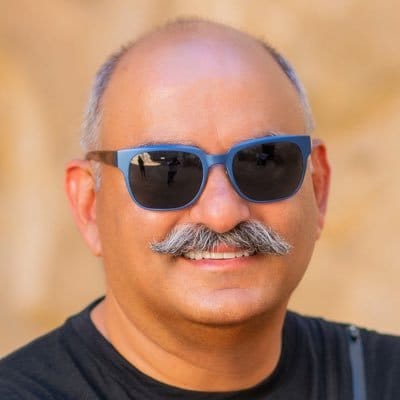
Mohnish Pabrai
Pure Buffett-Munger cloning. Mohnish doesn't pretend to be original and that's his superpower.
He coined the term "cloning" for his approach: find the best investors in the world, study their moves, understand their reasoning, and copy what makes sense. He runs a concentrated portfolio — typically 10 or fewer positions.
He looks for what he calls "Dhandho" — a Gujarati word meaning "endeavors that create wealth." The Dhandho framework is simple: heads I win big, tails I don't lose much. He wants asymmetric bets where the downside is limited but the upside is massive.
He's willing to go heavily into emerging markets, especially India and Turkey, where he sees mispriced assets that Western investors ignore. He holds for years, trades very rarely, and does almost nothing most of the time.
Bill Nygren
Classic large-cap value. Nygren buys businesses trading significantly below his estimate of intrinsic value — typically at least a 40% discount.
He focuses on companies with strong management teams, high free cash flow generation, and the ability to allocate capital intelligently. He runs concentrated portfolios (20-30 stocks) and is willing to hold positions for 3-5+ years.
He is a contrarian by default — his best ideas are usually in sectors the market hates.
FINANCIAL PHILOSOPHY
Mohnish Pabrai
Pabrai's philosophy is built on a few bedrock ideas. First: be a shameless cloner.
If someone smarter has figured it out, copy them. Second: look for low-risk, high-uncertainty situations — the market prices uncertainty as if it were risk, but they're not the same thing.
Third: invest in your circle of competence and expand it slowly. Fourth: compounding is the eighth wonder of the world, so start early and be patient.
Fifth: give back. He takes the Buffett giving pledge seriously — his Dakshana Foundation is the real deal, not a vanity project.
He genuinely believes wealth creation and philanthropy are two sides of the same coin.
Bill Nygren
Nygren believes the market is generally efficient but occasionally misprices individual businesses, especially during periods of fear or sector-wide pessimism. He thinks like a business buyer, not a stock trader — asking "what would a rational private buyer pay for this entire company?" He considers management quality and skill at investing company money as important as the financial statements.
RISK TOLERANCE
Mohnish Pabrai
Moderate to aggressive on individual positions, conservative in structure. Each position can be 10-20% of his portfolio, which is concentrated by any standard.
But he only buys when his downside analysis shows limited risk of permanent loss. He's comfortable with volatility — his fund dropped 60-70% in 2008 and he didn't panic.
He views drawdowns as temporary if the business thesis is intact. He keeps a big cash position when he can't find cheap stocks, sometimes 30-40% in cash.
He's also willing to invest heavily in countries most American investors won't touch.
Bill Nygren
Moderate. Nygren runs concentrated portfolios which adds stock-specific risk, but he focuses on large-cap, established businesses with strong balance sheets.
He is not swinging at biotech startups or crypto. The risk is being early and looking wrong for extended periods while waiting for the market to recognize value.
THE PLAYBOOK
Mohnish Pabrai
Mohnish lives simply relative to his wealth. He drives a used car, lives modestly, and has said he spends very little time worrying about material possessions.
He reads voraciously — 3-4 hours a day, mostly annual reports, business biographies, and investor letters. He takes a no-meeting approach to his day: he has no office, no analysts, no team.
He invests alone from his home in Irvine, California. He checks his portfolio rarely and makes maybe 2-3 investment decisions per year.
The rest of the time he reads, thinks, and works on Dakshana. He's also a creature of habit — he follows a similar daily routine year-round.
Bill Nygren
Low-profile lifestyle. Based in Chicago.
Nygren does not seek media attention and rarely appears on financial TV. He writes detailed quarterly commentaries for Oakmark shareholders that are some of the best free investing education available.
He lets his long-term performance record speak for itself.
BIGGEST WIN
Mohnish Pabrai
His bet on Fiat Chrysler (now Stellantis) starting around 2012 was a masterclass. He bought the stock when Sergio Marchionne was restructuring the company and the market was deeply skeptical.
The stock roughly tripled. He also made a killing on Rain Industries, an Indian chemical company that most Western investors had never heard of.
He bought it cheap, the company's fundamentals improved dramatically, and the stock went up several hundred percent. These wins perfectly illustrate his method: find overlooked companies in overlooked markets and let the market catch up.
Bill Nygren
His consistency over nearly three decades. While many value managers have stumbled during the growth-dominated 2010s, Nygren adapted his approach to include "modern value" — companies like Alphabet and Meta that trade at low multiples relative to their growth rates.
His willingness to evolve his definition of value without abandoning the discipline has kept Oakmark relevant.
BIGGEST MISTAKE
Mohnish Pabrai
The 2008 financial crisis was brutal for Pabrai. His funds lost 60-70% of their value.
He was heavily concentrated in financial stocks and housing-related plays going into the crash. He's been completely transparent about this — he calls it a humbling experience that made him a better investor.
He also admits he's made mistakes holding some positions too long after the thesis broke, particularly in some emerging market bets. But his willingness to openly discuss failures is one of the things that makes him credible.
Bill Nygren
Holding financial stocks through the 2008 financial crisis. Oakmark Fund was down significantly in 2008 as bank and insurance stocks cratered.
While the long-term recovery proved him right on many of those holdings, the drawdown was painful for investors who redeemed at the bottom.
CAREER HIGHLIGHTS
Mohnish Pabrai
Mohnish Pabrai was born in Mumbai in 1964 and moved to the US for college. He started his career as an IT consultant and founded TransTech Inc., an IT consulting firm, in 1991 with $100,000 in savings and $70,000 on credit cards.
He grew it to $20 million in revenue and sold it. In 1999, he read a book about Buffett and had a revelation: investing was simpler and more profitable than running a business.
He started Pabrai Investment Funds with $1 million — $100,000 of his own money and the rest from friends and family. By 2007, his funds had compounded at over 28% annually.
The 2008 crash hit him hard — his funds dropped 60-70%. But he recovered and kept compounding.
His total assets under management have exceeded $1 billion. In 2007, he and Guy Spier famously paid $650,100 at a charity auction to have lunch with Warren Buffett.
He's also a major philanthropist — his Dakshana Foundation has helped thousands of underprivileged Indian students get into top engineering and medical schools.
Bill Nygren
Joined Harris Associates (parent of Oakmark Funds) in 1983. Became lead portfolio manager of the Oakmark Fund in 2000.
Lead manager of Oakmark Select Fund since 1996 and Oakmark Global Select since 2006. Oakmark Select Fund has returned over 11% annually since 1996 inception.
Manages over $20 billion across Oakmark strategies. Named Morningstar Domestic Stock Fund Manager of the Year in 2001.
Known for buying out-of-favor large-cap value stocks and holding them for years. Has consistently argued that the market overreacts to short-term problems and undervalues franchises with durable competitive advantages.
COMPANIES & ROLES
Mohnish Pabrai
Pabrai Investment Funds — his hedge fund modeled directly after Buffett's original partnership structure. No management fee, just a performance fee above a hurdle rate.
TransTech Inc. — his first company, an IT consulting firm he built from scratch and sold.
Dakshana Foundation — his philanthropy arm that coaches underprivileged Indian students for IIT and medical school entrance exams. Over 15,000 students have gotten into top schools through the program.
Bill Nygren
Oakmark Funds (lead portfolio manager), Harris Associates (partner)
EDUCATION
Mohnish Pabrai
Pabrai earned a bachelor's degree in electrical engineering from Clemson University in South Carolina. He's entirely self-taught as an investor — no MBA, no finance degree, no Wall Street training.
Like Buffett, he learned investing from books, primarily The Intelligent Investor and Buffett's shareholder letters. He considers his engineering background an advantage because it taught him systematic thinking and first-principles analysis.
Bill Nygren
CFA charterholder. MBA from the University of Wisconsin-Madison.
Undergraduate degree from the University of Minnesota. Has spent his entire career at Harris Associates — over 40 years at one firm.
BOOKS & RESOURCES
Mohnish Pabrai
His own book, a must-read that explains his framework for finding low-risk, high-return investments using the Gujarati concept of Dhandho
The foundation, as it is for virtually all value investors in this lineage
Pabrai considers Munger's mental models essential to good investing
For understanding qualitative business analysis beyond just the numbers
As an Amazon Associate, Netfigo earns from qualifying purchases. Book links above may be affiliate links.
Bill Nygren
Nygren's own quarterly Oakmark commentaries are worth reading. He frequently cites Warren Buffett and Charlie Munger as influences
As an Amazon Associate, Netfigo earns from qualifying purchases. Book links above may be affiliate links.