
NETFIGO SCORE BATTLE
ORIGINAL DATARisk Appetite
Contrarian Index
Track Record
Accessibility
Time Horizon
AT A GLANCE
INVESTING STYLE
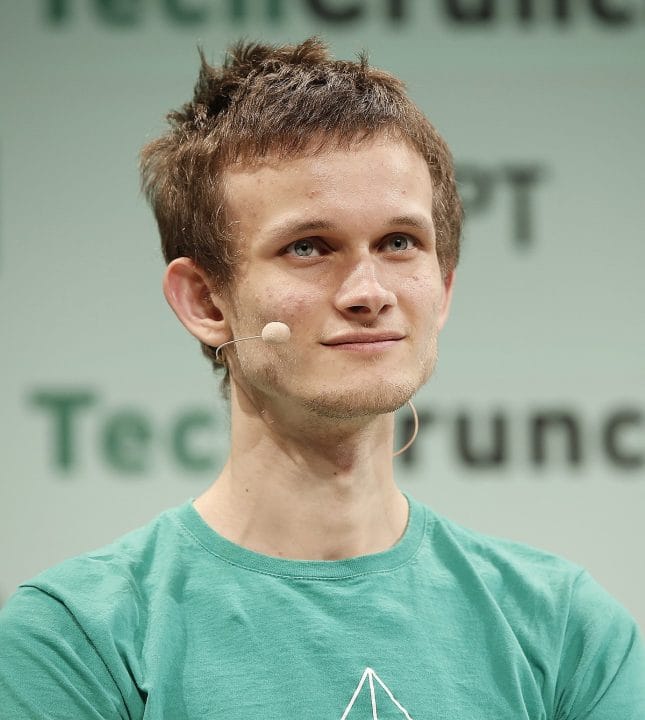
Vitalik Buterin
Buterin''s personal investment approach is deliberately simple and aligned with his own creation. He holds primarily ETH and has been transparent about not trading actively or making complex financial moves.
He donated a substantial portion of his meme coin holdings — including a SHIB donation to the India Covid-Crypto Relief Fund that was worth about $1 billion on paper, though the fund realised closer to $400 million once it actually sold — when developers sent him tokens to increase their perceived legitimacy. He has said he does not feel entitled to wealth beyond what he needs to live and fund work he cares about.
Farnoosh Torabi
Torabi is a practical, diversified, automation-focused investor. She believes in maxing out tax-advantaged accounts first (401k, Roth IRA), investing in low-cost index funds, and automating everything so investing isn't a decision you make each month.
She's not a stock picker and doesn't pretend to be. Her approach: the market will go up over time, so get in early, stay in, keep costs low, and don't try to time anything.
She's in the Bogle camp philosophically.
What makes her perspective different is her focus on the earning side. Most personal finance advice is about spending less and saving more.
Torabi argues that growing your income — through negotiation, side hustles, career moves — is a more powerful lever than cutting expenses. You can only cut so much.
There's no ceiling on what you can earn.
FINANCIAL PHILOSOPHY
Vitalik Buterin
Buterin believes that decentralized systems — where no single entity can control, censor, or inflate — create better outcomes for society than centralized ones. His philosophy extends beyond money to governance, identity, and social coordination.
He has written extensively about "credible neutrality" — the idea that a system is most valuable when no participant can manipulate it for their own benefit. He is genuinely trying to build infrastructure for a more fair and open world, not just technology for technology''s sake.
Farnoosh Torabi
Torabi's philosophy has three pillars. First: earn more.
She believes income growth is the most underrated financial strategy. Cutting lattes saves you $5 a day.
A salary negotiation can be worth $10,000 a year — compounding forever.
Second: automate and simplify. She doesn't want people thinking about money every day.
Set up the systems — automatic savings, automatic investing, automatic bill pay — and then spend your mental energy on earning more and living well.
Third: talk about money openly. She thinks financial secrecy — between partners, between friends, between parents and kids — is the biggest barrier to financial health.
Her podcast is built on this idea: hearing how real people handle money normalizes the conversation and makes everyone smarter.
Her most resonant principle: financial independence isn't about being rich. It's about having enough that no person, no job, and no situation has power over you.
RISK TOLERANCE
Vitalik Buterin
Buterin''s financial risk is concentrated entirely in the crypto space — primarily ETH. He has experienced 80%+ drawdowns in ETH price multiple times and continued working regardless.
He is not a risk manager in the portfolio sense. He is a technologist whose compensation happens to be denominated in a volatile asset.
His approach to personal finances appears to be minimal engagement rather than active management.
Farnoosh Torabi
Moderate. She believes in taking appropriate risk for your age and goals — more aggressive when young, more conservative as you approach needing the money.
She's not afraid of the stock market but doesn't advocate for concentrated bets or speculative investments.
She stresses the importance of an emergency fund and having "go-to-hell money" — enough cash saved that you can walk away from a bad job, a bad relationship, or a bad situation without financial panic. She frames this as a safety net and a power tool.
THE PLAYBOOK
Vitalik Buterin
Buterin lives extremely modestly for someone with a net worth exceeding $1 billion. He has stated his annual personal spending is approximately $100,000.
He rents rather than owns. He does not own a car.
He travels extensively but simply. He donated the majority of the meme coins he received to charity rather than selling them.
He has stated publicly that he does not want to become a billionaire philanthropist in the traditional sense — he wants to stay involved in technical work.
Farnoosh Torabi
Torabi is thoughtful about spending. She talks about "spending audits" — periodically reviewing every subscription, recurring charge, and discretionary spend to make sure it still aligns with what you actually value.
She and her husband split finances in a way she's been open about: joint accounts for shared expenses (mortgage, kids, household), separate accounts for individual spending. No permission needed for personal purchases under a certain threshold.
She frames this as both financial and relationship advice.
She lives in the New York area with her family. She's not flashy about spending but she's also not a frugality absolutist — she believes in spending on things that bring genuine joy while cutting things that don't.
BIGGEST WIN
Vitalik Buterin
Co-founding Ethereum is the win, full stop. The network processes trillions of dollars in transaction value annually.
It enabled DeFi — decentralized finance, a parallel financial system built on smart contracts. It enabled NFTs — however one feels about them.
It enabled DAOs. It is the infrastructure layer on which most of the innovative blockchain applications since 2015 have been built.
Its market cap has exceeded $500 billion. He created this at 20.
That is the win.
Farnoosh Torabi
The So Money podcast is the biggest professional win. Over 1,500 episodes, consistently in the top personal finance charts, and it's given her a platform that reaches millions.
The podcast opened doors to corporate speaking, books, and media opportunities.
"When She Makes More" was a cultural win — it started a national conversation about breadwinner women and money dynamics in relationships. She was on every major talk show discussing it, and it positioned her as someone willing to tackle the uncomfortable money topics that other advisors avoid.
BIGGEST MISTAKE
Vitalik Buterin
The DAO hack of 2016 is the most consequential crisis Buterin has navigated. The DAO — a decentralized autonomous organization built on Ethereum — was hacked for $60 million in ETH shortly after launch.
Buterin helped lead the decision to hard fork the Ethereum blockchain to reverse the hack, which was philosophically controversial: the entire point of "code is law" in blockchain is that transactions are irreversible. The fork split the community, creating Ethereum Classic as a separate chain.
It was the right pragmatic decision and the wrong philosophical one — a tension Buterin has never fully resolved.
Farnoosh Torabi
Torabi has been honest about her biggest regret: not negotiating her salary aggressively enough early in her career. As a journalist, she accepted what was offered because she felt grateful to have the job.
She later calculated how much that cost her over a decade of compounding raises and says the number is "depressing."
She uses this story constantly in her teaching — it's her most practical lesson. One conversation about your salary in your 20s can be worth hundreds of thousands of dollars over a career.
She now coaches women specifically on salary negotiation because she knows the cost of not doing it.
CAREER HIGHLIGHTS
Vitalik Buterin
Buterin was born in Kolomna, Russia, in 1994 and moved to Canada with his family at age six. His father was a computer scientist, and Buterin showed early mathematical gifts.
He discovered Bitcoin at 17 through his father and became obsessed — writing for Bitcoin Magazine starting in 2011 as a teenager, developing a reputation as one of the most thoughtful analysts of the nascent blockchain space.
He proposed Ethereum in a 2013 whitepaper, arguing that Bitcoin''s scripting language was too limited and that a more general-purpose blockchain — one that could run arbitrary programs called smart contracts — would unlock far more value. He was 19.
Bitcoin''s developers declined to implement his ideas, so he built Ethereum separately. He received a Thiel Fellowship in 2014 and dropped out of University of Waterloo to launch the project.
Ethereum launched in 2015. It became the second-largest cryptocurrency by market cap and the foundation of DeFi, NFTs, and most blockchain applications built since.
Farnoosh Torabi
Farnoosh Torabi was born in Worcester, Massachusetts, to Iranian immigrant parents who came to the US with almost nothing. Her parents worked multiple jobs — her mother cleaned houses, her father worked in tech.
Money was tight but education was non-negotiable. She grew up watching her parents navigate the American financial system without a manual.
She went to Penn State, then got a master's from Columbia University's Graduate School of Journalism. She started her career as a financial journalist, writing for Money Magazine, TheStreet.com, and the New York Times.
She covered personal finance from the journalism side — not as an advisor, but as a reporter who could translate complicated money topics into stories people actually wanted to read.
Her first book, "You're So Money," came out in 2008 — right when the financial crisis was making everyone panic about money. The timing was either terrible or perfect depending on how you look at it.
The book was aimed at twenty-somethings trying to be financially savvy without giving up their lives.
Her breakout book was "When She Makes More" in 2014. It tackled the taboo topic of relationships where the woman is the primary breadwinner — the financial, emotional, and relationship dynamics that nobody in personal finance was talking about.
It got massive press attention because it said the quiet part out loud: traditional gender expectations around money are still wrecking relationships, even among progressive couples.
In 2015, she launched the "So Money" podcast. It's now past 1,500 episodes, featuring interviews with everyone from billionaires to regular people sharing their financial wins and disasters.
It consistently ranks in the top personal finance podcasts. The show's strength is range — one episode might feature a CEO, the next a single mom who paid off $100,000 in debt.
COMPANIES & ROLES
Vitalik Buterin
Ethereum Foundation is the non-profit organization that funds core Ethereum development. Buterin is the most prominent figure associated with it but is not its CEO — he functions more as its chief architect and public intellectual.
He has no formal ownership of Ethereum the network. It is decentralized.
He holds Ethereum tokens (ETH) that he has accumulated since the genesis block.
He has also written extensively for the Ethereum blog and his personal blog (vitalik.ca), which covers cryptography, mechanism design, social coordination, and political philosophy. His blog posts are read by thousands of researchers and developers.
He serves on the boards of several organizations in the blockchain space.
Farnoosh Torabi
So Money Media is her primary business — the podcast, newsletter, and associated content. The podcast has featured over 1,500 guests and has a dedicated audience.
She's a contributor to CNET and has written for or appeared on virtually every major financial media outlet — CNBC, CNN, NBC, Forbes, O Magazine, and more. Corporate speaking is a significant revenue stream.
She doesn't manage money or run a fund. Her business model is content, education, and corporate partnerships.
She's done branded content with major financial companies — always disclosed, and she's careful about maintaining editorial independence.
EDUCATION
Vitalik Buterin
University of Waterloo, Computer Science — dropped out in 2014 after receiving a Thiel Fellowship. He has said the fellowship gave him the financial runway to work on Ethereum full time at a moment when the project would otherwise have been impossible to pursue.
Farnoosh Torabi
Torabi has a bachelor's degree from Penn State and a master's in journalism from Columbia University. The journalism background is her edge — she approaches personal finance as a storyteller and investigator, not as a financial advisor.
She can take complex topics and make them compelling, which is why her podcast works where others don't.
BOOKS & RESOURCES
Vitalik Buterin
Buterins own writing is the essential primary source
His blog at vitalik.ca covers cryptography, game theory, mechanism design, and political philosophy with a depth and clarity that most academic papers do not match. His Ethereum whitepaper (2013) is the founding document of the smart contract era
Provides the investment framework for understanding Ethereum as an asset rather than just a technology
As an Amazon Associate, Netfigo earns from qualifying purchases. Book links above may be affiliate links.
Farnoosh Torabi
For people who want a practical, no-BS money system
A critical look at the personal finance industry itself
As an Amazon Associate, Netfigo earns from qualifying purchases. Book links above may be affiliate links.