
NETFIGO SCORE BATTLE
ORIGINAL DATARisk Appetite
Contrarian Index
Track Record
Accessibility
Time Horizon
AT A GLANCE
INVESTING STYLE
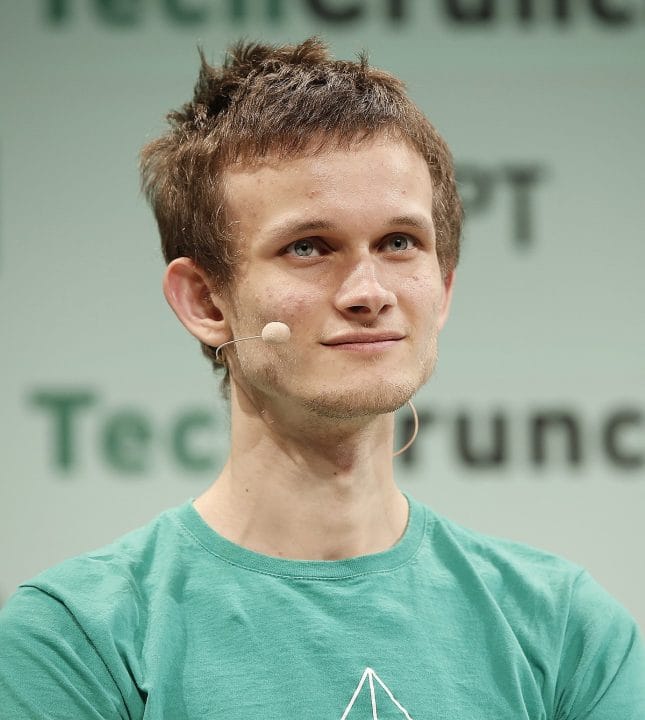
Vitalik Buterin
Buterin''s personal investment approach is deliberately simple and aligned with his own creation. He holds primarily ETH and has been transparent about not trading actively or making complex financial moves.
He donated a substantial portion of his meme coin holdings — including a SHIB donation to the India Covid-Crypto Relief Fund that was worth about $1 billion on paper, though the fund realised closer to $400 million once it actually sold — when developers sent him tokens to increase their perceived legitimacy. He has said he does not feel entitled to wealth beyond what he needs to live and fund work he cares about.
Stig Brodersen
Pure value investing in the Buffett-Graham tradition. Stig looks for companies trading below intrinsic value with strong competitive advantages, honest management, and a margin of safety.
He takes a concentrated approach — he'd rather own 10-15 well-understood positions than 50 diversified ones. He does deep fundamental analysis: reading annual reports, understanding unit economics, and calculating intrinsic value using discounted cash flow models.
He has an international perspective that most American value investors lack — he actively looks at companies in Europe, Asia, and emerging markets. He believes international markets are less efficiently priced than US markets, creating more opportunities for value investors.
FINANCIAL PHILOSOPHY
Vitalik Buterin
Buterin believes that decentralized systems — where no single entity can control, censor, or inflate — create better outcomes for society than centralized ones. His philosophy extends beyond money to governance, identity, and social coordination.
He has written extensively about "credible neutrality" — the idea that a system is most valuable when no participant can manipulate it for their own benefit. He is genuinely trying to build infrastructure for a more fair and open world, not just technology for technology''s sake.
Stig Brodersen
Stig believes that investing should be approached with intellectual humility and continuous learning. His core philosophy: understand what you own, buy it at a price that gives you a margin of safety, and be patient.
He thinks most investors trade too frequently and react too emotionally to short-term market movements. He values international diversification more than most American investors, arguing that US-centric portfolios miss significant opportunities.
He also believes strongly in the democratization of financial education — TIP was built on the principle that world-class investing knowledge should be free.
RISK TOLERANCE
Vitalik Buterin
Buterin''s financial risk is concentrated entirely in the crypto space — primarily ETH. He has experienced 80%+ drawdowns in ETH price multiple times and continued working regardless.
He is not a risk manager in the portfolio sense. He is a technologist whose compensation happens to be denominated in a volatile asset.
His approach to personal finances appears to be minimal engagement rather than active management.
Stig Brodersen
Moderate. Stig is concentrated but disciplined.
He won't buy something unless his downside analysis shows limited risk of permanent capital loss. He's willing to hold cash when he can't find cheap stocks — sometimes 20-30% of his portfolio.
He's less speculative than Preston and has stayed closer to the original value investing framework. He manages risk through deep understanding of each position rather than through broad diversification.
THE PLAYBOOK
Vitalik Buterin
Buterin lives extremely modestly for someone with a net worth exceeding $1 billion. He has stated his annual personal spending is approximately $100,000.
He rents rather than owns. He does not own a car.
He travels extensively but simply. He donated the majority of the meme coins he received to charity rather than selling them.
He has stated publicly that he does not want to become a billionaire philanthropist in the traditional sense — he wants to stay involved in technical work.
Stig Brodersen
Stig is methodical and disciplined. He reads extensively — annual reports, investing books, economic history, and academic research.
He maintains a structured process for evaluating potential investments and doesn't deviate from it based on market emotions. He lives in Denmark and maintains a lower public profile than many financial media personalities.
He reinvests podcast income into both his business and his personal investment portfolio.
BIGGEST WIN
Vitalik Buterin
Co-founding Ethereum is the win, full stop. The network processes trillions of dollars in transaction value annually.
It enabled DeFi — decentralized finance, a parallel financial system built on smart contracts. It enabled NFTs — however one feels about them.
It enabled DAOs. It is the infrastructure layer on which most of the innovative blockchain applications since 2015 have been built.
Its market cap has exceeded $500 billion. He created this at 20.
That is the win.
Stig Brodersen
Co-building The Investor's Podcast Network into a global phenomenon. The show's reach — 100 million+ downloads — means Stig has directly contributed to the financial education of millions of people across dozens of countries.
His interviews with top investors have created a free archive of investing wisdom that rivals any MBA curriculum. On a personal investment level, his consistent application of value principles across international markets has produced solid long-term returns.
BIGGEST MISTAKE
Vitalik Buterin
The DAO hack of 2016 is the most consequential crisis Buterin has navigated. The DAO — a decentralized autonomous organization built on Ethereum — was hacked for $60 million in ETH shortly after launch.
Buterin helped lead the decision to hard fork the Ethereum blockchain to reverse the hack, which was philosophically controversial: the entire point of "code is law" in blockchain is that transactions are irreversible. The fork split the community, creating Ethereum Classic as a separate chain.
It was the right pragmatic decision and the wrong philosophical one — a tension Buterin has never fully resolved.
Stig Brodersen
Stig has been open about early investment mistakes where he bought companies that were cheap for a reason — value traps where the low price reflected genuine business deterioration rather than market mispricing. He's talked about the importance of distinguishing between "cheap" and "good value," which is one of the hardest lessons in value investing.
He's also acknowledged that running a media business while managing a personal portfolio creates time allocation challenges.
CAREER HIGHLIGHTS
Vitalik Buterin
Buterin was born in Kolomna, Russia, in 1994 and moved to Canada with his family at age six. His father was a computer scientist, and Buterin showed early mathematical gifts.
He discovered Bitcoin at 17 through his father and became obsessed — writing for Bitcoin Magazine starting in 2011 as a teenager, developing a reputation as one of the most thoughtful analysts of the nascent blockchain space.
He proposed Ethereum in a 2013 whitepaper, arguing that Bitcoin''s scripting language was too limited and that a more general-purpose blockchain — one that could run arbitrary programs called smart contracts — would unlock far more value. He was 19.
Bitcoin''s developers declined to implement his ideas, so he built Ethereum separately. He received a Thiel Fellowship in 2014 and dropped out of University of Waterloo to launch the project.
Ethereum launched in 2015. It became the second-largest cryptocurrency by market cap and the foundation of DeFi, NFTs, and most blockchain applications built since.
Stig Brodersen
Stig Brodersen grew up in Denmark and studied business and finance. He earned his MBA and worked in corporate finance before deciding his real passion was investing education.
He connected with Preston Pysh online through their shared love of Warren Buffett and Benjamin Graham, and they launched The Investor's Podcast in 2014. The concept was brilliantly simple: read the classic investing books that every successful investor recommends, break them down chapter by chapter in plain language, and give them away for free as a podcast.
It worked beyond anyone's expectations. The show grew into The Investor's Podcast Network, now hosting multiple shows including We Study Billionaires, Millennial Investing, and Bitcoin Fundamentals.
The network has surpassed 100 million total downloads. When Preston shifted his focus to Bitcoin, Stig took the lead on We Study Billionaires, conducting in-depth interviews with legendary investors.
He's interviewed Howard Marks, Mohnish Pabrai, Guy Spier, Tobias Carlisle, and dozens of other investing heavyweights. He also co-authored books with Preston on Buffett's investment methods.
COMPANIES & ROLES
Vitalik Buterin
Ethereum Foundation is the non-profit organization that funds core Ethereum development. Buterin is the most prominent figure associated with it but is not its CEO — he functions more as its chief architect and public intellectual.
He has no formal ownership of Ethereum the network. It is decentralized.
He holds Ethereum tokens (ETH) that he has accumulated since the genesis block.
He has also written extensively for the Ethereum blog and his personal blog (vitalik.ca), which covers cryptography, mechanism design, social coordination, and political philosophy. His blog posts are read by thousands of researchers and developers.
He serves on the boards of several organizations in the blockchain space.
Stig Brodersen
The Investor's Podcast Network — co-founded with Preston Pysh, one of the largest financial media networks in the world. We Study Billionaires — the flagship podcast, now primarily hosted by Stig.
He co-authored books on Warren Buffett's investment frameworks with Preston Pysh. He also runs his own investment portfolio following value investing principles.
EDUCATION
Vitalik Buterin
University of Waterloo, Computer Science — dropped out in 2014 after receiving a Thiel Fellowship. He has said the fellowship gave him the financial runway to work on Ethereum full time at a moment when the project would otherwise have been impossible to pursue.
Stig Brodersen
Stig earned an MBA with a focus on finance and business. His academic background in business gives him a structured analytical framework for evaluating companies.
He's also self-educated through hundreds of investing books that he's read and discussed on the podcast — the show itself has been his ongoing graduate education in investing.
BOOKS & RESOURCES
Vitalik Buterin
Buterins own writing is the essential primary source
His blog at vitalik.ca covers cryptography, game theory, mechanism design, and political philosophy with a depth and clarity that most academic papers do not match. His Ethereum whitepaper (2013) is the founding document of the smart contract era
Provides the investment framework for understanding Ethereum as an asset rather than just a technology
As an Amazon Associate, Netfigo earns from qualifying purchases. Book links above may be affiliate links.
Stig Brodersen
The foundation of Stig's entire investing approach
The more technical deep-dive that Stig considers essential for serious investors
A book about unconventional CEOs that Stig frequently recommends
As an Amazon Associate, Netfigo earns from qualifying purchases. Book links above may be affiliate links.