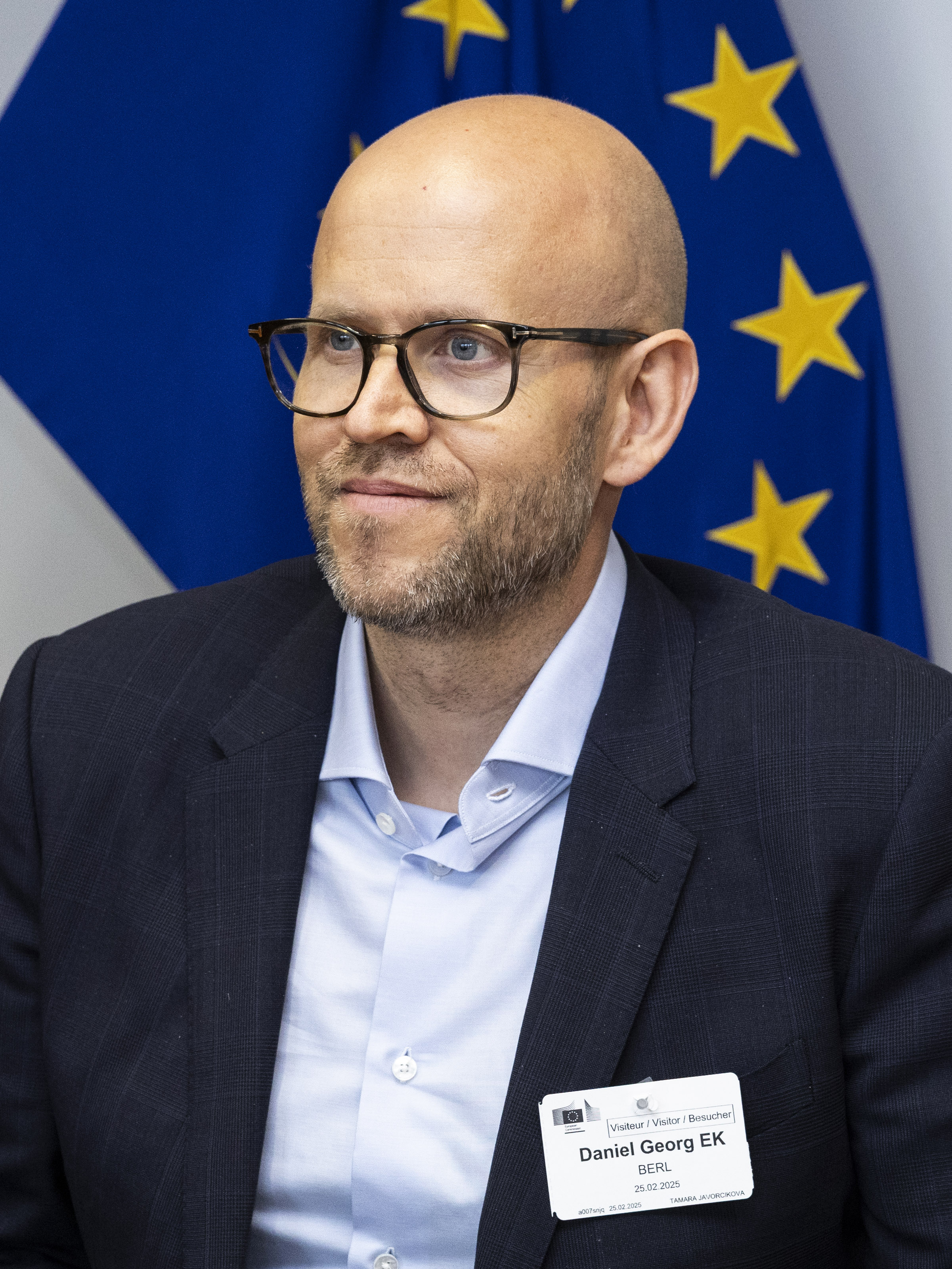
DANIEL EK
Spotify founder — convinced the music industry to stop suing its customers and start streaming instead
Daniel Ek solved music piracy not by fighting it, but by making a legal alternative so good that stealing music felt like too much work. Spotify now has 640 million users and finally turned a profit in 2024 — only 18 years after founding. The man spent nearly two decades convincing record labels, artists, Wall Street, and the public that streaming would work, all while burning cash at industrial scale. Stubbornness has rarely been so spectacularly vindicated.
Net Worth
$7 billion
Nationality
Swedish
Time Horizon
Long-Term
Risk Appetite
8 / 10
Net Worth Context
- · Still a billionaire — just the quiet kind at the end of the table.
CAREER & BACKGROUND
Born in 1983 in Stockholm, Sweden. Was coding by age 8 and running a web development business from his bedroom as a teenager — reportedly had 25 employees while still in high school.
Co-founded Advertigo (ad company, sold to TradeDoubler). Became a millionaire by 23 from various tech ventures.
Founded Spotify in 2006 with Martin Lorentzon when he was 23. Spent two years negotiating licenses with every major record label before launching.
Spotify launched in Sweden in 2008, expanded across Europe, and hit the US in 2011. Went public via direct listing on the NYSE in 2018 at a $30 billion valuation.
Reached 640 million monthly active users by 2024. Spotify finally posted its first sustained operating profit in Q4 2023, nearly 18 years after founding.
COMPANIES & ROLES
INVESTING STYLE & PHILOSOPHY
As a personal investor through Prima Materia, Ek focuses on long-term bets in areas he's personally passionate about: healthcare, longevity, defense technology, and human performance. He's not a spray-and-pray VC — he makes concentrated bets in companies he deeply understands.
His investing style mirrors his Spotify approach: find an industry that's broken, back a technology that can fix it, and be willing to wait a very long time for the payoff.
THE PLAYBOOK
Risk Approach
Very high. Ek took on the entire music industry when piracy was rampant and nobody believed streaming could work.
He spent years in unprofitable growth, burning cash while Wall Street questioned whether Spotify would ever make money. He chose a direct listing instead of a traditional IPO — unusual and risky.
He publicly challenged Apple's App Store practices, risking retaliation from the biggest company on Earth. His entire career is a series of "this is crazy" bets that took years to validate.
Money Habits
Ek is a health and longevity obsessive. He follows strict routines — cold plunges, meditation, structured exercise, and optimized sleep.
He's invested millions in longevity research through Prima Materia. He keeps a relatively low profile for a tech billionaire — no yacht, no flashy cars.
He still lives in Stockholm. He tried to buy Arsenal Football Club because he's a lifelong fan, not as a vanity project.
He works intensely but blocks significant personal time, having talked publicly about burning out in Spotify's early years.
BIGGEST WIN
Convincing the music industry to adopt streaming. In 2006, the music business was dying — piracy had gutted revenues by 40%.
Record labels were suing teenagers. Ek's pitch was simple: "You can't beat piracy by fighting it.
You beat it by offering something better." He spent two years in rooms with hostile executives, negotiating licensing deals that the labels thought would cannibalize CD sales. He was right — global music revenue has more than doubled since Spotify launched, and streaming now accounts for 67% of all music industry revenue.
He literally saved the music business.
BIGGEST MISTAKE
The Joe Rogan deal's political fallout. Spotify paid $200 million for exclusive rights to "The Joe Rogan Experience" in 2020.
When Rogan hosted guests spreading COVID misinformation, artists including Neil Young and Joni Mitchell pulled their music from Spotify. Ek was caught between free speech and artist relationships.
The controversy cost Spotify users, advertiser confidence, and Ek personally had to navigate a political minefield that had nothing to do with music technology. The exclusivity strategy was later abandoned.
FINANCIAL PHILOSOPHY
Ek believes technology should make expensive things cheap and scarce things abundant. He's said "the biggest risk is not taking any risk." He views entrepreneurship as a long game — he was willing to lose money for 18 years because he believed the model would eventually work at scale.
He's also a vocal proponent of the European tech ecosystem and frequently argues that Europe can compete with Silicon Valley if founders think bigger.
FAMILY & PERSONAL LIFE
Married to Sofia Levander. They have two daughters.
Ek is known for being a devoted family man and has spoken about structuring his schedule to prioritize time with his children.
EDUCATION
Dropped out of KTH Royal Institute of Technology in Stockholm after a few weeks. Entirely self-taught as a programmer and entrepreneur.
Started coding at age 8 and was running a profitable web business before finishing high school.
BOOKS & RESOURCES
As an Amazon Associate, Netfigo earns from qualifying purchases. Book links above may be affiliate links.
QUOTES (6)
I was coding at 8, running a web business at 14, and had 25 employees in high school. My parents had no idea what I was doing. Neither did I, honestly. I just knew I wanted to build things.
You can't beat piracy by fighting it. You beat it by offering something better. We made it easier to listen legally than to steal. That was the whole strategy.
Spotify lost money for 18 years. Eighteen. Every year people said the model was broken. We knew it wasn't — it just needed scale. Patience is the most underrated startup strategy.
Record labels told me streaming would destroy the music industry. Global music revenue has more than doubled since Spotify launched. We didn't destroy the industry. We saved it from piracy.
The biggest risk is not taking any risk. In a world that's changing quickly, the only strategy that is guaranteed to fail is not taking risks.
NETFIGO SCORE
Proprietary 5-dimension investor rating
Risk Appetite
Contrarian Index
Track Record
Accessibility
Time Horizon
Related Profiles
Investors
Companies
Head-to-Head
Compare Daniel Ek vs another investor.