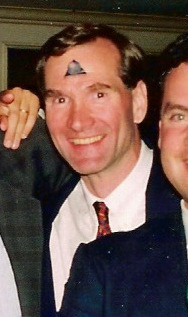
DAVID SWENSEN
Turned Yale's endowment into the most successful institutional portfolio in history
Took over Yale's endowment in 1985 with $1.3 billion and grew it to $42.3 billion over 36 years — a 13.7% annual return that beat virtually every pension fund, endowment, and most hedge funds. He invented the "endowment model" that shifted institutional investing from stocks and bonds into private equity, venture capital, and real assets. Then he wrote a book telling regular people not to try to copy him. The most successful institutional investor of all time was also the most honest.
Net Worth
$100 million (at death)
Nationality
American
Time Horizon
Generational
Risk Appetite
7 / 10
CAREER & BACKGROUND
Born in 1954 in River Falls, Wisconsin. PhD in economics from Yale under James Tobin, a Nobel laureate.
Then worked at Salomon Brothers on Wall Street where he helped pioneer interest rate swaps.
Yale recruited him back in 1985 to run the endowment. He was 31 years old.
He took a massive pay cut — Wall Street would have paid him ten times what Yale offered. He stayed for 36 years because he believed in the mission.
Under his management, Yale's endowment grew from $1.3 billion to $42.3 billion. The returns weren't just good — they were historic.
He generated $24 billion more than a simple stock/bond portfolio would have produced. That's $24 billion in real money that went to financial aid, professorships, and research.
COMPANIES & ROLES
Yale Investments Office was his entire career. He ran it from 1985 until his death from cancer in 2021.
During that time, he trained a generation of institutional investors — many of his former analysts went on to run endowments at MIT, Stanford, Princeton, and other major universities.
He didn't start a hedge fund. He didn't join private equity.
He stayed at Yale for a fraction of what he could have earned on Wall Street. His former colleagues estimate he left hundreds of millions of dollars on the table.
He also served on the boards of several organizations and helped establish best practices for endowment management that became the global standard.
INVESTING STYLE & PHILOSOPHY
Swensen pioneered the "endowment model" — also called the "Yale Model." The idea: institutional investors with long time horizons should allocate heavily to alternative assets like private equity, venture capital, real estate, timber, and hedge funds, rather than traditional stocks and bonds.
Before Swensen, most endowments held 60% stocks and 40% bonds. He shifted Yale to roughly 25% private equity, 25% absolute return (hedge funds), 10% real assets, and smaller allocations to public equities and bonds.
The diversification into illiquid assets earned a premium because Yale could afford to wait.
He picked managers obsessively. His edge wasn't just the asset allocation — it was choosing the best private equity and venture capital funds before they became famous.
Yale was an early investor in funds that produced legendary returns.
THE PLAYBOOK
Risk Approach
High on illiquid investments, moderate overall. Swensen allocated heavily to private equity and venture capital — assets you can't sell quickly.
This requires enormous institutional confidence because if Yale needed cash, those positions couldn't be liquidated.
The 2008 financial crisis exposed this risk. Yale's endowment dropped 24.6% in one year as illiquid positions couldn't be sold and valuations plummeted.
It was a painful reminder that the endowment model has real vulnerabilities.
Money Habits
Remarkably modest for someone who managed $42 billion. He earned around $4-5 million per year at Yale — a fortune by normal standards but a fraction of what top hedge fund managers earn.
He drove a modest car and lived a quiet life in New Haven.
He turned down Wall Street offers that would have paid him $50-100 million annually. He once said the psychic income of building something meaningful at Yale was worth more than any bonus.
BIGGEST WIN
The overall 36-year track record. Generating 13.7% annual returns over 36 years is almost impossible for any investor, let alone an institutional one managing billions.
He turned $1.3 billion into $42.3 billion. The compounding produced $24 billion more than a passive approach would have generated.
That excess funded tens of thousands of student scholarships.
BIGGEST MISTAKE
The 2008 drawdown. Yale's endowment fell 24.6% during the financial crisis — losing roughly $6 billion.
The heavy allocation to illiquid private equity and venture capital meant positions couldn't be sold at the worst moment. Yale even had to issue bonds to cover spending commitments.
Swensen acknowledged the crisis exposed a vulnerability in the model he created.
FINANCIAL PHILOSOPHY
Swensen believed in equity orientation (stocks beat bonds long-term), diversification across asset classes, and capturing illiquidity premiums. If you can lock up capital for 10+ years, you should earn more than someone who needs liquidity tomorrow.
He was deeply skeptical of the financial industry's fees. His book for individual investors argued that mutual fund fees destroy returns and that most people should just buy index funds.
He thought the asset management industry was designed to transfer wealth from investors to managers.
For institutions: be contrarian, hire the best managers, and think in decades. For individuals: buy Vanguard index funds and don't try to be clever.
FAMILY & PERSONAL LIFE
Married with children. Kept personal life very private.
He was diagnosed with cancer and continued working at Yale through his treatment. He died on May 5, 2021, at age 67.
The Yale community mourned him as one of the most impactful figures in the university's modern history.
EDUCATION
Grew up in River Falls, Wisconsin. Undergraduate degree from the University of Wisconsin-River Falls.
PhD in economics from Yale University, studying under Nobel laureate James Tobin. Then Salomon Brothers, then back to Yale for good.
BOOKS & RESOURCES
As an Amazon Associate, Netfigo earns from qualifying purchases. Book links above may be affiliate links.
QUOTES (6)
The most important decision an investor makes is the asset allocation decision.
The mutual fund industry is a colossal failure. It charges high fees and consistently underperforms index funds.
For individuals, the best approach is to invest in low-cost index funds. Don't try to be clever.
Equity orientation, diversification, and a long time horizon are the three pillars of sound investing.
NETFIGO SCORE
Proprietary 5-dimension investor rating
Risk Appetite
Contrarian Index
Track Record
Accessibility
Time Horizon
Related Profiles
Head-to-Head
Compare David Swensen vs another investor.