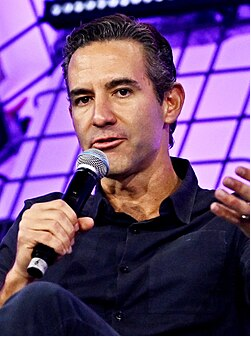
DAVID VELEZ
Founded Nubank — Latin America's biggest digital bank with 100+ million customers
A Colombian who moved to Brazil, hated how the banks treated people, and built the largest digital bank in the Western Hemisphere to fix it. Nubank has over 100 million customers. That's more than JPMorgan Chase. He did it in a country where five banks controlled 80% of the market and everyone said it was impossible. Velez is now the richest self-made person in Latin American history under 50.
Net Worth
$7 billion
Nationality
Colombian-Brazilian
Time Horizon
Long-Term
Risk Appetite
8 / 10
Net Worth Context
- · Still a billionaire — just the quiet kind at the end of the table.
CAREER & BACKGROUND
Born in 1982 in Medellin, Colombia — yes, that Medellin. Grew up during the worst of the drug violence.
His father was an engineer, his mother a homemaker. The family was middle class, not wealthy.
Went to Stanford for his MBA after studying engineering at Universidad de los Andes in Bogota. At Stanford, he got exposed to Silicon Valley thinking.
After graduating, he worked at Sequoia Capital as a partner in their Latin American investment effort and at General Atlantic.
In 2013, he moved to São Paulo and tried to open a bank account. The experience was so terrible — endless paperwork, hidden fees, awful service — that he decided to start his own bank.
He founded Nubank in May 2013 with a purple credit card and zero branches.
Brazil's banking system was a cartel. Five banks controlled 80% of deposits.
They charged some of the highest interest rates in the world. Nobody believed a startup could break in.
Nubank offered a no-fee credit card, a dead-simple app, and customer service that actually responded. Brazilians went insane for it.
By 2021, Nubank had over 40 million customers. It went public on the NYSE in December 2021 at a $41 billion valuation.
Warren Buffett's Berkshire Hathaway invested $500 million before the IPO. By 2024, the customer count crossed 100 million.
COMPANIES & ROLES
Nubank is everything. It's a full digital bank — credit cards, savings accounts, personal loans, insurance, investments — all through a mobile app with zero branches.
It operates in Brazil, Mexico, and Colombia. The company processes billions in transactions and has become the sixth-largest financial institution in Latin America by market cap.
Before Nubank, Velez worked at Sequoia Capital and General Atlantic. But Nubank is what made him.
INVESTING STYLE & PHILOSOPHY
Velez thinks like a tech founder, not a banker. He doesn't look at financial services as a regulated industry to respect — he sees it as a broken system to disrupt.
His investing philosophy for Nubank was simple: the incumbents are so bad that you don't need to be brilliant, you just need to not be terrible. Remove the fees, make the app work, answer the phone.
That's the whole strategy.
THE PLAYBOOK
Risk Approach
High risk tolerance with long-term thinking. Velez started a digital bank in Brazil — a country with brutal banking regulations and entrenched incumbents who would happily crush a competitor.
He spent years burning cash before Nubank turned profitable. Most people would have pivoted or sold.
He doubled down, expanded to Mexico and Colombia, and kept raising money until the model worked.
Money Habits
Velez lives in São Paulo. For a guy worth $7 billion, he's remarkably low-key.
He reportedly still works from Nubank's office most days. He's not collecting sports teams or launching rockets.
His big personal spend is education — he's invested heavily in schools and scholarship programs in Colombia and Brazil. He drives himself around São Paulo, which is honestly pretty brave given the traffic.
BIGGEST WIN
Nubank's IPO. The company went public on the NYSE in December 2021 at a $41 billion valuation — the largest fintech IPO in Latin American history.
Warren Buffett invested $500 million pre-IPO through Berkshire Hathaway, which was basically a stamp of legitimacy. By 2024, the company had over 100 million customers and was consistently profitable.
Velez's personal stake was worth over $7 billion.
BIGGEST MISTAKE
The 2022 crash. Nubank's stock dropped over 60% from its IPO price in the first year of trading, bottoming around $3.50 after debuting at $9.
Critics said the company was overvalued, that growth was slowing, and that loan losses would eat the business alive. Velez had to weather a brutal period of doubt.
The stock eventually recovered, but that first year was a rough lesson in public market expectations.
FINANCIAL PHILOSOPHY
Banking should be simple, transparent, and accessible to everyone. That's it.
Velez has said repeatedly that the traditional banking model is built to confuse customers and extract fees. Nubank's entire design philosophy is radical simplicity — a purple card, one app, no fine print.
He believes that in financial services, the best product wins eventually because customers hate their banks and will switch the moment something better exists.
FAMILY & PERSONAL LIFE
Married to Mariel Reyes. They have children together but keep family life very private.
Velez has spoken about growing up in Medellin during the drug war era and how that experience taught him that big problems can be solved if someone is stubborn enough to try.
EDUCATION
Studied engineering at Universidad de los Andes in Bogota, Colombia. Then got his MBA at Stanford Graduate School of Business.
Stanford is where he connected with the Silicon Valley mindset that shaped Nubank.
BOOKS & RESOURCES
Velez has mentioned this as the startup book that most resonated with his experience building Nubank through regulatory and competitive nightmares
Another founder memoir about building an iconic brand against the odds. Velez has recommended it for the parallels to starting something in a market everyone said was impossible
Relevant to Velez's mission of financial inclusion in emerging markets
As an Amazon Associate, Netfigo earns from qualifying purchases. Book links above may be affiliate links.
QUOTES (5)
The banks in Brazil were so bad that we didn't need to be great. We just needed to not be terrible.
Financial services should be simple enough that your grandmother can understand every fee she's paying.
Everyone told us we were crazy to start a bank in Brazil. Five banks controlled everything. But that's exactly why the opportunity existed.
Growing up in Medellin during the worst years taught me something: big problems aren't permanent if someone is stubborn enough to solve them.
A hundred million customers chose us. Not because we had the biggest marketing budget, but because their old bank was treating them like garbage.
NETFIGO SCORE
Proprietary 5-dimension investor rating
Risk Appetite
Contrarian Index
Track Record
Accessibility
Time Horizon
Related Profiles
Head-to-Head
Compare David Velez vs another investor.