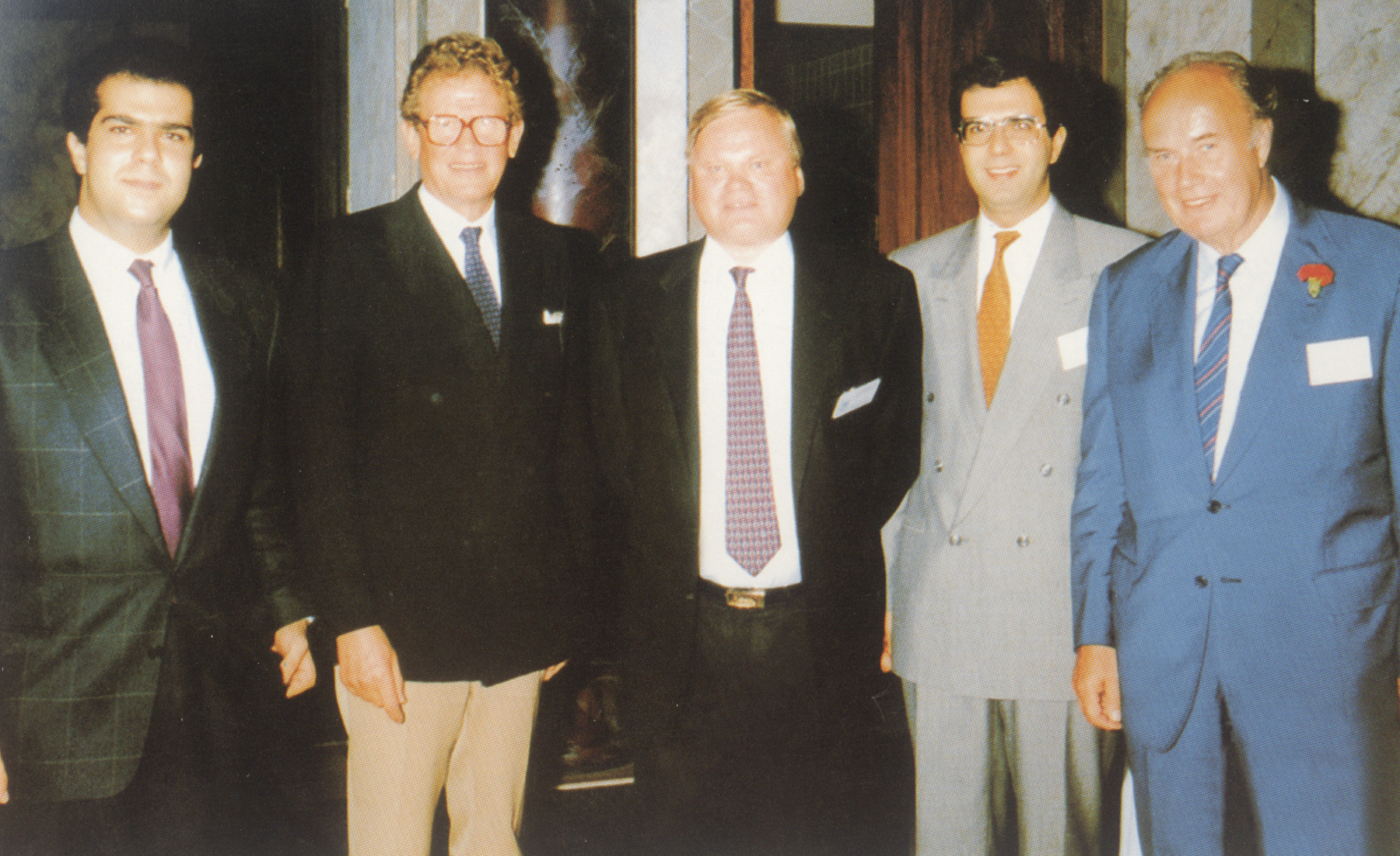
JOHN FREDRIKSEN
Building the world's largest shipping and offshore drilling empire by buying distressed assets and selling at market peaks.
He bought a struggling Swedish tanker company for $462 million in 1996. He turned it into a $4.6 billion fleet within five years. Most shipping CEOs panic during downturns, but he treats crashes like clearance sales. He buys when the math works and sells before the party ends. Norway's richest man proves that timing beats talent every single time.
Net Worth
$15.7 billion
Nationality
Norwegian-Cypriot
Time Horizon
Long-Term
Risk Appetite
9 / 10
Net Worth Context
- · That's the GDP of a small country — around the size of Greenland.
- · Enough to buy an NBA team and keep $12B for snacks.
CAREER & BACKGROUND
He started at sixteen working as a courier for a shipping brokerage. He learned the business by reading telex messages instead of finishing high school.
By the late sixties he was trading oil in Beirut. He bought his first freighter in 1973 and never looked back.
The Iran-Iraq war in the eighties changed everything. Oil transport rates skyrocketed.
He moved tankers through conflict zones while competitors stayed ashore. That risk built his first real fortune.
He eventually moved back to the Mediterranean and focused on fleet expansion.
His major break came in 1996 when he took control of Frontline. He bought the Swedish company in a massive deal and immediately reorganized it.
He moved operations to Norway and then to the New York Stock Exchange. He founded Seadrill in 2005 to dominate offshore drilling.
He acquired a majority stake in Smedvig just a year later. He sold it into Seadrill when the timing felt right.
Today he controls massive chunks of dry bulk shipping, fish farming, and LNG transport. He recently started shifting operations to the UAE while maintaining a quiet base in London.
He continues to buy into maritime equity across global markets like Star Bulk Carriers and Valaris. He never stops hunting for the next dislocated asset.
COMPANIES & ROLES
Frontline is his flagship operation. It runs the largest fleet of oil tankers on the planet.
He stepped down as CEO years ago but remains the controlling shareholder. Seadrill owns deep-water drilling rigs that extract oil from the ocean floor.
He founded it with a modest two hundred million dollar equity base before scaling it into a global giant. Golden Ocean Group handles dry bulk shipping, which moves raw materials like coal and grain across oceans.
Golar LNG moves liquefied natural gas through specialized vessels. Mowi is a massive fish farming operation.
It looks completely different from shipping, but the logistics of moving heavy cargo share a similar operational DNA. He does not sit on boards for fun.
He controls these companies through investment vehicles like Meisha and acts as a hands-on capital allocator. His portfolio is a carefully timed machine across the entire maritime supply chain.
INVESTING STYLE & PHILOSOPHY
He operates like a seasonal retailer. He buys inventory when demand is dead and prices hit rock bottom.
He holds it until the market wakes up screaming for capacity. Then he sells immediately.
He never falls in love with an asset. Shipping stocks are famous traps for sentimentality.
He treats vessels like commodities with a strictly useful life. If a tanker or rig stops making economic sense he exits without hesitation.
He also refuses to diversify into random industries. He stays in what he knows, which means moving physical goods across water or through the ocean floor.
He understands shipping cycles better than almost anyone alive. He buys during bloodbaths.
He builds fleets when bankers refuse loans. That contrarian timing is his entire edge.
THE PLAYBOOK
Risk Approach
He has spent time in jail and shipped through active war zones, which tells you everything about his fear threshold. He does not measure risk with risk committees or academic spreadsheets.
He measures it against the physical reality of supply and demand. If he sees a mathematical mismatch between asset prices and replacement costs, he buys regardless of headlines.
He survived the nineteen eighties shipping crashes by taking massive positions while competitors folded completely. He understands that shipping is brutally cyclical.
His tolerance for volatility is extremely high, but only when he controls the narrative. He avoids leverage traps by raising capital through public listings and strategic sales.
He will lose sleep over political interference or bad regulatory environments, not market swings. Money moves.
Regulations stick.
Money Habits
He lives a deeply private life. The public rarely sees him.
He avoids financial media and gives almost no interviews. He owns an eighteenth-century rectory in Chelsea worth over one hundred ten million pounds.
He fills it with classic Norwegian art. He keeps properties across London, Oslo, Cyprus, and Marbella for seasonal rotations.
He does not broadcast his lifestyle. He simply enjoys it.
Family comes before everything else. During his time in prison, his primary concern was not his legal battles.
He spent his downtime knitting sweaters for his twin daughters to send to his wife. He keeps his business decisions completely separated from his home life.
BIGGEST WIN
He bought a struggling Swedish tanker firm in nineteen ninety-six for four hundred sixty-two million dollars. Most analysts wrote it off as an overleveraged disaster.
He immediately merged routes, upgraded vessels, and expanded the fleet through strategic acquisitions. Within five years, Frontline controlled eighty ships.
The entire fleet was valued at four point six billion dollars. That represents a tenfold return on a massive capital base.
He proved that shipping cycles could be mastered through ruthless operational timing. He exited the CEO role later, but the deal remains his signature move.
He bought panic and sold confidence.
BIGGEST MISTAKE
Public records do not show a single catastrophic financial failure for Fredriksen, which is almost unheard of in global shipping. Most industry giants implode during the inevitable downturns.
He survives because he treats losses as tactical rather than fatal. When specific assets stop performing he rotates them out quietly.
He sold parts of his Seadrill and shipping stakes during market highs to avoid the next crash. He never doubles down on a dying cycle out of ego.
The closest thing to a mistake is his public frustration with western political environments. He constantly relocates capital away from high-tax jurisdictions.
While this protects his returns, it burns diplomatic bridges. He views it as a necessary cost of doing business.
The lesson is simple. Capital has no nationality and absolutely zero sentimentality.
FINANCIAL PHILOSOPHY
Rule one is timing. Buying at the bottom only works if you are willing to wait for the cycle to turn completely.
You cannot predict the exact month, but you can predict the pattern. He buys when bankers say no.
Rule two is operational control. He does not buy stocks and hope for the best.
He takes charge of management and restructures debt. He fixes routing, renegotiates charters, and optimizes fuel efficiency.
An asset only works if someone manages it properly. Rule three is geographic pragmatism.
He left Norway because the political environment punished success. He believes capital belongs where it is respected and taxed fairly.
He will relocate his entire base of operations without hesitation if the local math changes. Loyalty does not pay dividends.
FAMILY & PERSONAL LIFE
His wife Inger passed away in two thousand six. She came from a prominent Norwegian family.
Her death marked the end of his most public personal chapter. He stepped away from the mainstream spotlight immediately after.
He has twin daughters named Cecilie and Kathrine. Both were born in nineteen eighty-three.
They are now deeply involved in managing his various business holdings. They did not take an easy path through inherited wealth.
They learned operations from the ground up alongside him. He keeps his personal life strictly separated from maritime trade papers.
The few documented details center entirely on his devotion to his children.
EDUCATION
He left school at sixteen in nineteen sixty. He never completed a traditional university degree.
He enrolled in night school but quickly realized the shipping floor taught him more than a lecture hall ever could. He learned commodity pricing by tracking global freight rates on old telex machines.
The Norwegian School of Economics awarded him an honorary doctorate in two thousand three. It recognized a lifetime of market dominance rather than academic research.
His entire philosophy comes from practical experience. He believes real trading teaches risk faster than any textbook.
BOOKS & RESOURCES
John Fredriksen does not write books or publish reading lists
His education comes from market cycles, shipping logs, and decades of trading tanker routes through war zones
The best introduction to the industry Fredriksen dominates. It captures how shipping fortunes are made by buying vessels during downturns and selling capacity during booms. That is Fredriksen's entire playbook in novel form
Covers the lawless reality of global shipping. The flags of convenience, the regulatory gaps, the environmental disasters. Fredriksen operates in this world every day
Explains the risk management philosophy that keeps Fredriksen alive while competitors go bankrupt. Understanding probability and asymmetric bets is how he times his moves across shipping cycles
As an Amazon Associate, Netfigo earns from qualifying purchases. Book links above may be affiliate links.
QUOTES (5)
Norway is completely uninteresting. It is good for those who work for the state.
People should get up and work even more, and go to the office instead of having a home office.
We are opportunistic and look for good investments, not necessarily control.
NETFIGO SCORE
Proprietary 5-dimension investor rating
Risk Appetite
Contrarian Index
Track Record
Accessibility
Time Horizon
Related Profiles
Head-to-Head
Compare John Fredriksen vs another investor.