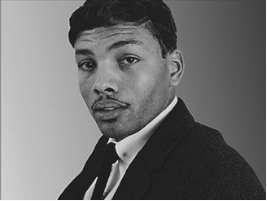
LARRY WILLIAMS
Turning $10,000 into $1.147 million in one year (1987 World Cup Championship of Futures Trading), inventing the Williams %R indicator used on every trading platform on Earth, and writing 12 books on commodity and futures trading.
Larry Williams turned $10,000 into $1,147,607 in a single calendar year — a verified, audited 11,376% return. He did it in 1987, which also happened to be the year the stock market crashed 22% in one day. He invented the Williams %R oscillator that ships in Bloomberg, MetaTrader, TradingView, and every other platform that has ever existed. His daughter later won the same trading championship using his methods. At this point, the data speaks for itself.
Net Worth
Estimated $50 million
Nationality
American
Time Horizon
Swing
Risk Appetite
9 / 10
CAREER & BACKGROUND
Williams was born in 1942 in Miles City, Montana, and started out as a writer before getting pulled into commodity markets in the 1960s. He was drawn to seasonal patterns — the idea that certain commodities move predictably at specific times of year based on supply and demand cycles.
He developed his own technical indicators including the Williams %R (a momentum oscillator that measures overbought and oversold conditions) and the Ultimate Oscillator. He entered the 1987 World Cup Championship of Futures Trading with $10,000 of real money and finished the year with $1,147,607.
The results were independently verified. He also ran for US Senate in Montana in 1978 as a Republican, losing narrowly to Max Baucus.
He has written over a dozen books on trading and runs an ongoing educational business. In the 1990s, the SEC brought action against him related to commodity pool operations, which he settled.
He's been frank about that episode. He divides his time between Montana and the Cayman Islands.
COMPANIES & ROLES
Williams has run his own trading operation throughout his career rather than managing outside capital in a traditional fund structure. His indicators — the Williams %R and the Ultimate Oscillator — became industry standards and are now built into every major trading platform without royalty payments to him, which tells you something about how early he developed them.
He also runs an educational trading business, teaching his seasonal and technical methods to retail traders worldwide. He's written and self-published much of his material, which is unusual for someone with his track record.
INVESTING STYLE & PHILOSOPHY
Williams is primarily a short-term futures and commodity trader. His edge has two components.
First, seasonality: commodities like corn, wheat, oil, and gold tend to move in predictable ways at certain times of year — harvest cycles, weather patterns, and demand rhythms create repeated setups if you know where to look. Second, technical indicators: the Williams %R tells him when a market is oversold and ready to bounce, or overbought and ready to fall.
He combines the seasonal map with the technical setup to find high-probability trades, executes quickly, and gets out. He's a market timer, not a buy-and-holder.
He looks for the setup, takes the trade, and moves on.
THE PLAYBOOK
Risk Approach
Williams takes what most people would consider extreme risk — he turned $10,000 into over a million by making concentrated bets in leveraged futures markets. But his risk framework is more disciplined than it looks from the outside.
He uses defined stops on every position, meaning his maximum loss is predetermined before he enters a trade. He's also comfortable with volatility: during his 1987 championship year, he experienced multiple large drawdowns before finishing the year at plus 11,000 percent.
He believes the key is having a verifiable edge and trading it consistently, accepting that any individual trade can go wrong.
Money Habits
Williams has made and rebuilt wealth multiple times in his career. He lives between Montana, where he grew up, and the Cayman Islands, and he's spoken openly about the financial stress that came from regulatory battles and market losses in the 1990s.
He rebuilt. He's not known for extravagant lifestyle spending — the money goes into his trading and his research.
He keeps a lower public profile than his track record would suggest, which is either modesty or wisdom in a business full of people trying to sell you something.
BIGGEST WIN
The 1987 World Cup Championship of Futures Trading. Real money.
Audited results. $10,000 turned into $1,147,607 in twelve calendar months — an 11,376% return.
He did this during a year that included Black Monday, October 19, 1987, when the Dow Jones fell 22.6% in a single session — still the largest single-day percentage drop in US stock market history. Surviving and profiting through that year is not something that can be faked or theorized away.
The number is real.
BIGGEST MISTAKE
Williams has been open about two categories of mistakes. The first is trading losses — the same leverage that creates spectacular wins creates spectacular drawdowns, and he's had both.
He's never claimed to be right all the time, and his earlier books include performance data across the full range, not just the highlights. The second is the regulatory action the SEC brought against him in the 1990s, related to how he structured and marketed commodity pools to investors.
He settled the case. The financial and reputational cost was significant.
He's addressed it in interviews and moved on, which is the only thing you can do.
FINANCIAL PHILOSOPHY
Williams believes markets are more predictable than most people admit, because seasonal supply and demand cycles repeat every year. He thinks the efficient market hypothesis is wrong — not just slightly wrong, but demonstrably wrong, because seasonal patterns have generated profits for decades.
His core principle: find a statistical edge, define it precisely, and trade it without letting emotion override the system. He's also a believer in position sizing over stock picking — how much you bet on each trade matters as much as which trades you make.
FAMILY & PERSONAL LIFE
Williams was born in 1942 in Miles City, Montana. His daughter Michelle Williams — born in 1980 in Kalispell, Montana — became one of Hollywood's most acclaimed actresses, earning multiple Academy Award nominations.
Another of his daughters won the 1987 World Cup Championship of Futures Trading in 1997, turning $10,000 into over $100,000 using his seasonal methods. The fact that the methodology was replicable enough for his daughter to win the same competition he did is either the best endorsement possible or a really good family party story.
Probably both.
EDUCATION
Williams attended the University of Oregon. He worked as a writer and journalist before transitioning into commodity trading in the 1960s.
His trading education was entirely self-built — research, pattern recognition, and live market experience over decades.
BOOKS & RESOURCES
As an Amazon Associate, Netfigo earns from qualifying purchases. Book links above may be affiliate links.
QUOTES (6)
The secret to trading is not finding the perfect system. It is finding a system that has an edge and then executing it without letting your emotions get in the way.
Seasonality is the single most reliable repeating pattern in commodity markets. It exists because supply and demand cycles are real, and they happen at the same time every year.
I have found that time is more important than price. Get in at the right time and price takes care of itself.
Your losses will always tell you more than your wins. Study them. They are your real education.
Position sizing is where most traders make or lose the most money. You can have the best system in the world and blow up your account with wrong-sized positions.
The Commitments of Traders report is the most important piece of market intelligence available to retail traders, and almost no one uses it correctly.
NETFIGO SCORE
Proprietary 5-dimension investor rating
Risk Appetite
Contrarian Index
Track Record
Accessibility
Time Horizon
Related Profiles
Investors
Linda Raschke
Raschke and Williams are both legendary short-term futures and commodity traders who built their reputations on disciplined technical systems rather than fundamental analysis.
Paul Tudor Jones
Both are futures traders who built their reputations on market timing and technical discipline. Jones made his name shorting the 1987 crash — the same year Williams won the World Cup inside it.
Richard Dennis
Dennis and Williams both rose to fame through verified futures trading performance. Dennis trained the Turtle Traders. Williams won the World Cup. Different methods, same unforgiving markets.
Head-to-Head
Compare Larry Williams vs another investor.