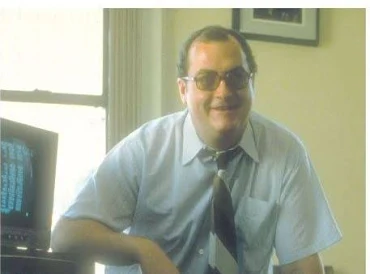
RICHARD DENNIS
The "Prince of the Pit" who turned $1,600 into $200 million trading commodities. Famous for the Turtle Trading experiment that proved trading could be taught.
Richard Dennis turned $1,600 borrowed from his family into $200 million by trading commodities on the Chicago floor. He was 25 when he made his first million. Then he bet his partner he could teach random people to trade — he recruited 23 strangers, gave them his rules and his money, and they collectively made over $175 million in five years. He called them the Turtles. He proved that great trading is a learnable skill, not a genetic gift. He also lost about $50 million in 1988 trading other people's money, which proved that even the best systems break when the market decides to be weird.
Net Worth
$300 Million
Nationality
American
Time Horizon
Medium-Term
Risk Appetite
9 / 10
Net Worth Context
- · 300x the average American's lifetime earnings, stacked and waiting.
CAREER & BACKGROUND
Richard J. Dennis was born in Chicago in 1949.
His father was a city worker. Dennis grew up on the South Side and started hanging around the Chicago Mercantile Exchange as a teenager, working as a runner on the trading floor at 17.
He couldn't trade himself — you had to be 21 — so his father opened an account and Dennis called in orders. By the time he turned 21, he had scraped together $1,600 (some accounts say $400 of his own money and $1,200 borrowed from family).
He started trading mini-contracts on the MidAmerica Commodity Exchange. Within a few years, he had turned that into $200 million.
He was one of the biggest independent traders on the Chicago floors by the late 1970s. In 1983, he and his partner William Eckhardt made a famous bet: Dennis said trading could be taught, Eckhardt said it was innate talent.
They recruited 23 people from newspaper ads — some with no trading experience — trained them for two weeks, gave them real money, and turned them loose. The Turtles, as they became known, made over $175 million in five years.
Dennis retired from active trading in the late 1980s after significant losses in 1988.
COMPANIES & ROLES
Dennis ran the C&D Commodities trading firm with his partner William Eckhardt. He later founded Dennis Trading Group, which managed outside money.
He was primarily a floor trader and then a systematic trend-following trader. He didn't build companies in the traditional sense — his "company" was his trading operation and the capital he managed.
He was also significantly involved in politics, donating millions to libertarian and progressive causes, including marijuana legalization and the ACLU.
INVESTING STYLE & PHILOSOPHY
Dennis was a pure trend follower. He bought things that were going up and sold things that were going down.
No fundamental analysis. No opinions about what markets "should" do.
He followed price. His system used breakout rules — when a commodity price hit a new 20-day or 55-day high, he bought.
When it hit a new low, he sold. Positions were sized based on volatility.
He pyramided into winners (adding to positions as they moved in his favor) and cut losers quickly. The system was entirely mechanical.
The hard part wasn't the rules — it was following them when your gut was screaming to do something different.
THE PLAYBOOK
Risk Approach
Dennis had an unusual relationship with risk. He was willing to accept large drawdowns — periods where his account lost 30%, 40%, even more — because he understood that trend-following systems make money in big trends and lose money during choppy, sideways markets.
He knew the losses were the price of admission for the eventual big wins. He used strict position-sizing rules to ensure no single trade could destroy him.
But the accumulated psychological damage of sustained drawdowns was real. His 1988 losses of roughly 50% of his managed funds ($50+ million) showed that even someone with his experience could be shaken by sustained adverse conditions.
Money Habits
Dennis was not flashy with his money. He drove an ordinary car and lived modestly by multi-millionaire standards.
But he spent heavily on causes he believed in. He donated millions to marijuana legalization campaigns, the ACLU, and various progressive political causes.
He funded ballot initiatives in multiple states. He was one of the earliest and largest donors to drug policy reform in America.
He lived in Chicago throughout his career and was known for being approachable and unpretentious despite his enormous success.
BIGGEST WIN
His entire career from 1970 to the mid-1980s was one long winning streak. Turning $1,600 into $200 million over roughly 15 years is one of the greatest trading runs in commodity market history.
His single best year was reportedly 1986, when he made approximately $80 million. The Turtle experiment was also a massive "win" for his thesis — the 23 trainees collectively generated over $175 million in profits over five years, proving that systematic trading could be taught and replicated.
BIGGEST MISTAKE
The 1988 drawdown. Dennis was managing outside capital — about $100 million from investors — when his trend-following system hit a sustained losing streak.
He lost roughly 50% of the managed money, or about $50 million, in a single year. He returned the remaining capital to investors and stepped back from money management.
He also lost a significant portion of his own money. The irony is that trend-following systems have periods like this by design — the losses come during trendless markets.
But having other people's money on the line made the psychology different. He proved that a system can be correct long-term but devastating short-term.
FINANCIAL PHILOSOPHY
Dennis believed markets were driven by herd behavior and that trends existed because humans are psychologically wired to underreact to new information. He believed that any good trading method would be "almost impossible to follow" emotionally because it requires doing the opposite of what feels safe.
He believed that the key to long-term success was sticking to a tested system even during painful drawdowns. He also believed — and proved — that trading skill was not innate but could be taught to almost anyone willing to follow rules with discipline.
FAMILY & PERSONAL LIFE
Dennis has been very private about his personal life. He was born and raised in Chicago and has lived there throughout his career.
He has been described as quiet, introverted, and more interested in ideas than in socializing. His public persona has been primarily through his trading record, the Turtle experiment, and his political donations.
Details about his family, marriages, and children are not part of the public record by his choice.
EDUCATION
DePaul University (B.A. in philosophy).
He started a Ph.D. in philosophy at Tulane but never finished — the trading floor called him back.
His philosophical training is visible in how he approached markets: systematically, logically, and without emotional attachment to outcomes.
BOOKS & RESOURCES
Dennis didnt write any books himself, but his story is the subject of one of the best trading books ever written.
The definitive account of the Turtle experiment
Features a famous Dennis interview
Tells the story from the inside
Covers the broader philosophy that Dennis pioneered
As an Amazon Associate, Netfigo earns from qualifying purchases. Book links above may be affiliate links.
QUOTES (5)
When you have a system, the hardest part is following it when it's losing.
Trading is a learnable skill. The idea that great traders are born, not made, is just wrong.
The key to long-term survival and prosperity has a lot to do with the money management techniques incorporated into the system.
I always say you could publish my trading rules in the newspaper and no one would follow them. The key is consistency and discipline.
The worst thing you can do is miss a major trend. Missing the bus is worse than being on the wrong bus.
NETFIGO SCORE
Proprietary 5-dimension investor rating
Risk Appetite
Contrarian Index
Track Record
Accessibility
Time Horizon
Related Profiles
Head-to-Head
Compare Richard Dennis vs another investor.