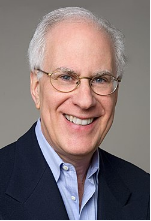
MARC CHAIKIN
Chaikin Money Flow, Chaikin Power Gauge, Chaikin Analytics, technical indicators
Marc Chaikin spent 40 years on Wall Street building tools that other analysts used to make money. Then he realized he should sell the tools directly. He founded Chaikin Analytics in 2011 and built the Power Gauge — a 20-factor stock rating system that institutional traders pay thousands of dollars a year to access. He is the rare Wall Street technician who became more influential after leaving the trading floor than while on it. The Chaikin Money Flow indicator is built into Bloomberg terminals and virtually every serious trading platform on earth.
Net Worth
Est. $50M–$100M
Nationality
American
Time Horizon
Medium-Term
Risk Appetite
6 / 10
CAREER & BACKGROUND
Chaikin started his Wall Street career in the 1960s as a stockbroker. Over the following decades he moved into research and analytics, eventually working at firms including Shearson Hayden Stone, Kidder Peabody, and Drexel Burnham Lambert.
He was there for the go-go years, the junk bond era, the crash of 1987 — all of it.
He developed the Chaikin Money Flow indicator in the 1980s. The CMF measures the amount of Money Flow Volume over a specific period, telling traders whether a stock is being accumulated (bought) or distributed (sold) by institutions.
It became one of the most widely used volume-based indicators in technical analysis. Bloomberg added it to its terminals.
Every retail trading platform from TD Ameritrade to Fidelity eventually included it.
He then developed the Chaikin Oscillator — a momentum indicator based on the MACD of the Accumulation/Distribution Line. Then the Chaikin Power Gauge, his most comprehensive creation: a 20-factor model combining technical and fundamental data to rate stocks from Very Bullish to Very Bearish.
In 2011, he packaged all of this into Chaikin Analytics and went directly to retail and institutional investors. The business has grown steadily, with his Power Gauge appearing on CNBC's Mad Money and in major brokerage platforms.
COMPANIES & ROLES
Chaikin Analytics is his primary company, founded in 2011. It provides the Power Gauge stock rating system, which aggregates 20 factors across four categories: financials, earnings, technicals, and expert opinions.
Subscriptions range from individual investors to institutional clients. Before founding his own firm, he spent decades at various Wall Street brokerages developing quantitative tools for internal trading desks.
INVESTING STYLE & PHILOSOPHY
Chaikin is fundamentally a technician who respects fundamentals. The Power Gauge is his synthesis: he does not believe you can make decisions from charts alone, but he also does not believe pure fundamental analysis tells you when to act.
His approach uses price action, volume, and institutional money flows to confirm what the fundamentals suggest. If a stock looks cheap fundamentally but institutions are clearly selling, he wants to know why.
Chaikin Money Flow is his signature lens. Large institutions move markets.
When they are accumulating a stock, CMF goes positive. When they are distributing it, CMF goes negative.
Retail investors almost always trade against institutional flow and lose. His tools are designed to help smaller investors see what the big money is doing.
THE PLAYBOOK
Risk Approach
Moderate to moderate-high. Chaikin tracks technical signals that often catch short-to-medium-term moves.
He is not a buy-and-hold-forever investor. He believes in cutting losses when the technical picture deteriorates, regardless of how good the fundamental story looks.
He has said the most dangerous trade is the one where you are right about the company but wrong about the timing.
Money Habits
He is private about his personal finances. He has invested heavily in building Chaikin Analytics and has spoken about reinvesting profits into product development and distribution.
He lives in the Philadelphia area and runs a relatively tight operation for a financial data business. His focus appears to be building the Power Gauge into a must-have tool across brokerage platforms rather than personal wealth accumulation.
BIGGEST WIN
Getting the Chaikin Money Flow indicator adopted by Bloomberg and the major retail brokerage platforms. He built it in the 1980s as an internal tool for institutional traders.
Decades later it ships in every major retail trading platform on earth. Millions of traders use it daily without knowing his name.
That is the kind of quiet influence that compounds over 40 years.
BIGGEST MISTAKE
By his own account, staying in the employee model too long. He spent decades building tools for employers that owned the intellectual property.
When he finally built his own firm in 2011, he was in his late 60s. He has said publicly that he wished he had gone independent sooner — the Power Gauge could have existed ten years earlier if he had started building his own business in the 1990s.
FINANCIAL PHILOSOPHY
Follow the institutions. Retail investors cannot outthink Goldman Sachs analysts or Renaissance Technologies quants on fundamental research.
But they can see the same price and volume data. Learning to read institutional money flow — who is buying, who is selling, how much conviction there is behind a move — levels the playing field in ways that pure fundamental analysis cannot.
The Power Gauge is his answer to the question: how does a regular person know what the smart money is doing?
FAMILY & PERSONAL LIFE
He lives in the Philadelphia area. He is private about his family but has mentioned his grandchildren in interviews as part of his motivation for building accessible tools — he wants regular people, not just institutional traders, to have professional-grade analytics.
EDUCATION
He attended the University of Pennsylvania. He is largely self-taught as a market technician, spending decades in the trenches of Wall Street developing his methodology through direct observation of how institutional money flows through markets.
BOOKS & RESOURCES
The closest thing to a bible for technical analysts, and the book most serious chartists learn from first. Murphy covers money flow indicators, accumulation/distribution, and the broader framework Chaikin built his career on
Williams developed a parallel framework for reading institutional money flow through price and volume, and his work complements Chaikin's approach well
Chaikins free webinars and YouTube appearances are genuinely useful
He explains his Power Gauge methodology clearly and without jargon. Start with those before paying for a subscription to understand what you are buying
As an Amazon Associate, Netfigo earns from qualifying purchases. Book links above may be affiliate links.
QUOTES (5)
Price and volume tell you everything you need to know about what institutions are doing. They cannot hide their buying and selling — it shows up in the tape.
The most dangerous position is being right about a stock but wrong about the timing. Technicals tell you when, fundamentals tell you what.
When institutions are buying a stock, the Chaikin Money Flow tells you. That is as close to seeing inside the room as retail investors can get.
Most retail investors trade against the institutions and wonder why they lose. You have to learn to follow the smart money, not fight it.
I spent 40 years building tools for employers. I wish I had gone independent 20 years sooner.
NETFIGO SCORE
Proprietary 5-dimension investor rating
Risk Appetite
Contrarian Index
Track Record
Accessibility
Time Horizon
Related Profiles
Investors
Mark Minervini
Minervini uses volume analysis and institutional buying signals similar to Chaikin's money flow framework. Both focus on finding stocks where institutional accumulation is happening before the move becomes obvious to the crowd.
William O'Neil
Both built systematic, technical-plus-fundamental frameworks for identifying strong stocks. O'Neil's CANSLIM methodology and Chaikin's Power Gauge share the same foundational belief: earnings and price action together beat either alone.
Head-to-Head
Compare Marc Chaikin vs another investor.