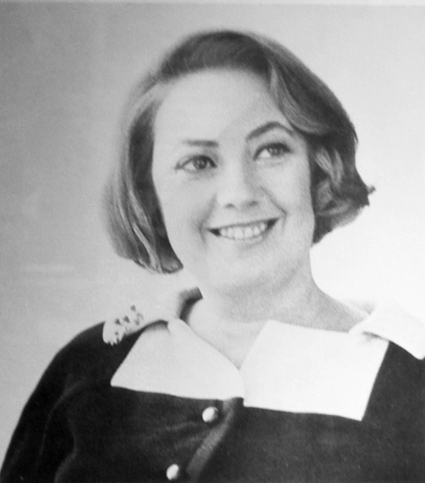
MURIEL SIEBERT
The first woman to own a seat on the New York Stock Exchange, purchased in 1967 for $445,000
Muriel Siebert did in 1967 what no woman had done before — she bought a seat on the New York Stock Exchange for $445,000 and refused to be turned away. It took her 10 months to find a male sponsor willing to vouch for her. She built Muriel Siebert and Co. into a respected discount brokerage, then walked away to run New York's entire banking system. During her five years as state Superintendent of Banking, not a single New York bank failed. She is not just a pioneer. She is the whole blueprint.
Net Worth
~$50M–$100M (est.)
Nationality
American
Time Horizon
Long-Term
Risk Appetite
6 / 10
CAREER & BACKGROUND
Siebert arrived in New York in 1954 with $500 and a car. She got her first job at Bache and Co.
by claiming a college degree she didn't have. She spent over a decade as a sharp equity analyst covering the airline and aircraft industries before deciding to buy NYSE seat number 1,366 in 1967.
She founded Muriel Siebert and Co. that same year as one of the early discount brokerages.
From 1977 to 1982, she served as New York's first female Superintendent of Banking. She later brought the firm public in 1996 and continued running it into her 80s.
COMPANIES & ROLES
Muriel Siebert and Co. (founder, 1967–2013)
INVESTING STYLE & PHILOSOPHY
Fundamental equity research, with deep expertise in the airline and aircraft industries early in her career. Built her firm around transparency, fair execution, and client service rather than proprietary trading or complex products.
THE PLAYBOOK
Risk Approach
Medium. She was willing to take massive career risks — buying an NYSE seat as a woman in 1967 required enormous conviction.
Professionally conservative once established, running her brokerage with caution.
Money Habits
Believed in grinding before expecting rewards. She worked relentlessly through her analyst years and reinvested heavily into her business.
Known for running a tight, disciplined operation at her firm.
BIGGEST WIN
Becoming the first woman to buy an NYSE seat in 1967. The symbolic and practical impact of that single act reshaped who was allowed to participate in American finance.
BIGGEST MISTAKE
Stepping away from her brokerage in 1977 to take the banking superintendent role created operational gaps in the firm. She acknowledged the transition was harder than expected.
FINANCIAL PHILOSOPHY
Access and fairness matter. She believed ordinary investors deserved the same quality of execution and service as institutional clients.
She was an early champion of the discount brokerage model before it became mainstream.
FAMILY & PERSONAL LIFE
Never married. Adopted a daughter, Jane Siebert, who later died of a drug overdose.
After Jane's death, Siebert became a passionate champion of financial literacy, donating to education programs and youth financial programs.
EDUCATION
Attended Case Western Reserve University but did not graduate. Built her entire career through on-the-job training, voracious reading, and decades of market experience.
BOOKS & RESOURCES
"Den of Thieves by James B
As an Amazon Associate, Netfigo earns from qualifying purchases. Book links above may be affiliate links.
QUOTES (6)
Wall Street is not a meritocracy. But the market is. The market doesn't care who you are.
A discount brokerage is not a lesser brokerage. It is an honest brokerage.
I had to fight for everything I got. But I never asked for a seat at the table. I bought one.
I came to New York with five hundred dollars and a car. I had no connections. I figured that out as I went.
During my five years as Superintendent of Banking, not one New York bank failed. That is the record I am most proud of.
NETFIGO SCORE
Proprietary 5-dimension investor rating
Risk Appetite
Contrarian Index
Track Record
Accessibility
Time Horizon
Related Profiles
Investors
Abigail Johnson
Abigail Johnson leads Fidelity, one of the institutions Siebert spent her career pushing to serve ordinary investors more fairly. Both represent milestones in women holding the highest levels of financial power.
Cathie Wood
Both Siebert and Wood built firms in financial services at a time when women were largely excluded from Wall Street leadership. Siebert blazed the trail; Wood built on it decades later.
Dawn Fitzpatrick
Dawn Fitzpatrick is among the senior women in institutional finance who operate in a world Siebert helped open. The path Siebert carved in the 1960s made careers like Fitzpatrick's possible.
Head-to-Head
Compare Muriel Siebert vs another investor.