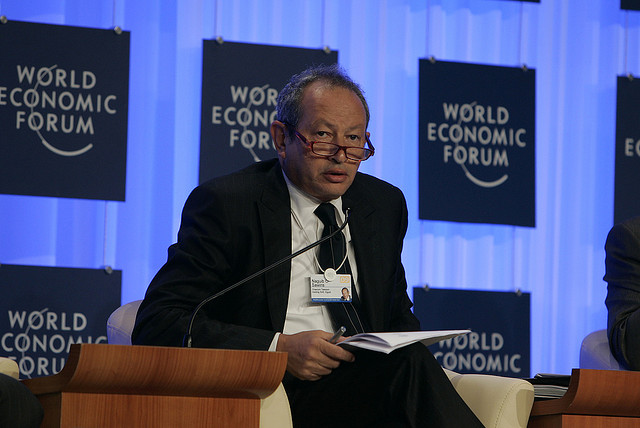
NAGUIB SAWIRIS
Building Orascom Telecom into a Middle Eastern powerhouse and engineering a $6.4 billion merger that created one of the world's largest mobile networks.
He took Egypt's family construction business and pivoted it into a telecom empire that reached 181 million customers. The 2010 merger with VimpelCom brought him a $6.4 billion deal and a global footprint overnight. He bets heavily on emerging markets where the risks are real and the infrastructure is still being built. His patience pays off because he does not chase Silicon Valley trends. He just builds in places everyone else avoids.
Net Worth
$5.6 billion
Nationality
Egyptian-American
Time Horizon
Long-Term
Risk Appetite
7 / 10
Fund
Orascom Investment Holding
Net Worth Context
- · That's the GDP of a small country — around the size of Jamaica.
- · Enough to buy an NBA team and keep $52B for snacks.
CAREER & BACKGROUND
He joined Orascom in 1979. The family business started in construction and heavy engineering.
Sawiris saw the writing on the wall before most telecom executives even owned a fax machine. He pushed the company into technology and telecommunications.
He launched Egypt's first internet service provider in 1994. Two years later he founded a satellite communications venture to fill the massive infrastructure gaps across the region.
The real explosion happened in 1997. He founded Orascom Telecom Holding and launched Mobinil.
It was the first private mobile network in Egypt. He partnered with Orange and Motorola to secure the licenses and hardware he needed to dominate the market.
Over the next decade he built a sprawling network across the Middle East and Africa. He kept acquiring, merging, and expanding into new territories.
By 2011 he orchestrated a massive cross-border merger with Russian operator VimpelCom. The combined entity suddenly became the sixth-largest mobile provider on the planet.
He stepped away from day-to-day telecom operations in 2016. That freed him up to focus on real estate through Ora Developers and mining through La Mancha Holding.
He still chairs Orascom Investment Holding and Orascom TMT Investments today. He moved from running cell towers to building luxury resorts, buying gold mines, and funding European tech companies.
The career shifted from digging physical pipes to deploying strategic capital across three continents.
COMPANIES & ROLES
Orascom Investment Holding acts as the central investment vehicle for the family. It holds strategic stakes in telecom infrastructure, media properties, and European technology firms.
Think of it as a parent company that preserves legacy assets while hunting for new growth engines.
Orascom TMT Investments focuses specifically on telecommunications and technology deals. It holds shares in an Egyptian asset manager and an Italian internet platform.
This is where he capitalizes digital transformation and connectivity plays.
Ora Developers is his global real estate arm. It builds luxury resorts and high-end residential communities.
You will find his portfolio in places like Grenada, Cyprus, and Pakistan. He focuses on mixed-use projects that attract international capital and tourism.
La Mancha Resource Capital is his mining and exploration fund. It invests in gold and copper projects across Africa, Australia, and South America.
He treats commodities as a structural hedge against geopolitical instability and currency devaluation.
He previously led Wind Telecom and Orascom Telecom Media. Those were the operational engines he used to merge telecom infrastructure across borders and scale subscriber counts past 180 million.
The companies were eventually spun off or integrated into larger holding structures after the VimpelCom deal.
INVESTING STYLE & PHILOSOPHY
He does not wait for perfect market conditions. He goes where the infrastructure gaps are widest.
Think of it like planting trees in a desert. It takes longer to establish roots.
You have to dig deeper for water. But once it grows you completely own the shade.
He targets sectors that require massive upfront capital but lock in customers for decades. Telecom was his prime example.
You lay the fiber cables. You build the transmission towers.
Once people sign contracts they rarely switch providers. He applies that same logic to real estate developments and mining operations.
You secure the land. You navigate the permitting process.
You wait for regional demand to catch up to the supply.
He prefers emerging markets with rapidly growing middle classes. He looks for countries that need basic digital and physical connectivity first.
Then he backs companies ready to digitize their financial services. He buys early.
He holds through political turbulence. He does not panic when the local currency wobbles because he priced that volatility into the initial valuation.
THE PLAYBOOK
Risk Approach
He treats volatility as the admission fee for outsized returns. His entire career operates in markets that make most Western institutional managers nervous.
He knows political shifts can freeze assets overnight. He accepts that reality before he signs the paperwork.
He mitigates catastrophic risk by spreading capital across unrelated sectors and distant continents. When telecom regulators clamp down in one region his mining operations in another country continue generating cash.
When European real estate slows down his Middle Eastern technology investments absorb the draw.
He structures his positions to survive five-year downturns without forced selling. He relies on a massive family balance sheet to endure liquidity crunches.
Losing money on a single frontier project frustrates him but does not threaten the portfolio. He plans for geopolitical chaos before he wires the funds.
Money Habits
He channels his wealth into physical and strategic projects that take years to mature. He owns a global real estate portfolio valued at around $2.5 billion.
His developments span more than seven countries. He funds luxury resorts in Grenada.
He backs marinas in Cyprus. He finances residential towers in Islamabad.
These are not passive REITs. They are ground-up builds he oversees closely.
He maintains heavy exposure to precious metals and critical mining assets. His La Machado fund holds active exploration stakes in gold projects across Canada and West Africa.
Gold does not pay dividends. It just sits in the vault and protects against inflation and currency debasement.
He values the psychological and financial security.
His spending leans heavily toward business networking and site inspections. He travels constantly to negotiate with government officials and review construction progress.
He does not publicly flaunt designer brands or superyachts. The portfolio itself is the status symbol.
He reinvests corporate dividends directly into new ventures. He treats his family's balance sheet like an extension of his own operating capital.
BIGGEST WIN
The 2010 VimpelCom deal netted him over $4 billion in cash and equity. Orascom Telecom was scaling rapidly across emerging markets but faced regulatory ceilings and capital constraints.
VimpelCom needed immediate access to his North African and Middle Eastern subscriber base.
He engineered a complex cross-border exchange that merged his mobile operations with theirs. The combined entity instantly reached 181 million customers across twenty countries.
It became the sixth-largest wireless operator globally almost overnight.
He did not cash out at the announcement. He navigated years of tense boardroom negotiations, cross-jurisdictional tax structuring, and regulatory approvals.
When the stake finally transferred he walked away with billions in realized value and a cemented global reputation. The market doubted he could pull off a merger between Cairo and Moscow.
The trade paid off spectacularly and funded his next decade of investments.
BIGGEST MISTAKE
He rarely discusses public failures. The available records show a remarkably clean execution history.
That usually means the hardest hits happen behind closed doors. He almost certainly absorbed heavy liquidity drains during the 2011 regional upheavals.
His telecom operations in Egypt and North Africa likely burned millions in operational cash when governments froze licenses, delayed tower permits, or suspended currency conversions.
Frontier real estate development carries identical timing risk. His massive resort projects in Grenada and Pakistan operate entirely on government timelines.
Permitting delays bleed capital rapidly. Construction halts while bureaucratic approvals stall.
He has to keep funding dormant sites that generate zero revenue.
The structural lesson appears in how he reorganized his portfolio afterward. He spun off his telecom and construction arms into separate holding entities.
He stopped concentrating all his family capital into single-country operational bets. He diversified across geographically and economically unrelated industries so political shocks in one capital would not sink the entire empire.
He learned that emerging market scale requires emerging market patience.
FINANCIAL PHILOSOPHY
Capital has to come from real work and real assets. Easy money leaves you completely exposed to market corrections.
He refuses to chase shortcuts because shortcuts usually end in regulatory fines or collapsed valuations.
He believes reputation compounds faster than a bank account. If you honor your contracts and pay your suppliers on time better deals keep landing on your desk.
If you cut corners you permanently burn the relationship.
He does not try to time macroeconomic cycles. He buys foundational assets when valuations are depressed and institutional money is fleeing.
He sits on investments until they reach full operational maturity. Compounding only works when you stop interrupting it with panic.
Diversification protects you from your own optimism. You spread your capital across different industries.
You ensure those industries operate in different time zones. Then you stop checking the daily price action.
FAMILY & PERSONAL LIFE
He is married to Ghada Gamil Sawiris. They have four children together.
He deliberately keeps his family away from the media spotlight. You will not find his kids running his executive boardrooms or posting luxury lifestyles on social media.
He comes from one of the most prominent business dynasties in modern Egypt. The Orascom legacy shaped his entire professional worldview.
He absorbed contract negotiation and infrastructure logistics at his father's dinner table. The family generated construction profits for decades before he redirected the cash flow toward digital and telecom expansion.
He carries a relentless work ethic into his current billionaire status.
He speaks Arabic, English, and German fluently. He also speaks some French.
This multilingual ability allows him to negotiate directly with partners in Cairo, London, and Berlin without relying on translators. His personal life remains intentionally low-key.
He prefers to let his asset allocations demonstrate his influence.
EDUCATION
His specific university degrees do not appear in standard public registries. The Orascom family business provided a relentless practical education anyway.
He studied engineering fundamentals before transitioning fully into corporate development. He likely learned more on industrial project sites and international licensing negotiations than in academic seminars.
He entered the family operations in 1979 and started authorizing transactions that moved regional markets. Real-world execution replaced classroom theory decades ago.
BOOKS & RESOURCES
Naguib Sawiris absorbs market intelligence through boardrooms and geopolitical briefings, not bookshelves
He has never published a reading list. But his career maps onto a few books almost perfectly
Matches his approach to telecom expansion. He entered hostile markets in North Korea, Iraq, and sub-Saharan Africa while competitors stayed safe. Every move was calculated aggression
The closest entrepreneurial parallel. Knight built Nike through relentless expansion into markets nobody else wanted. Sawiris did the same thing with cell towers
Captures the globalization thesis that Sawiris bet his fortune on. Connecting developing markets to global telecom infrastructure before anyone else saw the opportunity
As an Amazon Associate, Netfigo earns from qualifying purchases. Book links above may be affiliate links.
QUOTES (6)
We need to eliminate the competition of the public sector and the Army and the business we need to restore the political Life.
The organisation is named the Muslim Brotherhood and, under the cloak of this name, everything that has nothing to do with Islam, such as killing, bombing and assassinations of political figures, is being perpetrated.
It isn't me who links them to extremism. They are the ones who linked themselves.
I'm a very strong believer and this has been always the source of my strength, not the money.
Clearly I like making money. But I like my money, and my success, to be attributed only to my hard work, my honesty, my reputation, my background, my education and my family. I don't like easy money, it doesn't taste right.
NETFIGO SCORE
Proprietary 5-dimension investor rating
Risk Appetite
Contrarian Index
Track Record
Accessibility
Time Horizon
Related Profiles
Head-to-Head
Compare Naguib Sawiris vs another investor.