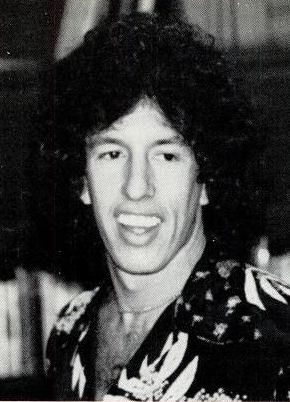
RICHARD PERRY
Hedge fund manager who ran Perry Capital for 28 years before shutting it down after a disastrous bet on Fannie Mae
Richard Perry was the golden boy of event-driven investing for two decades. His fund returned over 15% annually from 1988 to 2008, making him one of the most consistent performers on Wall Street. Then he bet big on Fannie Mae and Freddie Mac — and the government basically told him to get lost. Perry Capital shut down in 2016 with assets that had fallen from $15 billion to under $4 billion. A masterclass in how one bad thesis can unwind a lifetime of good ones.
Net Worth
$1 billion
Nationality
American
Time Horizon
Medium-Term
Risk Appetite
7 / 10
Net Worth Context
- · Still a billionaire — just the quiet kind at the end of the table.
CAREER & BACKGROUND
Richard Perry grew up in New York and went to Wharton, which is basically the finishing school for anyone who wants to manage other people’s money. After graduating in 1980, he worked at Goldman Sachs in the risk arbitrage department.
That’s the corner of finance where you bet on mergers and acquisitions happening or not happening. He was good at it.
In 1988, he started Perry Capital with about $45 million. The fund specialized in event-driven investing — basically betting on corporate events like mergers, bankruptcies, restructurings, and spin-offs.
For the next 20 years, the fund delivered extraordinary returns. By 2007, Perry Capital managed over $15 billion.
Then things got complicated. After the 2008 financial crisis, Perry made a huge bet that Fannie Mae and Freddie Mac — the government-sponsored mortgage giants — would be returned to private shareholders.
He sued the U.S. government over it.
He lost. The position cratered, investors pulled their money, and by September 2016, Perry Capital closed its doors.
The fund that once managed $15 billion went out with barely $4 billion.
COMPANIES & ROLES
Perry Capital was a multi-strategy hedge fund focused on event-driven and distressed situations. At its peak it managed $15 billion and was one of the most respected names in the space.
The fund closed in September 2016 after the Fannie Mae bet went south.
Perry also had significant stakes in various companies through activist positions. He was involved in the Barneys New York bankruptcy, the Mylan-Perrigo merger fight, and dozens of other corporate situations over the years.
He was the kind of investor who showed up on shareholder lists and companies paid attention.
INVESTING STYLE & PHILOSOPHY
Event-driven to the core. Perry looked for situations where something was about to change — a merger, a bankruptcy, a restructuring, a regulatory decision.
He’d analyze the odds, figure out what the market was mispricing, and bet accordingly.
Think of it like poker. He wasn’t buying stocks because he loved the business.
He was calculating probabilities on specific events and sizing positions based on the expected value. When a merger was announced, he’d figure out if the deal would close, at what price, and how much risk was in the gap.
The Fannie Mae trade was this approach taken to the extreme — a binary bet on a government decision that he was convinced would go his way. It didn’t.
THE PLAYBOOK
Risk Approach
Perry was willing to take concentrated bets when he believed the odds were overwhelmingly in his favor. For most of his career, this worked.
The Fannie Mae position became his defining risk — he held on even as the thesis deteriorated, convinced the government would eventually do the right thing by shareholders.
His fund could handle 10-15% drawdowns without flinching. The problem came when a single position became large enough to threaten the entire fund.
Concentration risk is fine until it isn’t. Perry found the line.
Money Habits
Perry lived large. He owned a sprawling apartment on the Upper East Side of Manhattan and was a fixture in New York’s social scene.
He was married to fashion designer Lisa Perry, and their lifestyle was the kind of thing that showed up in Architectural Digest — a Pop Art-filled apartment that looked like it was designed for a magazine shoot, because it was.
Even after the fund closed, Perry reportedly maintained significant personal wealth — the billion-dollar net worth estimate comes from his decades of management fees and personal gains before things went south. The fund’s closure didn’t mean he was broke.
It meant his investors were unhappy.
BIGGEST WIN
During the late 1990s and 2000s, Perry Capital was one of the most consistent performers in the hedge fund world. His event-driven strategy delivered returns exceeding 15% annually for nearly two decades.
One of his best years came during the dot-com bust when he was positioned in distressed debt and merger arbitrage — while everyone else was nursing losses from tech stocks, Perry was making money on corporate restructurings. The fund reportedly returned over 25% in 2001 while the S&P 500 dropped 12%.
That’s the power of an event-driven approach in a downturn — you’re not betting on markets, you’re betting on specific situations.
BIGGEST MISTAKE
The Fannie Mae and Freddie Mac bet. Full stop.
Perry Capital accumulated a massive position in the preferred shares of both government-sponsored enterprises, betting that the government would eventually release them from conservatorship and restore value to shareholders. He even sued the U.S.
government — the Treasury Department and the Federal Housing Finance Agency — arguing the net worth sweep was unconstitutional.
He lost in court. The government kept sweeping all profits.
His position became effectively worthless. Investors fled.
The fund that once managed $15 billion bled down to under $4 billion and closed in 2016. The total loss on the Fannie/Freddie trade was reportedly in the billions.
It’s one of the most expensive single-trade disasters in hedge fund history.
FINANCIAL PHILOSOPHY
Perry believed that the market systematically misprices corporate events. Mergers, bankruptcies, regulatory decisions — these are all situations where you can calculate an expected value more precisely than the market does, because the market is lazy and most investors don’t do the detailed legal and financial analysis.
His other core belief was in concentration. When you find a mispriced event, you don’t put 2% of the portfolio on it.
You size it to matter. This philosophy generated outsized returns for decades — and then destroyed the fund when the one big bet went wrong.
FAMILY & PERSONAL LIFE
Perry was married to Lisa Perry, a fashion designer known for her mod-inspired clothing line and her collection of Pop Art. The couple were prominent in New York social circles.
Their Upper East Side apartment was famous for its art collection — Warhols, Lichtensteins, Calders. They divorced around 2017, shortly after the fund closed.
Perry has children but keeps them out of the public eye.
EDUCATION
Wharton School at the University of Pennsylvania. Class of 1980.
Wharton in the early ’80s was ground zero for the next generation of Wall Street titans — Perry was a classmate era with many future hedge fund and PE founders. He went straight from campus to Goldman Sachs, where he learned risk arbitrage from some of the best in the business.
BOOKS & RESOURCES
Perry isn’t the type to publish reading lists, but the intellectual framework of event-driven investing traces back to a few key texts.
The Predators’ Ball by Connie Bruck tells the story of Michael Milken and the junk bond era that created the distressed investing field Perry later dominated.
As an Amazon Associate, Netfigo earns from qualifying purchases. Book links above may be affiliate links.
QUOTES (5)
The opportunity in event-driven investing is that most people don’t do the work to understand what’s actually happening in a merger or restructuring.
When the government changes the rules in the middle of the game, there’s no hedge for that.
Event-driven investing requires patience. The events happen on their own schedule, not yours.
You make your money by analyzing the probability and the payoff. If the math is right, the outcome takes care of itself.
NETFIGO SCORE
Proprietary 5-dimension investor rating
Risk Appetite
Contrarian Index
Track Record
Accessibility
Time Horizon
Related Profiles
Head-to-Head
Compare Richard Perry vs another investor.