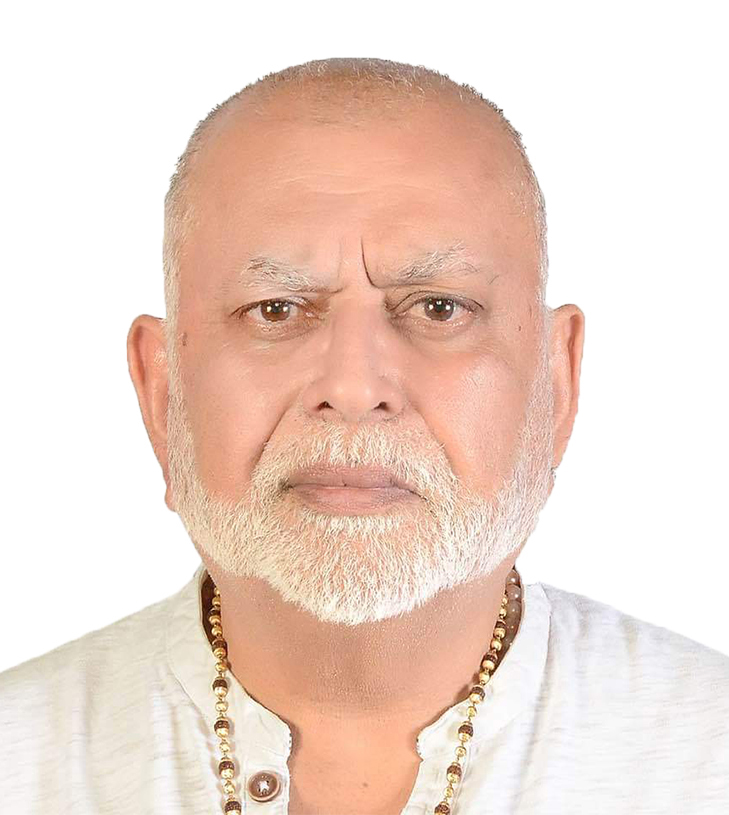
SUDHIR RUPARELIA
Building Uganda's largest private business empire from scratch after being expelled from the country as a teenager during Idi Amin's 1972 expulsion of Asians.
Uganda expelled him at 16 with the rest of its Asian population in 1972. He came back after Idi Amin fell and built the country's first billion-dollar private empire. Crane Bank grew to over 400,000 customers and became Uganda's second-largest bank by deposits before Bank of Uganda seized it in October 2016 — a move he has challenged in court every year since. He did not leave Uganda after that. He stayed, rebuilt, and kept going. The best proof that he belongs on this list: he was effectively expelled from Uganda twice — once by a dictator and once by a regulator — and he is still there.
Net Worth
$1.1 billion
Nationality
Ugandan
Time Horizon
Long-Term
Risk Appetite
8 / 10
Net Worth Context
- · Still a billionaire — just the quiet kind at the end of the table.
CAREER & BACKGROUND
Sudhir Ruparelia was born in 1956 in Jinja, Uganda, to Indian parents who ran a small business. He was 16 when Idi Amin ordered Uganda's entire Asian community expelled in 1972.
The family left with almost nothing. Ruparelia ended up in the UK, working factory jobs and restaurant kitchens.
He saved. When Amin's regime collapsed in 1979 and Ugandans of Asian origin were invited to return, Ruparelia went back.
Uganda in 1980 was in economic ruin. For most people, that was a problem.
For Ruparelia, it was an opportunity. He started trading commodities and foreign currency at a time when Uganda was lifting its currency controls.
That is where his first real money came from. By 1983, he had opened Crane Forex Bureau, one of Uganda's first licensed foreign exchange operations.
From forex, he built outward — real estate, banking, hospitality, education, media. Crane Bank launched in 1995 and grew consistently for two decades.
By 2016, it had over 400,000 customers and ranked as Uganda's second-largest bank by deposits. That October, the Bank of Uganda placed it under receivership, sold its assets to DFCU Bank, and Ruparelia called it a theft.
He has been litigating that position ever since, and courts have periodically agreed with him.
What is remarkable is what happened next. He did not leave Uganda.
He did not pivot to real estate in London or Dubai. He stayed and kept building Ruparelia Group, which today spans over 40 companies.
He is the closest thing Uganda has ever had to a one-man national development institution.
COMPANIES & ROLES
Ruparelia Group is the umbrella — a conglomerate with over 40 companies, almost all in Uganda. The flagship, until its seizure, was Crane Bank: Uganda's second-largest commercial bank by deposits.
Meera Investments is his real estate arm, holding a large portfolio of commercial and residential property across Kampala. His hospitality holdings include Speke Resort Munyonyo, a lakeside resort used for government and diplomatic events, and Speke Hotel, one of Kampala's oldest.
On the education side, he owns Kabira International School and Kampala Parents School. His media portfolio includes Crane FM and other radio stations.
He also has farming operations and smaller financial services businesses. The logic is simple: every major sector in Uganda's growing consumer economy.
He does not hold stocks in international companies. He holds the actual hotels, schools, and office buildings.
INVESTING STYLE & PHILOSOPHY
Ruparelia is a pure concentration play on one market: Uganda. He does not run a diversified fund or trade public securities.
He finds industries with growing local demand — banking, housing, education, hospitality — and builds physical businesses inside them. His edge is hyperlocal knowledge.
He understands Kampala's property market, Uganda's regulatory environment, and its political dynamics better than any foreign investor could. Where most investors spread risk across geographies, he concentrates in one country and diversifies across sectors within it.
The model is less portfolio manager and more nation builder. He holds for decades.
He reinvests profits rather than distributing them. He builds incrementally.
The result, over 40 years, is the largest private empire in Uganda's history.
THE PLAYBOOK
Risk Approach
Ruparelia built in a market where institutional risk is real and not theoretical. His biggest asset, Crane Bank, was seized by regulators in 2016 without warning.
His response was to keep building and sue the government. That tells you a lot about how he thinks about risk.
He does not try to eliminate it. He accepts a level of political and regulatory exposure that most Western investors would reject.
His risk management is relational: decades of operating in Uganda have given him an understanding of who matters, what is likely to happen, and how to navigate it. He is not heavily leveraged.
His approach is more own things outright than borrow to amplify returns. The Crane Bank episode proved that outright ownership does not protect you from government action.
But it also proved that he survives it.
Money Habits
Ruparelia lives well by any standard but is not known for the conspicuous global wealth tourism of billionaires who collect yachts and jets. He lives and works in Kampala.
His properties — including palatial family compounds — are substantial but grounded in Uganda. He is reported to drive himself to meetings and keep early working hours.
He has three wives and reportedly over 40 children, a lifestyle consistent with certain traditional East African families of his background. Many of his children are now involved in different parts of Ruparelia Group.
He has invested heavily in their education and sent many of them to international schools and universities. By most accounts, the empire is being built to last across generations, not to be sold.
BIGGEST WIN
The biggest win was Crane Bank — and the win was building it, not selling it. Ruparelia took a country with a devastated banking sector and built a bank from nothing into a 400,000-customer operation with dozens of branches and Uganda's second-largest deposit base.
The bank was a genuine economic institution. At its peak, Crane Bank was worth hundreds of millions of dollars.
Even after the seizure, he has extracted legal wins from the saga — courts have ruled in his favor on the manner of the takeover, and he has been awarded damages. The net financial outcome may still be negative.
But the story of building Uganda's largest indigenous bank from scratch had never been told before.
BIGGEST MISTAKE
The critics say Crane Bank's downfall was partly self-inflicted: the bank was growing faster than its capital base could support, expanding deposits and lending aggressively without the equity cushion to absorb a shock. Whether that is fully accurate is disputed — but the lesson is uncomfortable.
In banking, thin capital buffers are an invitation for regulators to act. Ruparelia has acknowledged in subsequent interviews that he could have been more aggressive about shoring up the bank's capital in 2014 and 2015, before the Bank of Uganda's patience ran out.
The cost: approximately 00 million in assets transferred to DFCU Bank at what his legal team described as far below market value.
FINANCIAL PHILOSOPHY
Ruparelia has never written a manifesto, but his record says it clearly. He believes Uganda is an undervalued market and that the way to profit from it is to own real businesses inside it, not to trade paper claims on it from abroad.
He reinvests obsessively. He holds for the very long term.
He believes that hard times create opportunities for people who stay when everyone else is leaving. He came back to Uganda after Amin because he believed the country would recover.
He stayed after Crane Bank was seized because he believed his claim to its assets was just. Both beliefs have proved right.
His financial worldview: stay in your market, own real things, fight for what is yours, and compound over decades.
FAMILY & PERSONAL LIFE
Ruparelia has three wives — Jyotsna, Rajni, and Miriam — and reportedly more than 40 children. He is a prominent figure in Uganda's Indian-origin community and an active participant in Hindu community events in Kampala.
His eldest son Rajiv Ruparelia is increasingly visible in the management of Ruparelia Group, and several other children have roles across different parts of the business. Despite his wealth, he has not relocated to London or Dubai.
He remains based in Kampala — a deliberate choice that reflects his belief in the country he has spent 40 years building.
EDUCATION
Ruparelia attended primary school in Uganda before the 1972 expulsion cut his formal schooling short. He completed secondary education in the UK.
He has been frank in interviews that formal credentials were not his path — the real education was the market: trading, calculating margins, understanding currencies. What his time in England gave him was work ethic and an understanding of how professional businesses operate.
He came back to Uganda and applied both.
BOOKS & RESOURCES
Ruparelia is not a prominent name on the global conference-circuit reading list, but the books that shaped entrepreneurs of his generation and background are well known.
The classic: a book about mindset, persistence, and the conviction that you can build something from nothing. It is well-worn on the shelves of East African business founders
Resonates for different reasons — a story of forced displacement, resilience, and returning to rebuild
For anyone wanting to understand the environment Ruparelia operates in, The Fortunes of Africa by Martin Meredith is essential: it covers the economic and political forces that shaped every major African market, including Uganda, across the last 100 years.
As an Amazon Associate, Netfigo earns from qualifying purchases. Book links above may be affiliate links.
QUOTES (6)
I came back to Uganda because I believed in the country. That belief has never left me.
The Bank of Uganda acted illegally and we will prove that in every court available to us.
When you have built something from nothing once, you know that losing everything is not the end. It is just the beginning of another chapter.
Uganda has everything: people, resources, potential. What it has lacked is people who believe in it enough to stay and build.
My biggest regret with Crane Bank was not moving faster to raise more capital when we had the chance. We were growing too fast for our own equity.
Every day I go to work I think about the thousands of Crane Bank employees and depositors. That is what keeps me going in the courts.
NETFIGO SCORE
Proprietary 5-dimension investor rating
Risk Appetite
Contrarian Index
Track Record
Accessibility
Time Horizon
Related Profiles
Investors
Aliko Dangote
Both are among Africa's most prominent self-made billionaires who built diversified empires in politically complex environments, starting from their home countries when outside capital was scarce.
Mohammed Dewji
Both are East African businessmen of South Asian descent who built major conglomerates after their families were affected by political turmoil, and both remain deeply invested in the African continent.
Head-to-Head
Compare Sudhir Ruparelia vs another investor.