Compare / Bill Gates vs Bill Nygren
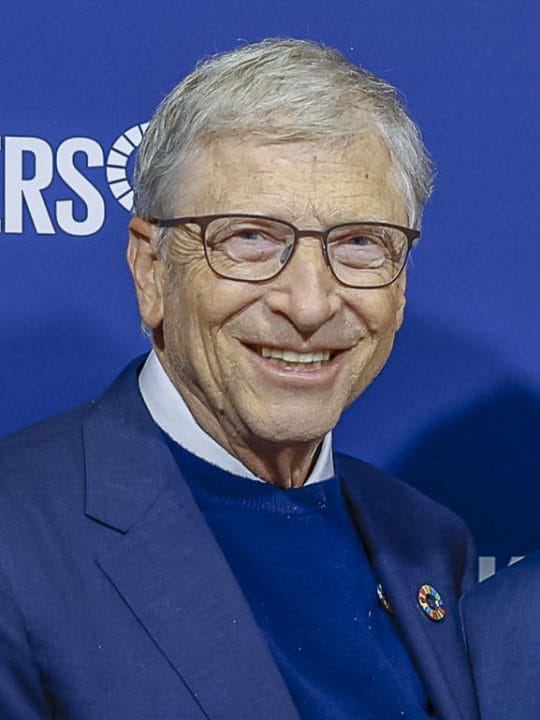
NETFIGO SCORE BATTLE
ORIGINAL DATARisk Appetite
Contrarian Index
Track Record
Accessibility
Time Horizon
AT A GLANCE
INVESTING STYLE
Bill Gates
Gates invests through Cascade Investment LLC in established, cash-generative businesses — railroads, waste management, agricultural equipment, farmland. His biggest single Cascade holding for years was Canadian National Railway.
He has sold most of his Microsoft stock over time. His investment philosophy outside Microsoft mirrors Buffett's: durable businesses with pricing power, bought at reasonable prices.
Bill Nygren
Classic large-cap value. Nygren buys businesses trading significantly below his estimate of intrinsic value — typically at least a 40% discount.
He focuses on companies with strong management teams, high free cash flow generation, and the ability to allocate capital intelligently. He runs concentrated portfolios (20-30 stocks) and is willing to hold positions for 3-5+ years.
He is a contrarian by default — his best ideas are usually in sectors the market hates.
FINANCIAL PHILOSOPHY
Bill Gates
His core framework: read obsessively, think long-term, and separate emotion from analysis. He takes annual Think Weeks — solo retreats to a lake cottage in the Pacific Northwest where he reads papers and books for two weeks with no interruptions.
He publishes a reading list twice a year at gatesnotes.com. He credits Warren Buffett, a friend since they were seated next to each other at a lunch in 1991, with teaching him to judge a business by how durable it is rather than how clever it is.
Bill Nygren
Nygren believes the market is generally efficient but occasionally misprices individual businesses, especially during periods of fear or sector-wide pessimism. He thinks like a business buyer, not a stock trader — asking "what would a rational private buyer pay for this entire company?" He considers management quality and skill at investing company money as important as the financial statements.
RISK TOLERANCE
Bill Gates
Gates's risk tolerance is intellectual and deliberate rather than impulsive. He takes genuinely large bets — TerraPower on nuclear fission, billions into climate technology, the Gates Foundation's campaigns to eradicate diseases that kill millions — but only after intense research.
His Think Weeks exist to force slow, rigorous thinking on big decisions. At Microsoft, he kept enough cash on hand to run the company for a full year with zero revenue because he never wanted short-term survival pressure to force a bad long-term decision.
That discipline carries into his personal finances.
Bill Nygren
Moderate. Nygren runs concentrated portfolios which adds stock-specific risk, but he focuses on large-cap, established businesses with strong balance sheets.
He is not swinging at biotech startups or crypto. The risk is being early and looking wrong for extended periods while waiting for the market to recognize value.
THE PLAYBOOK
Bill Gates
He wakes up early, exercises on a treadmill while watching documentaries, and reportedly does the dishes every night. He has said dishes are meditative.
For a man worth $108 billion, the emphasis on routine is either deeply grounded or very good PR. He drove himself to work at Microsoft for years and lived in a normal house long after he could afford otherwise.
Bill Nygren
Low-profile lifestyle. Based in Chicago.
Nygren does not seek media attention and rarely appears on financial TV. He writes detailed quarterly commentaries for Oakmark shareholders that are some of the best free investing education available.
He lets his long-term performance record speak for itself.
BIGGEST WIN
Bill Gates
Microsoft Windows. The decision to license MS-DOS to IBM for the PC while retaining the right to sell it to other manufacturers was arguably the most lucrative business decision in tech history.
Every PC manufacturer then licensed Windows. Gates captured the entire PC market without building the hardware.
By 1999, Microsoft's market cap hit $616 billion.
Bill Nygren
His consistency over nearly three decades. While many value managers have stumbled during the growth-dominated 2010s, Nygren adapted his approach to include "modern value" — companies like Alphabet and Meta that trade at low multiples relative to their growth rates.
His willingness to evolve his definition of value without abandoning the discipline has kept Oakmark relevant.
BIGGEST MISTAKE
Bill Gates
Missing the internet. Microsoft was late and initially dismissive of the internet as a platform.
Gates eventually course-corrected and wrote the Internet Tidal Wave memo in 1995, redirecting the entire company toward internet strategy. But the delay allowed Netscape to establish footholds, and Microsoft's browser monopoly tactics led to the landmark antitrust case United States v.
Microsoft in 2000, which threatened to break up the company.
Bill Nygren
Holding financial stocks through the 2008 financial crisis. Oakmark Fund was down significantly in 2008 as bank and insurance stocks cratered.
While the long-term recovery proved him right on many of those holdings, the drawdown was painful for investors who redeemed at the bottom.
CAREER HIGHLIGHTS
Bill Gates
Bill Gates was born in Seattle in 1955. He taught himself to program on a PDP-10 at age 13.
He enrolled at Harvard in 1973, dropped out in 1975, and moved to Albuquerque with Paul Allen to found Microsoft. Their break came when they licensed an operating system to IBM for the original PC — and crucially, retained the rights to sell it to anyone else.
That decision made Microsoft. Windows became the standard operating system for the world.
Gates became the world's richest person in 1995 and held that title for much of the next 15 years. He transitioned out of Microsoft's day-to-day around 2000 and fully moved into philanthropy via the Gates Foundation.
Bill Nygren
Joined Harris Associates (parent of Oakmark Funds) in 1983. Became lead portfolio manager of the Oakmark Fund in 2000.
Lead manager of Oakmark Select Fund since 1996 and Oakmark Global Select since 2006. Oakmark Select Fund has returned over 11% annually since 1996 inception.
Manages over $20 billion across Oakmark strategies. Named Morningstar Domestic Stock Fund Manager of the Year in 2001.
Known for buying out-of-favor large-cap value stocks and holding them for years. Has consistently argued that the market overreacts to short-term problems and undervalues franchises with durable competitive advantages.
COMPANIES & ROLES
Bill Gates
Microsoft (co-founder, former CEO and chairman). Cascade Investment LLC (his personal investment vehicle).
Bill & Melinda Gates Foundation (co-chair). Major holdings through Cascade include Canadian National Railway, Deere & Company, and significant farmland.
Early Microsoft equity remains a massive portion of his net worth.
Bill Nygren
Oakmark Funds (lead portfolio manager), Harris Associates (partner)
EDUCATION
Bill Gates
Harvard University — studied mathematics and computer science. Dropped out in 1975 after his sophomore year to found Microsoft.
Bill Nygren
CFA charterholder. MBA from the University of Wisconsin-Madison.
Undergraduate degree from the University of Minnesota. Has spent his entire career at Harris Associates — over 40 years at one firm.
BOOKS & RESOURCES
Bill Gates
The Road Ahead (his own book)
Business at the Speed of Thought (his own book)
As an Amazon Associate, Netfigo earns from qualifying purchases. Book links above may be affiliate links.
Bill Nygren
Nygren's own quarterly Oakmark commentaries are worth reading. He frequently cites Warren Buffett and Charlie Munger as influences
As an Amazon Associate, Netfigo earns from qualifying purchases. Book links above may be affiliate links.