
NETFIGO SCORE BATTLE
ORIGINAL DATARisk Appetite
Contrarian Index
Track Record
Accessibility
Time Horizon
AT A GLANCE
INVESTING STYLE
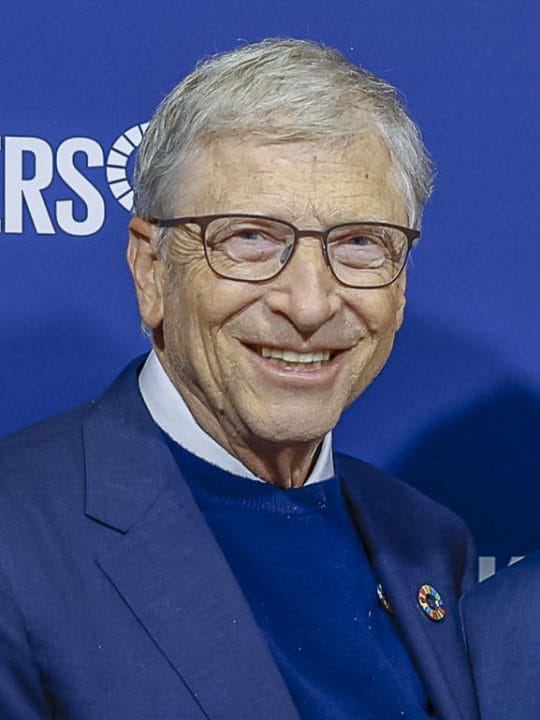
Bill Gates
Gates invests through Cascade Investment LLC in established, cash-generative businesses — railroads, waste management, agricultural equipment, farmland. His biggest single Cascade holding for years was Canadian National Railway.
He has sold most of his Microsoft stock over time. His investment philosophy outside Microsoft mirrors Buffett's: durable businesses with pricing power, bought at reasonable prices.
Stig Brodersen
Pure value investing in the Buffett-Graham tradition. Stig looks for companies trading below intrinsic value with strong competitive advantages, honest management, and a margin of safety.
He takes a concentrated approach — he'd rather own 10-15 well-understood positions than 50 diversified ones. He does deep fundamental analysis: reading annual reports, understanding unit economics, and calculating intrinsic value using discounted cash flow models.
He has an international perspective that most American value investors lack — he actively looks at companies in Europe, Asia, and emerging markets. He believes international markets are less efficiently priced than US markets, creating more opportunities for value investors.
FINANCIAL PHILOSOPHY
Bill Gates
His core framework: read obsessively, think long-term, and separate emotion from analysis. He takes annual Think Weeks — solo retreats to a lake cottage in the Pacific Northwest where he reads papers and books for two weeks with no interruptions.
He publishes a reading list twice a year at gatesnotes.com. He credits Warren Buffett, a friend since they were seated next to each other at a lunch in 1991, with teaching him to judge a business by how durable it is rather than how clever it is.
Stig Brodersen
Stig believes that investing should be approached with intellectual humility and continuous learning. His core philosophy: understand what you own, buy it at a price that gives you a margin of safety, and be patient.
He thinks most investors trade too frequently and react too emotionally to short-term market movements. He values international diversification more than most American investors, arguing that US-centric portfolios miss significant opportunities.
He also believes strongly in the democratization of financial education — TIP was built on the principle that world-class investing knowledge should be free.
RISK TOLERANCE
Bill Gates
Gates's risk tolerance is intellectual and deliberate rather than impulsive. He takes genuinely large bets — TerraPower on nuclear fission, billions into climate technology, the Gates Foundation's campaigns to eradicate diseases that kill millions — but only after intense research.
His Think Weeks exist to force slow, rigorous thinking on big decisions. At Microsoft, he kept enough cash on hand to run the company for a full year with zero revenue because he never wanted short-term survival pressure to force a bad long-term decision.
That discipline carries into his personal finances.
Stig Brodersen
Moderate. Stig is concentrated but disciplined.
He won't buy something unless his downside analysis shows limited risk of permanent capital loss. He's willing to hold cash when he can't find cheap stocks — sometimes 20-30% of his portfolio.
He's less speculative than Preston and has stayed closer to the original value investing framework. He manages risk through deep understanding of each position rather than through broad diversification.
THE PLAYBOOK
Bill Gates
He wakes up early, exercises on a treadmill while watching documentaries, and reportedly does the dishes every night. He has said dishes are meditative.
For a man worth $108 billion, the emphasis on routine is either deeply grounded or very good PR. He drove himself to work at Microsoft for years and lived in a normal house long after he could afford otherwise.
Stig Brodersen
Stig is methodical and disciplined. He reads extensively — annual reports, investing books, economic history, and academic research.
He maintains a structured process for evaluating potential investments and doesn't deviate from it based on market emotions. He lives in Denmark and maintains a lower public profile than many financial media personalities.
He reinvests podcast income into both his business and his personal investment portfolio.
BIGGEST WIN
Bill Gates
Microsoft Windows. The decision to license MS-DOS to IBM for the PC while retaining the right to sell it to other manufacturers was arguably the most lucrative business decision in tech history.
Every PC manufacturer then licensed Windows. Gates captured the entire PC market without building the hardware.
By 1999, Microsoft's market cap hit $616 billion.
Stig Brodersen
Co-building The Investor's Podcast Network into a global phenomenon. The show's reach — 100 million+ downloads — means Stig has directly contributed to the financial education of millions of people across dozens of countries.
His interviews with top investors have created a free archive of investing wisdom that rivals any MBA curriculum. On a personal investment level, his consistent application of value principles across international markets has produced solid long-term returns.
BIGGEST MISTAKE
Bill Gates
Missing the internet. Microsoft was late and initially dismissive of the internet as a platform.
Gates eventually course-corrected and wrote the Internet Tidal Wave memo in 1995, redirecting the entire company toward internet strategy. But the delay allowed Netscape to establish footholds, and Microsoft's browser monopoly tactics led to the landmark antitrust case United States v.
Microsoft in 2000, which threatened to break up the company.
Stig Brodersen
Stig has been open about early investment mistakes where he bought companies that were cheap for a reason — value traps where the low price reflected genuine business deterioration rather than market mispricing. He's talked about the importance of distinguishing between "cheap" and "good value," which is one of the hardest lessons in value investing.
He's also acknowledged that running a media business while managing a personal portfolio creates time allocation challenges.
CAREER HIGHLIGHTS
Bill Gates
Bill Gates was born in Seattle in 1955. He taught himself to program on a PDP-10 at age 13.
He enrolled at Harvard in 1973, dropped out in 1975, and moved to Albuquerque with Paul Allen to found Microsoft. Their break came when they licensed an operating system to IBM for the original PC — and crucially, retained the rights to sell it to anyone else.
That decision made Microsoft. Windows became the standard operating system for the world.
Gates became the world's richest person in 1995 and held that title for much of the next 15 years. He transitioned out of Microsoft's day-to-day around 2000 and fully moved into philanthropy via the Gates Foundation.
Stig Brodersen
Stig Brodersen grew up in Denmark and studied business and finance. He earned his MBA and worked in corporate finance before deciding his real passion was investing education.
He connected with Preston Pysh online through their shared love of Warren Buffett and Benjamin Graham, and they launched The Investor's Podcast in 2014. The concept was brilliantly simple: read the classic investing books that every successful investor recommends, break them down chapter by chapter in plain language, and give them away for free as a podcast.
It worked beyond anyone's expectations. The show grew into The Investor's Podcast Network, now hosting multiple shows including We Study Billionaires, Millennial Investing, and Bitcoin Fundamentals.
The network has surpassed 100 million total downloads. When Preston shifted his focus to Bitcoin, Stig took the lead on We Study Billionaires, conducting in-depth interviews with legendary investors.
He's interviewed Howard Marks, Mohnish Pabrai, Guy Spier, Tobias Carlisle, and dozens of other investing heavyweights. He also co-authored books with Preston on Buffett's investment methods.
COMPANIES & ROLES
Bill Gates
Microsoft (co-founder, former CEO and chairman). Cascade Investment LLC (his personal investment vehicle).
Bill & Melinda Gates Foundation (co-chair). Major holdings through Cascade include Canadian National Railway, Deere & Company, and significant farmland.
Early Microsoft equity remains a massive portion of his net worth.
Stig Brodersen
The Investor's Podcast Network — co-founded with Preston Pysh, one of the largest financial media networks in the world. We Study Billionaires — the flagship podcast, now primarily hosted by Stig.
He co-authored books on Warren Buffett's investment frameworks with Preston Pysh. He also runs his own investment portfolio following value investing principles.
EDUCATION
Bill Gates
Harvard University — studied mathematics and computer science. Dropped out in 1975 after his sophomore year to found Microsoft.
Stig Brodersen
Stig earned an MBA with a focus on finance and business. His academic background in business gives him a structured analytical framework for evaluating companies.
He's also self-educated through hundreds of investing books that he's read and discussed on the podcast — the show itself has been his ongoing graduate education in investing.
BOOKS & RESOURCES
Bill Gates
The Road Ahead (his own book)
Business at the Speed of Thought (his own book)
As an Amazon Associate, Netfigo earns from qualifying purchases. Book links above may be affiliate links.
Stig Brodersen
The foundation of Stig's entire investing approach
The more technical deep-dive that Stig considers essential for serious investors
A book about unconventional CEOs that Stig frequently recommends
As an Amazon Associate, Netfigo earns from qualifying purchases. Book links above may be affiliate links.