Compare / Howard Marks vs Anas Sefrioui
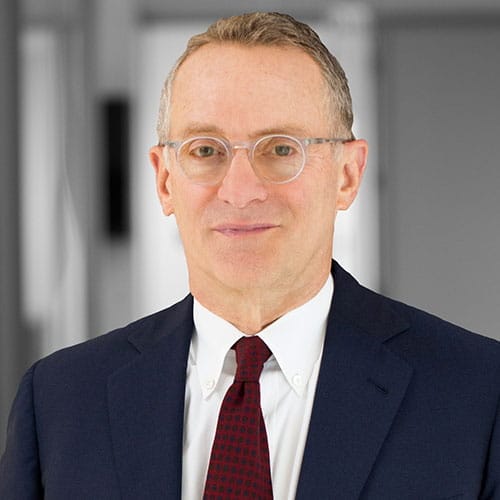
HOWARD MARKS
Oaktree Capital, The Most Important Thing, second-level thinking, investor memos
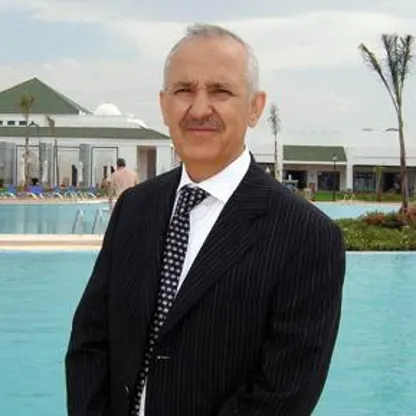
ANAS SEFRIOUI
Building Morocco’s largest real estate empire from scratch and constructing over 300,000 affordable homes acro…
NETFIGO SCORE BATTLE
ORIGINAL DATARisk Appetite
Contrarian Index
Track Record
Accessibility
Time Horizon
AT A GLANCE
INVESTING STYLE
Howard Marks
Marks calls it second-level thinking. First-level thinking is: "This company has good prospects — I''ll buy the stock." Second-level thinking is: "This company has good prospects, but everyone already knows that.
The stock is priced for perfection. I''ll pass." Being right about fundamentals isn''t enough.
You also have to be right about what the market already knows and what the price already reflects.
His other major concept: risk is not volatility. Risk is the probability of permanent loss of capital.
A bond that drops 30% in price isn''t necessarily risky if the underlying company is sound and will pay the debt back. A bond that barely moves but is issued by a company about to default is extremely risky.
He thinks most investors confuse the two, constantly.
Anas Sefrioui
Sefrioui is a real estate operator first, investor second. He builds companies, not portfolios.
His growth approach has always been organic — acquire land, develop it, sell units, reinvest. No interest in financial markets or passive allocation.
The Africa expansion was the one big strategic bet beyond his home market. Bold in concept.
Mixed in execution.
FINANCIAL PHILOSOPHY
Howard Marks
His core ideas, from The Most Important Thing: understand market cycles — everything is cyclical, including investor sentiment, credit availability, and valuations. Recognise where you are in a cycle and position accordingly.
Control risk obsessively — not because you''re afraid, but because avoiding the big losses is the primary driver of long-term returns. Practice second-level thinking — don''t just ask what''s true, ask what''s already priced in.
And be patient. The best opportunities come during crises, when forced sellers are creating discounts that wouldn''t exist in calmer markets.
Anas Sefrioui
Build where people actually need to live. Volume beats margin.
The goal is not the most impressive building but the most buildings. He has consistently argued that Africa’s housing deficit — running into the hundreds of millions of units — is the biggest real estate opportunity on earth.
RISK TOLERANCE
Howard Marks
Marks is deeply conservative about the downside. His framework: focus on risk control, not return maximisation.
Superior long-term returns come from avoiding the big losses, not from hitting the biggest wins. This sounds obvious.
Almost no one actually practises it. He has written extensively about how human psychology — overconfidence in good times, panic in bad times — makes sustained risk control incredibly hard.
He''s comfortable in distressed situations that most investors find too ugly to look at. The apparent ugliness is where the value is.
Anas Sefrioui
High on operational bets, low on financial market speculation. Building in emerging markets involves real currency exposure, regulatory uncertainty, and infrastructure gaps — Sefrioui leaned into all of them.
The 2020 legal troubles showed that close proximity to political capital can also become a liability overnight.
THE PLAYBOOK
Howard Marks
He lives in Los Angeles, where Oaktree is based. He is still active as co-chairman and still writing memos — he''s written over 100 since 1990.
He donates meaningfully to Penn and other academic institutions. He gives speeches at conferences and academic events.
He is considerably more understated than many hedge fund managers of comparable success — he''s interested in ideas, not attention. His son Andrew is a technology investor, and a long argument between the two of them about growth stocks became the basis of one of his best-known memos, Something of Value, in 2021.
Anas Sefrioui
Not known for conspicuous consumption. His wealth has been largely tied up in Addoha shares and land holdings rather than liquid assets.
He is a builder, not a spender.
BIGGEST WIN
Howard Marks
2008–2009. When the financial crisis hit, high-yield bond markets froze.
Perfectly sound debt was trading at catastrophic discounts because panic selling created forced sellers. Oaktree, which had been raising a distressed debt fund precisely for this type of environment, deployed capital aggressively through the crisis.
Fund VI, raised in 2008, became one of the most successful distressed debt funds in history. The returns were exceptional because the panic-induced discounts were exceptional.
Marks had been writing about exactly this type of opportunity for years. When it arrived, he was ready for it.
Anas Sefrioui
The 2006 Casablanca Stock Exchange IPO. Raising 6 billion Moroccan dirhams on the back of a simple affordable housing story, in a market that was not yet sophisticated, was a remarkable capital markets achievement.
It funded the next decade of growth.
BIGGEST MISTAKE
Howard Marks
By his own account, he''s avoided most of the disasters. His framework is explicitly designed to prevent catastrophic errors.
The closest thing to a meaningful mistake: being too early warning about the dot-com bubble — he published a memo in January 2000 laying out why tech valuations were unsustainable. He was right, but the bubble ran for another three months before collapsing.
Being early is expensive. He''s also honest that avoiding spectacular losses sometimes means missing spectacular gains — that''s the trade-off he''s consciously made.
Anas Sefrioui
Expanding into Sub-Saharan Africa too quickly, without enough local partnerships and local capital structures, created operational strain. The 2020 legal case may also trace back to financial engineering under pressure from the Africa overextension.
Governance did not scale as fast as ambition.
CAREER HIGHLIGHTS
Howard Marks
Howard Marks grew up in Flushing, Queens. He studied finance at the Wharton School of the University of Pennsylvania and got his MBA from the University of Chicago Booth School of Business.
He started his career at Citibank, where he ran their bond department and later their convertible securities and high-yield debt portfolios. He moved to TCW Group in Los Angeles in 1985 to manage distressed debt and high-yield bonds.
In 1995, he co-founded Oaktree Capital Management with six colleagues from TCW. The idea: focus specifically on alternative and distressed investments — high-yield bonds, distressed debt, convertible securities, private credit.
Oaktree went public in 2012 and was acquired by Brookfield Asset Management in 2019 for $4.7 billion. Marks stayed on as co-chairman.
Through all of it — from 1990 to today — he was writing the memos.
Anas Sefrioui
Anas Sefrioui was born in 1956 in Fez, Morocco. He started in real estate in the 1980s with small construction projects in Casablanca.
In 1988 he formally founded Groupe Addoha — later incorporated as Douja Promotion Group. For two decades he focused exclusively on affordable and mid-range housing, staying far from the luxury segment.
The strategy paid off. The 2006 Casablanca Stock Exchange IPO raised around 6 billion dirhams, was heavily oversubscribed, and pushed his personal wealth to an estimated billion, briefly making him one of the richest people in Africa.
Through the 2010s he expanded into Sub-Saharan Africa — Ivory Coast, Senegal, Ghana, and Cameroon — targeting the same underserved affordable housing market. Then came the turbulence.
A restructuring of Morocco’s affordable housing subsidy program hit margins hard. In 2020, Moroccan authorities charged him in connection with a mortgage fraud case linked to Crédit Immobilier.
He denied the charges. The Addoha stock price fell sharply.
The Africa expansion slowed. He remains one of the most significant real estate figures the continent has produced.
COMPANIES & ROLES
Howard Marks
Oaktree Capital Management, co-founded in 1995, manages roughly $170 billion across credit strategies. The firm specialises in high-yield bonds, distressed debt, senior loans, convertible securities, and real estate credit.
Distressed debt, in plain English, works like this: when a company gets into trouble, its bonds get cheap. If the company recovers — or even partially recovers — those bonds can multiply in value.
The skill is telling the difference between a company that''s temporarily distressed and one that''s actually going bankrupt. Marks has been making that call for 50 years.
Oaktree was acquired by Brookfield in 2019 for $4.7 billion — a reasonable indicator that the track record speaks for itself.
Anas Sefrioui
Groupe Addoha (Douja Promotion Group) is the whole story. Listed on the Casablanca Stock Exchange under the ticker ADH, its market cap peaked near 25 billion dirhams.
The company builds residential properties across four segments: affordable, mid-range, upper mid-range, and a small luxury slice — though the bread and butter has always been the lower two. At its height, Addoha delivered tens of thousands of housing units per year across Morocco and several Sub-Saharan African markets.
Sefrioui also built out logistics and manufacturing businesses tied to construction supply chains.
EDUCATION
Howard Marks
Wharton School of the University of Pennsylvania, BS in Finance summa cum laude, Phi Beta Kappa, 1967. University of Chicago Booth School of Business, MBA, 1969.
He has said that Chicago — where the efficient market hypothesis was gospel — taught him exactly what the prevailing wisdom was, which made it easier to know when to disagree with it.
Anas Sefrioui
Educated in Morocco in real estate and construction. Not known for Western business school credentials.
He built his expertise in the field, not the classroom.
BOOKS & RESOURCES
Howard Marks
Beyond the books: his memos are freely available on Oaktrees website and worth reading in order
The 2000 memo "bubble.com" — written in January 2000, three months before the Nasdaq peaked — is the one to find first
The bedrock Marks builds on
The best history of how humans have thought about risk over centuries. Marks has recommended it multiple times
As an Amazon Associate, Netfigo earns from qualifying purchases. Book links above may be affiliate links.
Anas Sefrioui
Stripped of the politics, it captures the land-banker mindset he has always embodied
Introduced millions to the idea that real estate builds wealth in ways employment never can
The Intelligent Entrepreneur by Bill Murphy Jr. speaks to the relentless, opportunity
Driven building Sefrioui exemplifies
Africa Rising by Vijay Mahajan laid out the case for Africa’s emerging consumer class years before it became consensus — and is the best intellectual framework for understanding his Africa strategy.
As an Amazon Associate, Netfigo earns from qualifying purchases. Book links above may be affiliate links.