Compare / Howard Marks vs Stig Brodersen
NETFIGO SCORE BATTLE
ORIGINAL DATARisk Appetite
Contrarian Index
Track Record
Accessibility
Time Horizon
AT A GLANCE
INVESTING STYLE
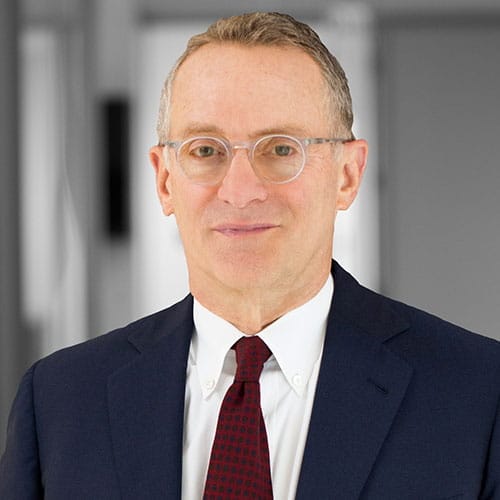
Howard Marks
Marks calls it second-level thinking. First-level thinking is: "This company has good prospects — I''ll buy the stock." Second-level thinking is: "This company has good prospects, but everyone already knows that.
The stock is priced for perfection. I''ll pass." Being right about fundamentals isn''t enough.
You also have to be right about what the market already knows and what the price already reflects.
His other major concept: risk is not volatility. Risk is the probability of permanent loss of capital.
A bond that drops 30% in price isn''t necessarily risky if the underlying company is sound and will pay the debt back. A bond that barely moves but is issued by a company about to default is extremely risky.
He thinks most investors confuse the two, constantly.
Stig Brodersen
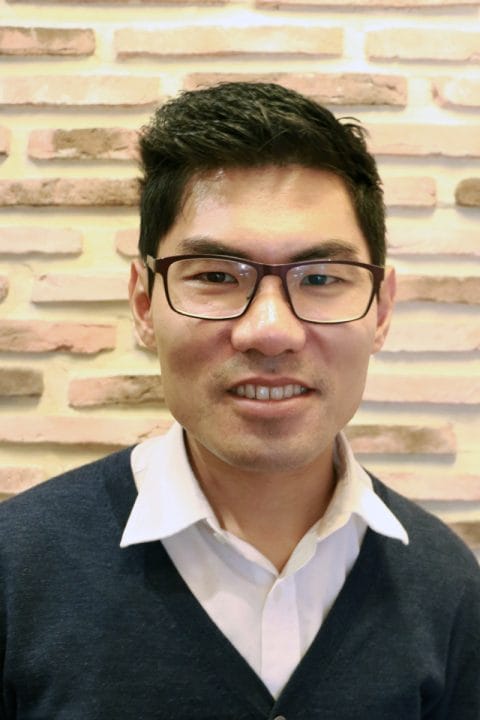
Pure value investing in the Buffett-Graham tradition. Stig looks for companies trading below intrinsic value with strong competitive advantages, honest management, and a margin of safety.
He takes a concentrated approach — he'd rather own 10-15 well-understood positions than 50 diversified ones. He does deep fundamental analysis: reading annual reports, understanding unit economics, and calculating intrinsic value using discounted cash flow models.
He has an international perspective that most American value investors lack — he actively looks at companies in Europe, Asia, and emerging markets. He believes international markets are less efficiently priced than US markets, creating more opportunities for value investors.
FINANCIAL PHILOSOPHY
Howard Marks
His core ideas, from The Most Important Thing: understand market cycles — everything is cyclical, including investor sentiment, credit availability, and valuations. Recognise where you are in a cycle and position accordingly.
Control risk obsessively — not because you''re afraid, but because avoiding the big losses is the primary driver of long-term returns. Practice second-level thinking — don''t just ask what''s true, ask what''s already priced in.
And be patient. The best opportunities come during crises, when forced sellers are creating discounts that wouldn''t exist in calmer markets.
Stig Brodersen
Stig believes that investing should be approached with intellectual humility and continuous learning. His core philosophy: understand what you own, buy it at a price that gives you a margin of safety, and be patient.
He thinks most investors trade too frequently and react too emotionally to short-term market movements. He values international diversification more than most American investors, arguing that US-centric portfolios miss significant opportunities.
He also believes strongly in the democratization of financial education — TIP was built on the principle that world-class investing knowledge should be free.
RISK TOLERANCE
Howard Marks
Marks is deeply conservative about the downside. His framework: focus on risk control, not return maximisation.
Superior long-term returns come from avoiding the big losses, not from hitting the biggest wins. This sounds obvious.
Almost no one actually practises it. He has written extensively about how human psychology — overconfidence in good times, panic in bad times — makes sustained risk control incredibly hard.
He''s comfortable in distressed situations that most investors find too ugly to look at. The apparent ugliness is where the value is.
Stig Brodersen
Moderate. Stig is concentrated but disciplined.
He won't buy something unless his downside analysis shows limited risk of permanent capital loss. He's willing to hold cash when he can't find cheap stocks — sometimes 20-30% of his portfolio.
He's less speculative than Preston and has stayed closer to the original value investing framework. He manages risk through deep understanding of each position rather than through broad diversification.
THE PLAYBOOK
Howard Marks
He lives in Los Angeles, where Oaktree is based. He is still active as co-chairman and still writing memos — he''s written over 100 since 1990.
He donates meaningfully to Penn and other academic institutions. He gives speeches at conferences and academic events.
He is considerably more understated than many hedge fund managers of comparable success — he''s interested in ideas, not attention. His son Andrew is a technology investor, and a long argument between the two of them about growth stocks became the basis of one of his best-known memos, Something of Value, in 2021.
Stig Brodersen
Stig is methodical and disciplined. He reads extensively — annual reports, investing books, economic history, and academic research.
He maintains a structured process for evaluating potential investments and doesn't deviate from it based on market emotions. He lives in Denmark and maintains a lower public profile than many financial media personalities.
He reinvests podcast income into both his business and his personal investment portfolio.
BIGGEST WIN
Howard Marks
2008–2009. When the financial crisis hit, high-yield bond markets froze.
Perfectly sound debt was trading at catastrophic discounts because panic selling created forced sellers. Oaktree, which had been raising a distressed debt fund precisely for this type of environment, deployed capital aggressively through the crisis.
Fund VI, raised in 2008, became one of the most successful distressed debt funds in history. The returns were exceptional because the panic-induced discounts were exceptional.
Marks had been writing about exactly this type of opportunity for years. When it arrived, he was ready for it.
Stig Brodersen
Co-building The Investor's Podcast Network into a global phenomenon. The show's reach — 100 million+ downloads — means Stig has directly contributed to the financial education of millions of people across dozens of countries.
His interviews with top investors have created a free archive of investing wisdom that rivals any MBA curriculum. On a personal investment level, his consistent application of value principles across international markets has produced solid long-term returns.
BIGGEST MISTAKE
Howard Marks
By his own account, he''s avoided most of the disasters. His framework is explicitly designed to prevent catastrophic errors.
The closest thing to a meaningful mistake: being too early warning about the dot-com bubble — he published a memo in January 2000 laying out why tech valuations were unsustainable. He was right, but the bubble ran for another three months before collapsing.
Being early is expensive. He''s also honest that avoiding spectacular losses sometimes means missing spectacular gains — that''s the trade-off he''s consciously made.
Stig Brodersen
Stig has been open about early investment mistakes where he bought companies that were cheap for a reason — value traps where the low price reflected genuine business deterioration rather than market mispricing. He's talked about the importance of distinguishing between "cheap" and "good value," which is one of the hardest lessons in value investing.
He's also acknowledged that running a media business while managing a personal portfolio creates time allocation challenges.
CAREER HIGHLIGHTS
Howard Marks
Howard Marks grew up in Flushing, Queens. He studied finance at the Wharton School of the University of Pennsylvania and got his MBA from the University of Chicago Booth School of Business.
He started his career at Citibank, where he ran their bond department and later their convertible securities and high-yield debt portfolios. He moved to TCW Group in Los Angeles in 1985 to manage distressed debt and high-yield bonds.
In 1995, he co-founded Oaktree Capital Management with six colleagues from TCW. The idea: focus specifically on alternative and distressed investments — high-yield bonds, distressed debt, convertible securities, private credit.
Oaktree went public in 2012 and was acquired by Brookfield Asset Management in 2019 for $4.7 billion. Marks stayed on as co-chairman.
Through all of it — from 1990 to today — he was writing the memos.
Stig Brodersen
Stig Brodersen grew up in Denmark and studied business and finance. He earned his MBA and worked in corporate finance before deciding his real passion was investing education.
He connected with Preston Pysh online through their shared love of Warren Buffett and Benjamin Graham, and they launched The Investor's Podcast in 2014. The concept was brilliantly simple: read the classic investing books that every successful investor recommends, break them down chapter by chapter in plain language, and give them away for free as a podcast.
It worked beyond anyone's expectations. The show grew into The Investor's Podcast Network, now hosting multiple shows including We Study Billionaires, Millennial Investing, and Bitcoin Fundamentals.
The network has surpassed 100 million total downloads. When Preston shifted his focus to Bitcoin, Stig took the lead on We Study Billionaires, conducting in-depth interviews with legendary investors.
He's interviewed Howard Marks, Mohnish Pabrai, Guy Spier, Tobias Carlisle, and dozens of other investing heavyweights. He also co-authored books with Preston on Buffett's investment methods.
COMPANIES & ROLES
Howard Marks
Oaktree Capital Management, co-founded in 1995, manages roughly $170 billion across credit strategies. The firm specialises in high-yield bonds, distressed debt, senior loans, convertible securities, and real estate credit.
Distressed debt, in plain English, works like this: when a company gets into trouble, its bonds get cheap. If the company recovers — or even partially recovers — those bonds can multiply in value.
The skill is telling the difference between a company that''s temporarily distressed and one that''s actually going bankrupt. Marks has been making that call for 50 years.
Oaktree was acquired by Brookfield in 2019 for $4.7 billion — a reasonable indicator that the track record speaks for itself.
Stig Brodersen
The Investor's Podcast Network — co-founded with Preston Pysh, one of the largest financial media networks in the world. We Study Billionaires — the flagship podcast, now primarily hosted by Stig.
He co-authored books on Warren Buffett's investment frameworks with Preston Pysh. He also runs his own investment portfolio following value investing principles.
EDUCATION
Howard Marks
Wharton School of the University of Pennsylvania, BS in Finance summa cum laude, Phi Beta Kappa, 1967. University of Chicago Booth School of Business, MBA, 1969.
He has said that Chicago — where the efficient market hypothesis was gospel — taught him exactly what the prevailing wisdom was, which made it easier to know when to disagree with it.
Stig Brodersen
Stig earned an MBA with a focus on finance and business. His academic background in business gives him a structured analytical framework for evaluating companies.
He's also self-educated through hundreds of investing books that he's read and discussed on the podcast — the show itself has been his ongoing graduate education in investing.
BOOKS & RESOURCES
Howard Marks
Beyond the books: his memos are freely available on Oaktrees website and worth reading in order
The 2000 memo "bubble.com" — written in January 2000, three months before the Nasdaq peaked — is the one to find first
The bedrock Marks builds on
The best history of how humans have thought about risk over centuries. Marks has recommended it multiple times
As an Amazon Associate, Netfigo earns from qualifying purchases. Book links above may be affiliate links.
Stig Brodersen
The foundation of Stig's entire investing approach
The more technical deep-dive that Stig considers essential for serious investors
A book about unconventional CEOs that Stig frequently recommends
As an Amazon Associate, Netfigo earns from qualifying purchases. Book links above may be affiliate links.