Compare / Ken Griffin vs Anas Sefrioui
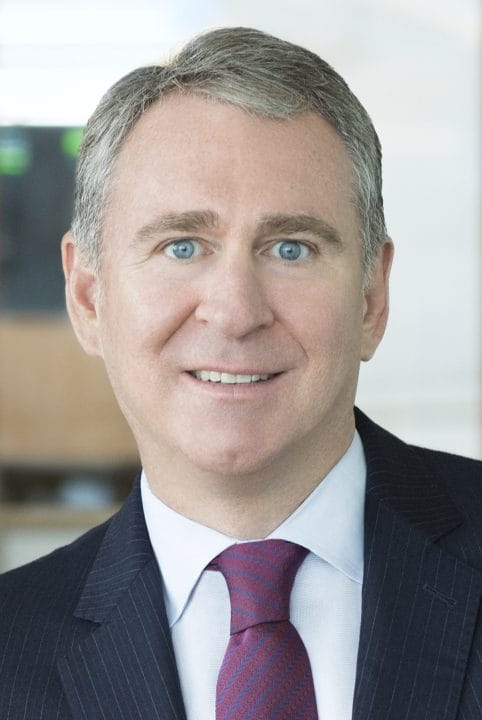
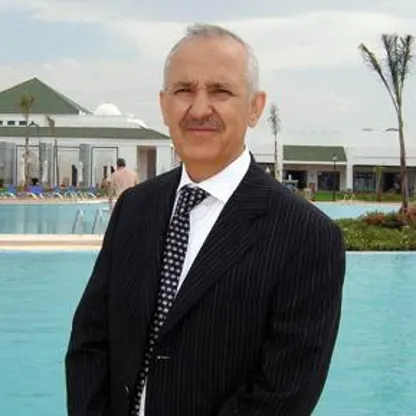
NETFIGO SCORE BATTLE
ORIGINAL DATARisk Appetite
Contrarian Index
Track Record
Accessibility
Time Horizon
AT A GLANCE
INVESTING STYLE
Ken Griffin
Citadel is multi-strategy, meaning it runs many independent investment approaches simultaneously — equities, fixed income, commodities, macro, quantitative. Within each strategy, the approach is deeply research-driven and increasingly quantitative.
Griffin has built an organization that competes by having better data, better models, and better technology than rivals. He recruits aggressively from top universities and research institutions.
The edge is institutional, not personal — it is the collective intelligence of thousands of analysts and engineers working together, not one man's intuition.
Anas Sefrioui
Sefrioui is a real estate operator first, investor second. He builds companies, not portfolios.
His growth approach has always been organic — acquire land, develop it, sell units, reinvest. No interest in financial markets or passive allocation.
The Africa expansion was the one big strategic bet beyond his home market. Bold in concept.
Mixed in execution.
FINANCIAL PHILOSOPHY
Ken Griffin
Griffin believes that markets are competitions between the best-informed, best-equipped participants, and that winning over time requires relentless investment in research, technology, and talent. He has said that Citadel spends more on technology than most technology companies its size.
His philosophy is not about finding one great insight — it is about building systems that generate small edges consistently, at enormous scale, across thousands of trades and hundreds of strategies.
Anas Sefrioui
Build where people actually need to live. Volume beats margin.
The goal is not the most impressive building but the most buildings. He has consistently argued that Africa’s housing deficit — running into the hundreds of millions of units — is the biggest real estate opportunity on earth.
RISK TOLERANCE
Ken Griffin
Griffin is known for demanding risk management and being willing to cut positions aggressively when models signal danger. The 2008 loss of 55% is the exception that proves the rule — he survived it, refined the risk systems, and the firm has been significantly more resilient since.
He uses leverage extensively, but with a risk framework sophisticated enough that most of the firm's strategies are not correlated — when one book loses, another may gain. He is also known for being very hard on underperforming managers.
Anas Sefrioui
High on operational bets, low on financial market speculation. Building in emerging markets involves real currency exposure, regulatory uncertainty, and infrastructure gaps — Sefrioui leaned into all of them.
The 2020 legal troubles showed that close proximity to political capital can also become a liability overnight.
THE PLAYBOOK
Ken Griffin
Griffin is one of the most extravagant spenders of any investor on this list, and he does not hide it. He paid $238 million for a Manhattan penthouse, the most expensive home ever sold in the United States.
He bought a $122 million mansion in Palm Beach. He owns a Boeing 767 private jet.
He has donated over $1 billion to arts, education, and political causes — the University of Chicago's economics department is named after him following a $125 million gift. He is the largest individual donor in Illinois political history.
Anas Sefrioui
Not known for conspicuous consumption. His wealth has been largely tied up in Addoha shares and land holdings rather than liquid assets.
He is a builder, not a spender.
BIGGEST WIN
Ken Griffin
2022 is the defining year. While global markets were in freefall — the S&P 500 down 18%, bonds down dramatically, most hedge funds losing money — Citadel's Wellington fund returned approximately 38%.
The firm made $16 billion in profit for its investors in a single year, the most ever made by a hedge fund in one calendar year. The strategy worked because Citadel had positioned correctly for rising inflation and rising rates — a macro call that most funds missed entirely.
The $16 billion in 2022 alone exceeded the total profits of virtually any fund over its entire history.
Anas Sefrioui
The 2006 Casablanca Stock Exchange IPO. Raising 6 billion Moroccan dirhams on the back of a simple affordable housing story, in a market that was not yet sophisticated, was a remarkable capital markets achievement.
It funded the next decade of growth.
BIGGEST MISTAKE
Ken Griffin
2008 is the dark chapter. Citadel's flagship funds lost approximately 55% during the financial crisis — not because of bad trading specifically, but because of a liquidity crisis.
Citadel held positions in illiquid securities that could not be sold without moving the market against them, and redemption pressure from investors compounded the problem. Griffin was forced to suspend redemptions — meaning investors who wanted to leave could not get their money out.
He spent months rebuilding. The firm survived, but the episode forced a fundamental redesign of Citadel's liquidity management and risk controls.
Anas Sefrioui
Expanding into Sub-Saharan Africa too quickly, without enough local partnerships and local capital structures, created operational strain. The 2020 legal case may also trace back to financial engineering under pressure from the Africa overextension.
Governance did not scale as fast as ambition.
CAREER HIGHLIGHTS
Ken Griffin
Griffin grew up in Boca Raton, Florida, and showed early signs of being extremely competitive and extremely interested in markets. He enrolled at Harvard in 1986 and almost immediately started trading — he installed a satellite dish on the roof of his dorm to get live stock data, and began running convertible bond arbitrage strategies with money raised from family.
By the time he graduated in 1989, he had been profitable enough that a hedge fund manager named Frank Meyer had given him $1 million to manage.
He launched Citadel LLC in 1990 at age 22 with $4.6 million. The name came from the idea of building something fortified, defensible, and hard to breach.
He spent the 1990s building out quantitative infrastructure, recruiting mathematicians and engineers rather than traditional traders, and expanding into multiple strategies. By the 2000s, Citadel was one of the most feared names in hedge funds.
The 2008 financial crisis hit the firm hard — the flagship funds lost about 55% — but Griffin did not close. He survived, rebuilt, and came out stronger.
Anas Sefrioui
Anas Sefrioui was born in 1956 in Fez, Morocco. He started in real estate in the 1980s with small construction projects in Casablanca.
In 1988 he formally founded Groupe Addoha — later incorporated as Douja Promotion Group. For two decades he focused exclusively on affordable and mid-range housing, staying far from the luxury segment.
The strategy paid off. The 2006 Casablanca Stock Exchange IPO raised around 6 billion dirhams, was heavily oversubscribed, and pushed his personal wealth to an estimated billion, briefly making him one of the richest people in Africa.
Through the 2010s he expanded into Sub-Saharan Africa — Ivory Coast, Senegal, Ghana, and Cameroon — targeting the same underserved affordable housing market. Then came the turbulence.
A restructuring of Morocco’s affordable housing subsidy program hit margins hard. In 2020, Moroccan authorities charged him in connection with a mortgage fraud case linked to Crédit Immobilier.
He denied the charges. The Addoha stock price fell sharply.
The Africa expansion slowed. He remains one of the most significant real estate figures the continent has produced.
COMPANIES & ROLES
Ken Griffin
Citadel LLC is the hedge fund business, managing approximately $58 billion. It runs multiple strategies across equities, fixed income, macro, and credit.
Its flagship Wellington and Kensington funds have produced extraordinary long-term returns — compounding at roughly 19% annually since inception. The firm has thousands of employees across multiple continents and is considered one of the most technologically sophisticated investment firms in the world.
Citadel Securities is a separate but equally important business. It is one of the largest market makers in US equities, handling approximately 25–30% of all US retail equity order flow.
When someone uses Robinhood or TD Ameritrade to buy a stock, there is a meaningful chance Citadel Securities is on the other side of that trade. This business is enormously profitable and is what made Griffin one of the wealthiest people in finance.
Anas Sefrioui
Groupe Addoha (Douja Promotion Group) is the whole story. Listed on the Casablanca Stock Exchange under the ticker ADH, its market cap peaked near 25 billion dirhams.
The company builds residential properties across four segments: affordable, mid-range, upper mid-range, and a small luxury slice — though the bread and butter has always been the lower two. At its height, Addoha delivered tens of thousands of housing units per year across Morocco and several Sub-Saharan African markets.
Sefrioui also built out logistics and manufacturing businesses tied to construction supply chains.
EDUCATION
Ken Griffin
Harvard University, BA in Economics, 1989. He arrived already interested in markets and left already running a fund.
He has donated hundreds of millions to Harvard and to the field of economics broadly — the Griffin Graduate School of Arts and Sciences at Harvard was named in his honor following a $300 million gift, the largest in Harvard's history.
Anas Sefrioui
Educated in Morocco in real estate and construction. Not known for Western business school credentials.
He built his expertise in the field, not the classroom.
BOOKS & RESOURCES
Ken Griffin
Griffin does not write books and rarely gives long-form interviews, so there is no single definitive text on him
His Economic Club of New York and Bloomberg Invest appearances are the closest thing to primary source material, and he is unusually direct in them
His February 2021 Congressional testimony on the GameStop episode is public and worth reading in full
It is the most detailed account he has given of how Citadel Securities actually makes money as a market maker
The useful contextual read. It is about high-frequency trading rather than about Griffin, and Citadel Securities sits right at the centre of that world, so it explains the business Griffin built better than any profile of the man does
As an Amazon Associate, Netfigo earns from qualifying purchases. Book links above may be affiliate links.
Anas Sefrioui
Stripped of the politics, it captures the land-banker mindset he has always embodied
Introduced millions to the idea that real estate builds wealth in ways employment never can
The Intelligent Entrepreneur by Bill Murphy Jr. speaks to the relentless, opportunity
Driven building Sefrioui exemplifies
Africa Rising by Vijay Mahajan laid out the case for Africa’s emerging consumer class years before it became consensus — and is the best intellectual framework for understanding his Africa strategy.
As an Amazon Associate, Netfigo earns from qualifying purchases. Book links above may be affiliate links.