
NETFIGO SCORE BATTLE
ORIGINAL DATARisk Appetite
Contrarian Index
Track Record
Accessibility
Time Horizon
AT A GLANCE
INVESTING STYLE
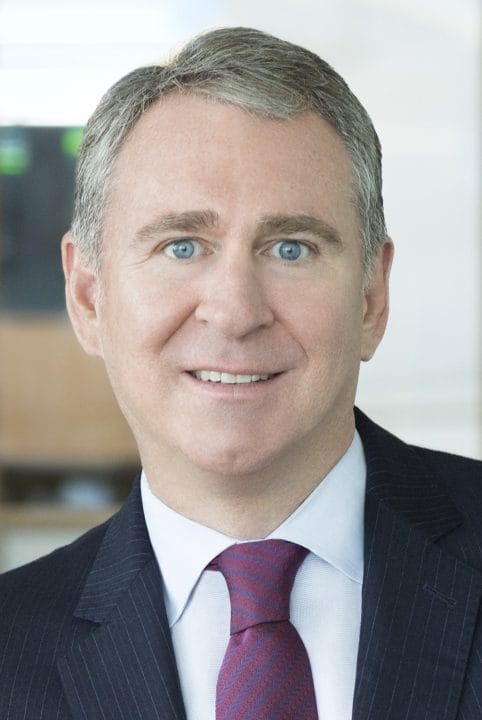
Ken Griffin
Citadel is multi-strategy, meaning it runs many independent investment approaches simultaneously — equities, fixed income, commodities, macro, quantitative. Within each strategy, the approach is deeply research-driven and increasingly quantitative.
Griffin has built an organization that competes by having better data, better models, and better technology than rivals. He recruits aggressively from top universities and research institutions.
The edge is institutional, not personal — it is the collective intelligence of thousands of analysts and engineers working together, not one man's intuition.
Stig Brodersen
Pure value investing in the Buffett-Graham tradition. Stig looks for companies trading below intrinsic value with strong competitive advantages, honest management, and a margin of safety.
He takes a concentrated approach — he'd rather own 10-15 well-understood positions than 50 diversified ones. He does deep fundamental analysis: reading annual reports, understanding unit economics, and calculating intrinsic value using discounted cash flow models.
He has an international perspective that most American value investors lack — he actively looks at companies in Europe, Asia, and emerging markets. He believes international markets are less efficiently priced than US markets, creating more opportunities for value investors.
FINANCIAL PHILOSOPHY
Ken Griffin
Griffin believes that markets are competitions between the best-informed, best-equipped participants, and that winning over time requires relentless investment in research, technology, and talent. He has said that Citadel spends more on technology than most technology companies its size.
His philosophy is not about finding one great insight — it is about building systems that generate small edges consistently, at enormous scale, across thousands of trades and hundreds of strategies.
Stig Brodersen
Stig believes that investing should be approached with intellectual humility and continuous learning. His core philosophy: understand what you own, buy it at a price that gives you a margin of safety, and be patient.
He thinks most investors trade too frequently and react too emotionally to short-term market movements. He values international diversification more than most American investors, arguing that US-centric portfolios miss significant opportunities.
He also believes strongly in the democratization of financial education — TIP was built on the principle that world-class investing knowledge should be free.
RISK TOLERANCE
Ken Griffin
Griffin is known for demanding risk management and being willing to cut positions aggressively when models signal danger. The 2008 loss of 55% is the exception that proves the rule — he survived it, refined the risk systems, and the firm has been significantly more resilient since.
He uses leverage extensively, but with a risk framework sophisticated enough that most of the firm's strategies are not correlated — when one book loses, another may gain. He is also known for being very hard on underperforming managers.
Stig Brodersen
Moderate. Stig is concentrated but disciplined.
He won't buy something unless his downside analysis shows limited risk of permanent capital loss. He's willing to hold cash when he can't find cheap stocks — sometimes 20-30% of his portfolio.
He's less speculative than Preston and has stayed closer to the original value investing framework. He manages risk through deep understanding of each position rather than through broad diversification.
THE PLAYBOOK
Ken Griffin
Griffin is one of the most extravagant spenders of any investor on this list, and he does not hide it. He paid $238 million for a Manhattan penthouse, the most expensive home ever sold in the United States.
He bought a $122 million mansion in Palm Beach. He owns a Boeing 767 private jet.
He has donated over $1 billion to arts, education, and political causes — the University of Chicago's economics department is named after him following a $125 million gift. He is the largest individual donor in Illinois political history.
Stig Brodersen
Stig is methodical and disciplined. He reads extensively — annual reports, investing books, economic history, and academic research.
He maintains a structured process for evaluating potential investments and doesn't deviate from it based on market emotions. He lives in Denmark and maintains a lower public profile than many financial media personalities.
He reinvests podcast income into both his business and his personal investment portfolio.
BIGGEST WIN
Ken Griffin
2022 is the defining year. While global markets were in freefall — the S&P 500 down 18%, bonds down dramatically, most hedge funds losing money — Citadel's Wellington fund returned approximately 38%.
The firm made $16 billion in profit for its investors in a single year, the most ever made by a hedge fund in one calendar year. The strategy worked because Citadel had positioned correctly for rising inflation and rising rates — a macro call that most funds missed entirely.
The $16 billion in 2022 alone exceeded the total profits of virtually any fund over its entire history.
Stig Brodersen
Co-building The Investor's Podcast Network into a global phenomenon. The show's reach — 100 million+ downloads — means Stig has directly contributed to the financial education of millions of people across dozens of countries.
His interviews with top investors have created a free archive of investing wisdom that rivals any MBA curriculum. On a personal investment level, his consistent application of value principles across international markets has produced solid long-term returns.
BIGGEST MISTAKE
Ken Griffin
2008 is the dark chapter. Citadel's flagship funds lost approximately 55% during the financial crisis — not because of bad trading specifically, but because of a liquidity crisis.
Citadel held positions in illiquid securities that could not be sold without moving the market against them, and redemption pressure from investors compounded the problem. Griffin was forced to suspend redemptions — meaning investors who wanted to leave could not get their money out.
He spent months rebuilding. The firm survived, but the episode forced a fundamental redesign of Citadel's liquidity management and risk controls.
Stig Brodersen
Stig has been open about early investment mistakes where he bought companies that were cheap for a reason — value traps where the low price reflected genuine business deterioration rather than market mispricing. He's talked about the importance of distinguishing between "cheap" and "good value," which is one of the hardest lessons in value investing.
He's also acknowledged that running a media business while managing a personal portfolio creates time allocation challenges.
CAREER HIGHLIGHTS
Ken Griffin
Griffin grew up in Boca Raton, Florida, and showed early signs of being extremely competitive and extremely interested in markets. He enrolled at Harvard in 1986 and almost immediately started trading — he installed a satellite dish on the roof of his dorm to get live stock data, and began running convertible bond arbitrage strategies with money raised from family.
By the time he graduated in 1989, he had been profitable enough that a hedge fund manager named Frank Meyer had given him $1 million to manage.
He launched Citadel LLC in 1990 at age 22 with $4.6 million. The name came from the idea of building something fortified, defensible, and hard to breach.
He spent the 1990s building out quantitative infrastructure, recruiting mathematicians and engineers rather than traditional traders, and expanding into multiple strategies. By the 2000s, Citadel was one of the most feared names in hedge funds.
The 2008 financial crisis hit the firm hard — the flagship funds lost about 55% — but Griffin did not close. He survived, rebuilt, and came out stronger.
Stig Brodersen
Stig Brodersen grew up in Denmark and studied business and finance. He earned his MBA and worked in corporate finance before deciding his real passion was investing education.
He connected with Preston Pysh online through their shared love of Warren Buffett and Benjamin Graham, and they launched The Investor's Podcast in 2014. The concept was brilliantly simple: read the classic investing books that every successful investor recommends, break them down chapter by chapter in plain language, and give them away for free as a podcast.
It worked beyond anyone's expectations. The show grew into The Investor's Podcast Network, now hosting multiple shows including We Study Billionaires, Millennial Investing, and Bitcoin Fundamentals.
The network has surpassed 100 million total downloads. When Preston shifted his focus to Bitcoin, Stig took the lead on We Study Billionaires, conducting in-depth interviews with legendary investors.
He's interviewed Howard Marks, Mohnish Pabrai, Guy Spier, Tobias Carlisle, and dozens of other investing heavyweights. He also co-authored books with Preston on Buffett's investment methods.
COMPANIES & ROLES
Ken Griffin
Citadel LLC is the hedge fund business, managing approximately $58 billion. It runs multiple strategies across equities, fixed income, macro, and credit.
Its flagship Wellington and Kensington funds have produced extraordinary long-term returns — compounding at roughly 19% annually since inception. The firm has thousands of employees across multiple continents and is considered one of the most technologically sophisticated investment firms in the world.
Citadel Securities is a separate but equally important business. It is one of the largest market makers in US equities, handling approximately 25–30% of all US retail equity order flow.
When someone uses Robinhood or TD Ameritrade to buy a stock, there is a meaningful chance Citadel Securities is on the other side of that trade. This business is enormously profitable and is what made Griffin one of the wealthiest people in finance.
Stig Brodersen
The Investor's Podcast Network — co-founded with Preston Pysh, one of the largest financial media networks in the world. We Study Billionaires — the flagship podcast, now primarily hosted by Stig.
He co-authored books on Warren Buffett's investment frameworks with Preston Pysh. He also runs his own investment portfolio following value investing principles.
EDUCATION
Ken Griffin
Harvard University, BA in Economics, 1989. He arrived already interested in markets and left already running a fund.
He has donated hundreds of millions to Harvard and to the field of economics broadly — the Griffin Graduate School of Arts and Sciences at Harvard was named in his honor following a $300 million gift, the largest in Harvard's history.
Stig Brodersen
Stig earned an MBA with a focus on finance and business. His academic background in business gives him a structured analytical framework for evaluating companies.
He's also self-educated through hundreds of investing books that he's read and discussed on the podcast — the show itself has been his ongoing graduate education in investing.
BOOKS & RESOURCES
Ken Griffin
Griffin does not write books and rarely gives long-form interviews, so there is no single definitive text on him
His Economic Club of New York and Bloomberg Invest appearances are the closest thing to primary source material, and he is unusually direct in them
His February 2021 Congressional testimony on the GameStop episode is public and worth reading in full
It is the most detailed account he has given of how Citadel Securities actually makes money as a market maker
The useful contextual read. It is about high-frequency trading rather than about Griffin, and Citadel Securities sits right at the centre of that world, so it explains the business Griffin built better than any profile of the man does
As an Amazon Associate, Netfigo earns from qualifying purchases. Book links above may be affiliate links.
Stig Brodersen
The foundation of Stig's entire investing approach
The more technical deep-dive that Stig considers essential for serious investors
A book about unconventional CEOs that Stig frequently recommends
As an Amazon Associate, Netfigo earns from qualifying purchases. Book links above may be affiliate links.