NETFIGO SCORE BATTLE
ORIGINAL DATARisk Appetite
Contrarian Index
Track Record
Accessibility
Time Horizon
AT A GLANCE
INVESTING STYLE
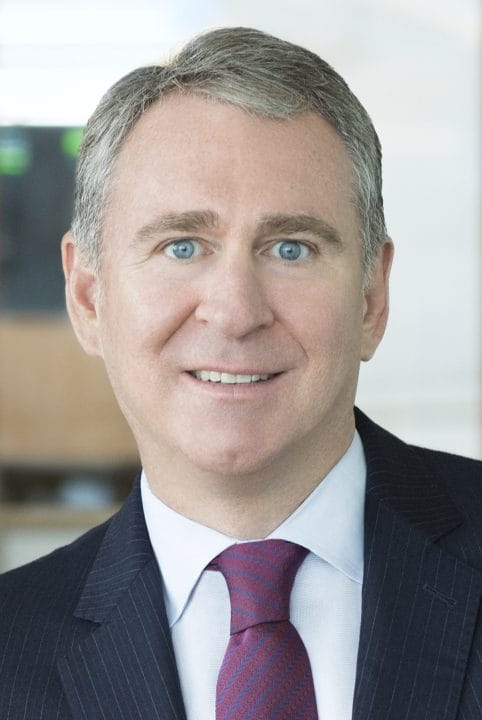
Ken Griffin
Citadel is multi-strategy, meaning it runs many independent investment approaches simultaneously — equities, fixed income, commodities, macro, quantitative. Within each strategy, the approach is deeply research-driven and increasingly quantitative.
Griffin has built an organization that competes by having better data, better models, and better technology than rivals. He recruits aggressively from top universities and research institutions.
The edge is institutional, not personal — it is the collective intelligence of thousands of analysts and engineers working together, not one man's intuition.
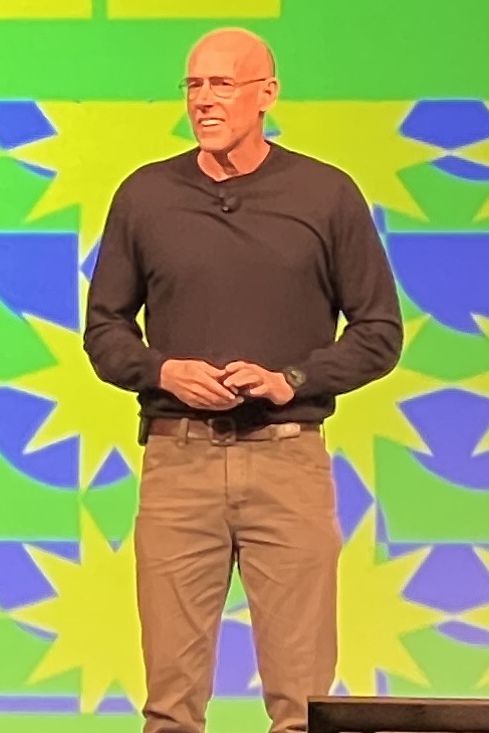
Scott Galloway
Galloway's personal investing style is relatively conservative given how loud he is. He keeps a heavy allocation in index funds and real estate.
He does make concentrated bets on individual stocks when he has conviction — he famously held Amazon for years. He angel invests occasionally but is not prolific.
His real wealth comes from business exits and media income, not portfolio management.
FINANCIAL PHILOSOPHY
Ken Griffin
Griffin believes that markets are competitions between the best-informed, best-equipped participants, and that winning over time requires relentless investment in research, technology, and talent. He has said that Citadel spends more on technology than most technology companies its size.
His philosophy is not about finding one great insight — it is about building systems that generate small edges consistently, at enormous scale, across thousands of trades and hundreds of strategies.
Scott Galloway
Diversify, own assets, and do not confuse being smart with being lucky. Galloway preaches that the most reliable path to wealth is boring — buy index funds, own property in growing cities, and let time do the work.
He is deeply skeptical of anyone who claims they can consistently beat the market.
RISK TOLERANCE
Ken Griffin
Griffin is known for demanding risk management and being willing to cut positions aggressively when models signal danger. The 2008 loss of 55% is the exception that proves the rule — he survived it, refined the risk systems, and the firm has been significantly more resilient since.
He uses leverage extensively, but with a risk framework sophisticated enough that most of the firm's strategies are not correlated — when one book loses, another may gain. He is also known for being very hard on underperforming managers.
Scott Galloway
Moderate. Galloway has experienced the full spectrum — he had a company go public and then go bankrupt (Red Envelope), which taught him that financial ruin is always closer than you think.
Post-L2 sale, he became much more conservative. Heavy real estate holdings in New York and Florida.
He preaches diversification publicly and mostly follows his own advice, with occasional concentrated stock positions.
THE PLAYBOOK
Ken Griffin
Griffin is one of the most extravagant spenders of any investor on this list, and he does not hide it. He paid $238 million for a Manhattan penthouse, the most expensive home ever sold in the United States.
He bought a $122 million mansion in Palm Beach. He owns a Boeing 767 private jet.
He has donated over $1 billion to arts, education, and political causes — the University of Chicago's economics department is named after him following a $125 million gift. He is the largest individual donor in Illinois political history.
Scott Galloway
Galloway owns significant real estate in New York and Florida. He talks openly about his wealth and spending — nice apartments, good restaurants, private school for his kids.
He is not frugal and does not pretend to be. But he is very intentional about where money goes.
He has said his biggest financial luxury is "buying back his time" — paying for convenience so he can focus on what matters.
BIGGEST WIN
Ken Griffin
2022 is the defining year. While global markets were in freefall — the S&P 500 down 18%, bonds down dramatically, most hedge funds losing money — Citadel's Wellington fund returned approximately 38%.
The firm made $16 billion in profit for its investors in a single year, the most ever made by a hedge fund in one calendar year. The strategy worked because Citadel had positioned correctly for rising inflation and rising rates — a macro call that most funds missed entirely.
The $16 billion in 2022 alone exceeded the total profits of virtually any fund over its entire history.
Scott Galloway
Selling L2 to Gartner for an estimated $134 million in 2017. He built L2 into the go-to benchmarking firm for digital competence of luxury and consumer brands.
The exit, combined with his media career taking off simultaneously, catapulted him from "NYU professor" to "famous rich guy who yells about tech on the internet."
BIGGEST MISTAKE
Ken Griffin
2008 is the dark chapter. Citadel's flagship funds lost approximately 55% during the financial crisis — not because of bad trading specifically, but because of a liquidity crisis.
Citadel held positions in illiquid securities that could not be sold without moving the market against them, and redemption pressure from investors compounded the problem. Griffin was forced to suspend redemptions — meaning investors who wanted to leave could not get their money out.
He spent months rebuilding. The firm survived, but the episode forced a fundamental redesign of Citadel's liquidity management and risk controls.
Scott Galloway
Red Envelope. Full stop.
Galloway has been brutally honest about this — he took a gift e-commerce company public, it was valued at hundreds of millions, and then it went bankrupt. He has called it the most painful experience of his career and has said it took years to emotionally recover.
He lost a significant amount of personal wealth in the collapse.
CAREER HIGHLIGHTS
Ken Griffin
Griffin grew up in Boca Raton, Florida, and showed early signs of being extremely competitive and extremely interested in markets. He enrolled at Harvard in 1986 and almost immediately started trading — he installed a satellite dish on the roof of his dorm to get live stock data, and began running convertible bond arbitrage strategies with money raised from family.
By the time he graduated in 1989, he had been profitable enough that a hedge fund manager named Frank Meyer had given him $1 million to manage.
He launched Citadel LLC in 1990 at age 22 with $4.6 million. The name came from the idea of building something fortified, defensible, and hard to breach.
He spent the 1990s building out quantitative infrastructure, recruiting mathematicians and engineers rather than traditional traders, and expanding into multiple strategies. By the 2000s, Citadel was one of the most feared names in hedge funds.
The 2008 financial crisis hit the firm hard — the flagship funds lost about 55% — but Griffin did not close. He survived, rebuilt, and came out stronger.
Scott Galloway
Scott Galloway is a serial entrepreneur and NYU Stern School of Business professor who became famous for his brutally honest takes on Big Tech. He founded nine companies over his career, including L2 (a business intelligence firm sold to Gartner in 2017), Red Envelope (an e-commerce company that went public then bankrupt), and Prophet (a brand strategy firm).
His 2017 book The Four, about Amazon, Apple, Facebook, and Google, became a bestseller. His YouTube channel and Prof G podcast reach millions.
He called Amazon buying Whole Foods before it happened. He also co-hosts Pivot with Kara Swisher, one of the most popular tech podcasts in the world.
He teaches brand strategy at NYU and is known for his profanity-laced, data-heavy lectures that go viral every semester.
COMPANIES & ROLES
Ken Griffin
Citadel LLC is the hedge fund business, managing approximately $58 billion. It runs multiple strategies across equities, fixed income, macro, and credit.
Its flagship Wellington and Kensington funds have produced extraordinary long-term returns — compounding at roughly 19% annually since inception. The firm has thousands of employees across multiple continents and is considered one of the most technologically sophisticated investment firms in the world.
Citadel Securities is a separate but equally important business. It is one of the largest market makers in US equities, handling approximately 25–30% of all US retail equity order flow.
When someone uses Robinhood or TD Ameritrade to buy a stock, there is a meaningful chance Citadel Securities is on the other side of that trade. This business is enormously profitable and is what made Griffin one of the wealthiest people in finance.
Scott Galloway
L2 Inc (founder, sold to Gartner), Red Envelope (founder, IPO then bankruptcy), Prophet (co-founder), Section4 (founder, online education), Prof G Media (founder)
EDUCATION
Ken Griffin
Harvard University, BA in Economics, 1989. He arrived already interested in markets and left already running a fund.
He has donated hundreds of millions to Harvard and to the field of economics broadly — the Griffin Graduate School of Arts and Sciences at Harvard was named in his honor following a $300 million gift, the largest in Harvard's history.
Scott Galloway
UCLA (BA), UC Berkeley Haas School of Business (MBA).
BOOKS & RESOURCES
Ken Griffin
Griffin does not write books and rarely gives long-form interviews, so there is no single definitive text on him
His Economic Club of New York and Bloomberg Invest appearances are the closest thing to primary source material, and he is unusually direct in them
His February 2021 Congressional testimony on the GameStop episode is public and worth reading in full
It is the most detailed account he has given of how Citadel Securities actually makes money as a market maker
The useful contextual read. It is about high-frequency trading rather than about Griffin, and Citadel Securities sits right at the centre of that world, so it explains the business Griffin built better than any profile of the man does
As an Amazon Associate, Netfigo earns from qualifying purchases. Book links above may be affiliate links.
Scott Galloway
The Algebra of Happiness by Scott Galloway, Prof G Pod (podcast), Pivot with Kara Swisher (podcast), No Mercy / No Malice (his weekly blog)
As an Amazon Associate, Netfigo earns from qualifying purchases. Book links above may be affiliate links.