
NETFIGO SCORE BATTLE
ORIGINAL DATARisk Appetite
Contrarian Index
Track Record
Accessibility
Time Horizon
AT A GLANCE
INVESTING STYLE
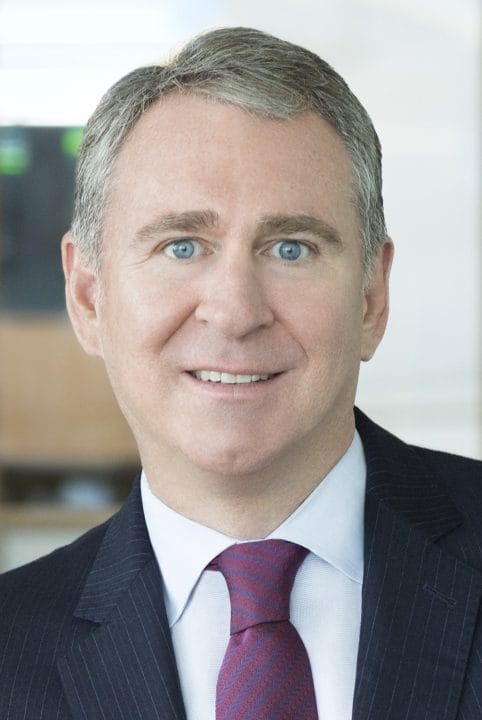
Ken Griffin
Citadel is multi-strategy, meaning it runs many independent investment approaches simultaneously — equities, fixed income, commodities, macro, quantitative. Within each strategy, the approach is deeply research-driven and increasingly quantitative.
Griffin has built an organization that competes by having better data, better models, and better technology than rivals. He recruits aggressively from top universities and research institutions.
The edge is institutional, not personal — it is the collective intelligence of thousands of analysts and engineers working together, not one man's intuition.
Farnoosh Torabi
Torabi is a practical, diversified, automation-focused investor. She believes in maxing out tax-advantaged accounts first (401k, Roth IRA), investing in low-cost index funds, and automating everything so investing isn't a decision you make each month.
She's not a stock picker and doesn't pretend to be. Her approach: the market will go up over time, so get in early, stay in, keep costs low, and don't try to time anything.
She's in the Bogle camp philosophically.
What makes her perspective different is her focus on the earning side. Most personal finance advice is about spending less and saving more.
Torabi argues that growing your income — through negotiation, side hustles, career moves — is a more powerful lever than cutting expenses. You can only cut so much.
There's no ceiling on what you can earn.
FINANCIAL PHILOSOPHY
Ken Griffin
Griffin believes that markets are competitions between the best-informed, best-equipped participants, and that winning over time requires relentless investment in research, technology, and talent. He has said that Citadel spends more on technology than most technology companies its size.
His philosophy is not about finding one great insight — it is about building systems that generate small edges consistently, at enormous scale, across thousands of trades and hundreds of strategies.
Farnoosh Torabi
Torabi's philosophy has three pillars. First: earn more.
She believes income growth is the most underrated financial strategy. Cutting lattes saves you $5 a day.
A salary negotiation can be worth $10,000 a year — compounding forever.
Second: automate and simplify. She doesn't want people thinking about money every day.
Set up the systems — automatic savings, automatic investing, automatic bill pay — and then spend your mental energy on earning more and living well.
Third: talk about money openly. She thinks financial secrecy — between partners, between friends, between parents and kids — is the biggest barrier to financial health.
Her podcast is built on this idea: hearing how real people handle money normalizes the conversation and makes everyone smarter.
Her most resonant principle: financial independence isn't about being rich. It's about having enough that no person, no job, and no situation has power over you.
RISK TOLERANCE
Ken Griffin
Griffin is known for demanding risk management and being willing to cut positions aggressively when models signal danger. The 2008 loss of 55% is the exception that proves the rule — he survived it, refined the risk systems, and the firm has been significantly more resilient since.
He uses leverage extensively, but with a risk framework sophisticated enough that most of the firm's strategies are not correlated — when one book loses, another may gain. He is also known for being very hard on underperforming managers.
Farnoosh Torabi
Moderate. She believes in taking appropriate risk for your age and goals — more aggressive when young, more conservative as you approach needing the money.
She's not afraid of the stock market but doesn't advocate for concentrated bets or speculative investments.
She stresses the importance of an emergency fund and having "go-to-hell money" — enough cash saved that you can walk away from a bad job, a bad relationship, or a bad situation without financial panic. She frames this as a safety net and a power tool.
THE PLAYBOOK
Ken Griffin
Griffin is one of the most extravagant spenders of any investor on this list, and he does not hide it. He paid $238 million for a Manhattan penthouse, the most expensive home ever sold in the United States.
He bought a $122 million mansion in Palm Beach. He owns a Boeing 767 private jet.
He has donated over $1 billion to arts, education, and political causes — the University of Chicago's economics department is named after him following a $125 million gift. He is the largest individual donor in Illinois political history.
Farnoosh Torabi
Torabi is thoughtful about spending. She talks about "spending audits" — periodically reviewing every subscription, recurring charge, and discretionary spend to make sure it still aligns with what you actually value.
She and her husband split finances in a way she's been open about: joint accounts for shared expenses (mortgage, kids, household), separate accounts for individual spending. No permission needed for personal purchases under a certain threshold.
She frames this as both financial and relationship advice.
She lives in the New York area with her family. She's not flashy about spending but she's also not a frugality absolutist — she believes in spending on things that bring genuine joy while cutting things that don't.
BIGGEST WIN
Ken Griffin
2022 is the defining year. While global markets were in freefall — the S&P 500 down 18%, bonds down dramatically, most hedge funds losing money — Citadel's Wellington fund returned approximately 38%.
The firm made $16 billion in profit for its investors in a single year, the most ever made by a hedge fund in one calendar year. The strategy worked because Citadel had positioned correctly for rising inflation and rising rates — a macro call that most funds missed entirely.
The $16 billion in 2022 alone exceeded the total profits of virtually any fund over its entire history.
Farnoosh Torabi
The So Money podcast is the biggest professional win. Over 1,500 episodes, consistently in the top personal finance charts, and it's given her a platform that reaches millions.
The podcast opened doors to corporate speaking, books, and media opportunities.
"When She Makes More" was a cultural win — it started a national conversation about breadwinner women and money dynamics in relationships. She was on every major talk show discussing it, and it positioned her as someone willing to tackle the uncomfortable money topics that other advisors avoid.
BIGGEST MISTAKE
Ken Griffin
2008 is the dark chapter. Citadel's flagship funds lost approximately 55% during the financial crisis — not because of bad trading specifically, but because of a liquidity crisis.
Citadel held positions in illiquid securities that could not be sold without moving the market against them, and redemption pressure from investors compounded the problem. Griffin was forced to suspend redemptions — meaning investors who wanted to leave could not get their money out.
He spent months rebuilding. The firm survived, but the episode forced a fundamental redesign of Citadel's liquidity management and risk controls.
Farnoosh Torabi
Torabi has been honest about her biggest regret: not negotiating her salary aggressively enough early in her career. As a journalist, she accepted what was offered because she felt grateful to have the job.
She later calculated how much that cost her over a decade of compounding raises and says the number is "depressing."
She uses this story constantly in her teaching — it's her most practical lesson. One conversation about your salary in your 20s can be worth hundreds of thousands of dollars over a career.
She now coaches women specifically on salary negotiation because she knows the cost of not doing it.
CAREER HIGHLIGHTS
Ken Griffin
Griffin grew up in Boca Raton, Florida, and showed early signs of being extremely competitive and extremely interested in markets. He enrolled at Harvard in 1986 and almost immediately started trading — he installed a satellite dish on the roof of his dorm to get live stock data, and began running convertible bond arbitrage strategies with money raised from family.
By the time he graduated in 1989, he had been profitable enough that a hedge fund manager named Frank Meyer had given him $1 million to manage.
He launched Citadel LLC in 1990 at age 22 with $4.6 million. The name came from the idea of building something fortified, defensible, and hard to breach.
He spent the 1990s building out quantitative infrastructure, recruiting mathematicians and engineers rather than traditional traders, and expanding into multiple strategies. By the 2000s, Citadel was one of the most feared names in hedge funds.
The 2008 financial crisis hit the firm hard — the flagship funds lost about 55% — but Griffin did not close. He survived, rebuilt, and came out stronger.
Farnoosh Torabi
Farnoosh Torabi was born in Worcester, Massachusetts, to Iranian immigrant parents who came to the US with almost nothing. Her parents worked multiple jobs — her mother cleaned houses, her father worked in tech.
Money was tight but education was non-negotiable. She grew up watching her parents navigate the American financial system without a manual.
She went to Penn State, then got a master's from Columbia University's Graduate School of Journalism. She started her career as a financial journalist, writing for Money Magazine, TheStreet.com, and the New York Times.
She covered personal finance from the journalism side — not as an advisor, but as a reporter who could translate complicated money topics into stories people actually wanted to read.
Her first book, "You're So Money," came out in 2008 — right when the financial crisis was making everyone panic about money. The timing was either terrible or perfect depending on how you look at it.
The book was aimed at twenty-somethings trying to be financially savvy without giving up their lives.
Her breakout book was "When She Makes More" in 2014. It tackled the taboo topic of relationships where the woman is the primary breadwinner — the financial, emotional, and relationship dynamics that nobody in personal finance was talking about.
It got massive press attention because it said the quiet part out loud: traditional gender expectations around money are still wrecking relationships, even among progressive couples.
In 2015, she launched the "So Money" podcast. It's now past 1,500 episodes, featuring interviews with everyone from billionaires to regular people sharing their financial wins and disasters.
It consistently ranks in the top personal finance podcasts. The show's strength is range — one episode might feature a CEO, the next a single mom who paid off $100,000 in debt.
COMPANIES & ROLES
Ken Griffin
Citadel LLC is the hedge fund business, managing approximately $58 billion. It runs multiple strategies across equities, fixed income, macro, and credit.
Its flagship Wellington and Kensington funds have produced extraordinary long-term returns — compounding at roughly 19% annually since inception. The firm has thousands of employees across multiple continents and is considered one of the most technologically sophisticated investment firms in the world.
Citadel Securities is a separate but equally important business. It is one of the largest market makers in US equities, handling approximately 25–30% of all US retail equity order flow.
When someone uses Robinhood or TD Ameritrade to buy a stock, there is a meaningful chance Citadel Securities is on the other side of that trade. This business is enormously profitable and is what made Griffin one of the wealthiest people in finance.
Farnoosh Torabi
So Money Media is her primary business — the podcast, newsletter, and associated content. The podcast has featured over 1,500 guests and has a dedicated audience.
She's a contributor to CNET and has written for or appeared on virtually every major financial media outlet — CNBC, CNN, NBC, Forbes, O Magazine, and more. Corporate speaking is a significant revenue stream.
She doesn't manage money or run a fund. Her business model is content, education, and corporate partnerships.
She's done branded content with major financial companies — always disclosed, and she's careful about maintaining editorial independence.
EDUCATION
Ken Griffin
Harvard University, BA in Economics, 1989. He arrived already interested in markets and left already running a fund.
He has donated hundreds of millions to Harvard and to the field of economics broadly — the Griffin Graduate School of Arts and Sciences at Harvard was named in his honor following a $300 million gift, the largest in Harvard's history.
Farnoosh Torabi
Torabi has a bachelor's degree from Penn State and a master's in journalism from Columbia University. The journalism background is her edge — she approaches personal finance as a storyteller and investigator, not as a financial advisor.
She can take complex topics and make them compelling, which is why her podcast works where others don't.
BOOKS & RESOURCES
Ken Griffin
Griffin does not write books and rarely gives long-form interviews, so there is no single definitive text on him
His Economic Club of New York and Bloomberg Invest appearances are the closest thing to primary source material, and he is unusually direct in them
His February 2021 Congressional testimony on the GameStop episode is public and worth reading in full
It is the most detailed account he has given of how Citadel Securities actually makes money as a market maker
The useful contextual read. It is about high-frequency trading rather than about Griffin, and Citadel Securities sits right at the centre of that world, so it explains the business Griffin built better than any profile of the man does
As an Amazon Associate, Netfigo earns from qualifying purchases. Book links above may be affiliate links.
Farnoosh Torabi
For people who want a practical, no-BS money system
A critical look at the personal finance industry itself
As an Amazon Associate, Netfigo earns from qualifying purchases. Book links above may be affiliate links.