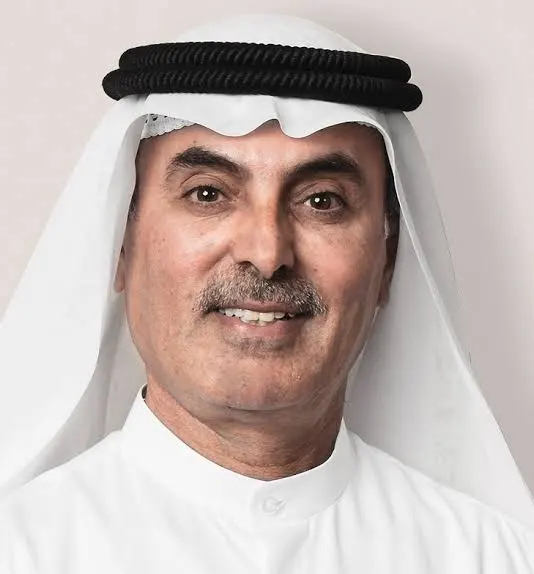
ABDULAZIZ AL GHURAIR
Chairman of Mashreq Bank and head of Al Ghurair Group — the UAE family empire that spans banking, flour milling, construction, and real estate.
Abdulaziz Al Ghurair runs one of the Gulf's most quietly powerful businesses. While flashier tycoons make headlines, his family built a conglomerate that touches almost every part of life in the UAE — from the flour in your bread to the bank processing your salary. Mashreq Bank, which he chairs, was founded in 1967 and is now one of the UAE's biggest privately-held banks with over $50 billion in assets. He's not a showman. He's a builder, and in the Gulf, that distinction matters enormously.
Net Worth
$3.2 billion
Nationality
Emirati
Time Horizon
Generational
Risk Appetite
3 / 10
Net Worth Context
- · Still a billionaire — just the quiet kind at the end of the table.
CAREER & BACKGROUND
Born into the Al Ghurair family — one of Dubai's original merchant families who established roots in the emirate's trading economy before oil money changed everything — Abdulaziz grew up watching a conglomerate take shape across multiple industries. He became chairman of Mashreq Bank, which his family helped found in 1967 as the Bank of Oman, and has steered it for decades through regional economic cycles.
Under his watch, the bank pushed aggressively into digital banking before most Gulf competitors took mobile-first seriously — by 2021, Mashreq had a higher share of digital-only customers than almost any traditional Gulf bank. Beyond banking, Al Ghurair grew the group's food manufacturing arm into one of the world's largest flour milling operations and expanded Al Ghurair Group into construction materials, packaging, and real estate.
The group now employs over 40,000 people across 30-plus countries.
COMPANIES & ROLES
Al Ghurair Group is the family conglomerate — its food division operates one of the largest flour mills in the Middle East, supplying grain products across the region. Mashreq Bank is the UAE's oldest privately-owned bank, with over $50 billion in assets and operations in retail, corporate, and digital banking.
The group also holds significant commercial and residential real estate in Dubai. Its packaging and construction businesses operate across the Gulf and into African markets.
INVESTING STYLE & PHILOSOPHY
Al Ghurair thinks in decades, not quarters. His family built wealth by owning entire supply chains — growing wheat, milling it, packaging it — rather than trading financial assets.
His approach is classic Gulf-style: build long-term, diversify across sectors that serve real needs, and reinvest profits back into expanding operations. He does not do venture capital.
He builds real things and holds them. The closest analogy is a Berkshire Hathaway model, but built on Middle Eastern trade routes instead of American insurance float.
THE PLAYBOOK
Risk Approach
Very conservative. He grew up watching the oil shocks of the 1970s reshape the Gulf economy and has steered Mashreq through multiple regional crises — including the 2008 financial crisis and the 2020 COVID-19 shock — without the drama that sank several competitors.
His family's approach is to hold real assets that produce cash, keep leverage modest, and not expand faster than the management bench can handle. He's not in the business of big speculative bets.
Money Habits
Famously discreet. No public yacht-racing habit.
No social media presence. He's known to personally attend strategy sessions at Mashreq that most billionaires would delegate entirely.
He funded the Al Ghurair Foundation for Education with a $1 billion family commitment in 2015 — that's provided over 50,000 scholarships to Arab students across 22 countries. His approach to personal spending seems consistent with his approach to business: deliberate, low-profile, and focused on what lasts.
BIGGEST WIN
Digitizing Mashreq Bank early and aggressively. By 2021, Mashreq had a higher percentage of digital-only customers than almost any other traditional Gulf bank.
While rivals were still retrofitting legacy core banking systems, Mashreq had already moved. The bank posted solid profits through the COVID-19 period when much of the Gulf's banking sector was managing provisioning spikes and falling transaction volumes.
That digital bet, made years before it was fashionable, was the move.
BIGGEST MISTAKE
Al Ghurair Group's push into certain North African markets in the early 2010s came just before the Arab Spring reshaped the business environment. Some operations had to be restructured and pulled back as political risk materialized in ways that financial models hadn't priced.
The exact cost is not public, but it was a reminder that political risk in the Middle East is not a footnote — it's a primary variable.
FINANCIAL PHILOSOPHY
Build things that last. If you can't explain what a business does in one sentence, you probably shouldn't own it.
Al Ghurair has been public about his belief that the UAE's future depends on Emiratis choosing to build industries, not just fill government roles. He has said that the hardest part of running a family business across generations is maintaining the standards of the founders while adapting to new markets.
He invests in education explicitly because he believes human capital is the region's scarcest resource.
FAMILY & PERSONAL LIFE
Part of the Al Ghurair family — one of Dubai's founding merchant dynasties. His sons have taken on operational roles within the Group's various divisions, a deliberate effort to professionalize family succession.
The family's Al Ghurair Foundation for Education, with its $1 billion commitment to scholarships across 22 Arab countries, reflects a long-term bet on the region's human capital. By 2023, the foundation had provided scholarships to students from Egypt, Jordan, Lebanon, and 18 other countries.
EDUCATION
Studied in the United Kingdom. Specific institution kept private — which is consistent with his general approach to personal publicity.
BOOKS & RESOURCES
Al Ghurair has not published a formal reading list, but his emphasis on long-term institution-building points toward foundational works on business history and leadership.
Relevant context for understanding the digital banking shift he oversaw at Mashreq
A useful parallel for understanding how banking dynasties build multi-generational institutions
Offers essential background
As an Amazon Associate, Netfigo earns from qualifying purchases. Book links above may be affiliate links.
QUOTES (6)
Every generation must build something meaningful. My generation built institutions. The next must build technologies that make those institutions irrelevant.
Digital banking is not a feature. It is the entire future of how people interact with money. We had to become a technology company that happens to have a banking licence.
The UAE's success comes from the willingness of its people to work harder than anyone else. That culture is what we must protect.
Banking is not just about money. It is about trust, and trust takes decades to build but only moments to lose.
We made a one billion dollar commitment to education because talent is the Arab world's most underdeveloped asset. The return on that investment will outlast anything else we build.
If you want to understand where the Middle East is going, do not watch the oil price. Watch what the young people are building.
NETFIGO SCORE
Proprietary 5-dimension investor rating
Risk Appetite
Contrarian Index
Track Record
Accessibility
Time Horizon
Related Profiles
Investors
Alwaleed bin Talal
Both are iconic Gulf investors who built massive private conglomerates across banking and real assets, representing the old-guard power of Arab family capital.
Hussain Sajwani
Both are UAE-based billionaire builders who shaped Dubai's physical and financial infrastructure over decades.
Mohamed Alabbar
Both are prominent Emirati business leaders with major real estate and retail footprints in the UAE and across the Arab world.
Head-to-Head
Compare Abdulaziz Al Ghurair vs another investor.