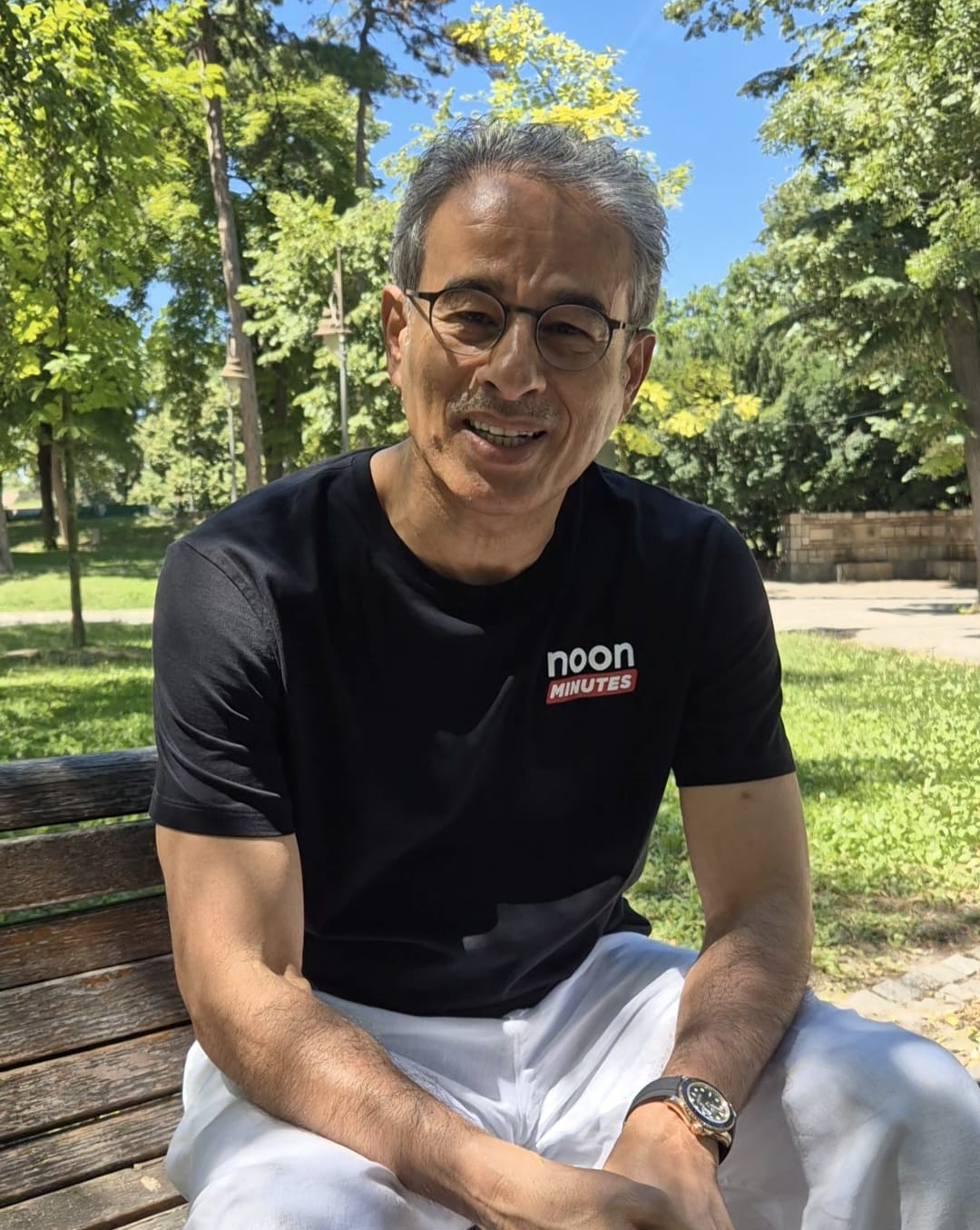
MOHAMED ALABBAR
Built the Burj Khalifa, the Dubai Mall, and founded Emaar Properties, which essentially created modern Dubai's skyline.
Mohamed Alabbar built the tallest building in the world, the largest mall in the world, and the most-visited destination on Earth. All in the middle of a desert. The Burj Khalifa alone cost $1.5 billion and stands at 2,717 feet. The Dubai Mall draws over 80 million visitors a year, more than New York, London, and Paris combined. Alabbar didn't just develop real estate. He developed an entire city's identity.
Net Worth
$3.5 billion
Nationality
Emirati
Time Horizon
Long-Term
Risk Appetite
9 / 10
CAREER & BACKGROUND
Mohamed Alabbar was born in 1956 in Dubai. He studied finance at Seattle University, the same city where Hussain Sajwani also studied.
The American experience shaped both men's approach to Dubai's development.
After returning to Dubai, Alabbar worked in various government and private sector roles before founding Emaar Properties in 1997 with the backing of the Dubai government. Emaar was created to lead Dubai's transformation into a global destination.
The first major project was the Dubai Marina, a massive waterfront development that turned empty desert into one of the most desirable residential areas in the Middle East. Then came the Burj Khalifa, conceived as the centerpiece of Downtown Dubai.
The Burj Khalifa was a statement project. At 2,717 feet and 163 floors, it was over 1,000 feet taller than the previous record holder, Taipei 101.
Construction took six years and 12,000 workers. The building was renamed from Burj Dubai to Burj Khalifa after Abu Dhabi's ruler provided a $10 billion bailout to Dubai during the 2008 financial crisis.
The Dubai Mall opened in 2008, right as the financial crisis hit. It became the most-visited retail destination on Earth, with over 80 million annual visitors.
The complex includes an aquarium, an ice rink, a waterfall, and over 1,200 stores.
Alabbar also launched Noon.com in 2017, positioning it as the Amazon of the Middle East. He invested $1 billion of his own money into the venture.
COMPANIES & ROLES
Emaar Properties is the foundation. A $10 billion+ company that has developed some of the most iconic real estate in the world.
The portfolio includes Downtown Dubai, Dubai Marina, the Burj Khalifa, the Dubai Mall, and communities across the UAE, Saudi Arabia, Egypt, India, and Turkey.
Noon.com is his e-commerce bet. Launched in 2017 with $1 billion in funding from Alabbar and Saudi Arabia's Public Investment Fund.
It competes with Amazon (Souq.com) across the Middle East in groceries, electronics, and fashion.
Eagle Hills is his international real estate development company, building mixed-use communities in Bahrain, Morocco, Serbia, and other emerging markets.
Alabar also serves on the board of various Dubai government entities and has been a key advisor to Sheikh Mohammed bin Rashid Al Maktoum, Dubai's ruler.
INVESTING STYLE & PHILOSOPHY
Think enormous. Alabbar doesn't do small projects.
Every development is designed to be a superlative: tallest, largest, most-visited. This isn't vanity.
It's marketing. When you build the tallest building in the world, you generate billions in free publicity for the surrounding development.
The Burj Khalifa was never meant to make money on its own. It was meant to make everything around it more valuable.
And it did. Property values in Downtown Dubai increased by multiples after the tower was completed.
Alabbar also thinks like a city planner, not just a developer. He creates entire communities with retail, hospitality, and residential integrated together.
THE PLAYBOOK
Risk Approach
Extremely high. Building the world's tallest tower in the middle of a financial crisis requires a risk tolerance that borders on recklessness.
But Alabbar had government backing and a long-term vision that transcended any single market cycle.
The Noon.com investment, $1 billion of his own money into e-commerce, was a different kind of risk. E-commerce in the Middle East was nascent, and he was competing against Amazon.
The outcome is still uncertain.
Money Habits
Alabbar lives in Dubai and maintains a high-profile lifestyle consistent with his role as one of the emirate's most prominent business figures. He attends the World Economic Forum, speaks at major conferences, and is a visible member of Dubai's ruling elite.
He's known for being a perfectionist about details. He reportedly visited the Burj Khalifa construction site multiple times a week and personally approved finishing materials.
For the Dubai Mall, he studied shopping malls across the world before designing the layout.
Unlike many Gulf billionaires, Alabbar has been relatively public and media-friendly, regularly giving interviews to international press.
BIGGEST WIN
The Burj Khalifa and Downtown Dubai. The $20 billion development transformed empty desert into the most recognizable skyline in the world.
The Burj Khalifa alone generates hundreds of millions in annual revenue from observation deck tickets, tenants, and the Armani Hotel.
But the real win is the surrounding development. Downtown Dubai's residential and commercial properties are among the most valuable per square foot in the Middle East.
The entire community was built from scratch on land that was essentially worthless before Alabbar's vision.
The Dubai Mall, generating over 80 million visitors annually, is arguably an even bigger commercial success. It is the most-visited retail destination on Earth.
BIGGEST MISTAKE
Noon.com has been an expensive bet that hasn't yet paid off. The $1 billion investment was supposed to create a regional e-commerce champion, but Amazon's acquisition of Souq.com gave it a massive head start.
Noon has struggled with logistics, inventory, and customer acquisition costs.
The timing of the Dubai Mall opening, right as the 2008 financial crisis hit, was terrible luck. Retail tenants pulled out, foot traffic was initially below projections, and Emaar had to offer massive incentives to fill the space.
It eventually recovered spectacularly, but the first two years were painful.
FINANCIAL PHILOSOPHY
Build iconic assets that define a location. Alabbar believes that real estate value is created by destination, not by buildings.
The Burj Khalifa is a destination. The Dubai Mall is a destination.
Everything around them benefits from the gravitational pull.
Patience with capital. Dubai's megaprojects take 5-10 years to develop and even longer to fully monetize.
Alabbar plans in decades, not quarters.
Diversify across asset classes but stay in your lane. Real estate, retail, hospitality, and e-commerce are all different businesses, but they share a common thread: understanding what consumers want and building it at scale.
FAMILY & PERSONAL LIFE
Alabbar is married with children. He maintains a relatively private family life despite his public business persona.
His children have not been prominently involved in his businesses, unlike many Gulf family dynasties.
He's close to Dubai's ruling family and serves as an advisor to Sheikh Mohammed. This relationship has been central to his career.
Emaar's projects align with the Dubai government's strategic vision, and the government has been a supportive shareholder.
EDUCATION
Alabbar studied finance at Seattle University in Washington state. Like Sajwani, the American education gave him perspectives on development, marketing, and customer experience that differentiated him from developers focused solely on construction.
BOOKS & RESOURCES
Alabbar has not written a book but is frequently featured in books about Dubais development.
Covers Dubai's transformation, with Emaar and Alabbar featured prominently
Another excellent account
As an Amazon Associate, Netfigo earns from qualifying purchases. Book links above may be affiliate links.
QUOTES (5)
If you are going to build, build something the world has never seen. Otherwise, why bother?
The building is the advertisement. When you build the tallest tower in the world, the marketing takes care of itself.
Dubai is proof that if you dream big enough and execute well enough, geography is irrelevant.
A mall is not about shopping. It is about experience. People come for the experience and buy things along the way.
Patience is the most underrated skill in development. Great projects take a decade. Most people quit at year three.
NETFIGO SCORE
Proprietary 5-dimension investor rating
Risk Appetite
Contrarian Index
Track Record
Accessibility
Time Horizon
Related Profiles
Head-to-Head
Compare Mohamed Alabbar vs another investor.