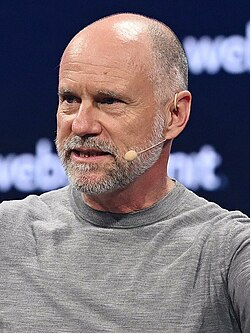
ALBERT WENGER
Managing partner at Union Square Ventures and one of the most intellectually rigorous thinkers in venture capital.
Albert Wenger is the VC who writes 5,000-word blog posts about universal basic income, climate change, and the meaning of human attention — and somehow still finds time to back companies like Twitter, Tumblr, Etsy, and Cloudflare. He wrote an entire book arguing that humanity is in a transition as significant as the shift from agrarian to industrial society. Most VCs write Medium posts about their portfolio. Wenger writes about the future of civilization. The returns are good too.
Net Worth
$300 million
Nationality
German-American
Time Horizon
Long-Term
Risk Appetite
6 / 10
CAREER & BACKGROUND
Born in Germany. Studied economics and computer science at Harvard, then earned a PhD in information technology from MIT.
Joined Union Square Ventures in 2007 as a partner, becoming managing partner alongside Fred Wilson and Brad Burnham.
USV's thesis has always been about investing in large networks of engaged users. Under Wenger's partnership, USV has invested in Twitter, Tumblr, Etsy, Cloudflare, MongoDB, Coinbase, and dozens of other companies built around network effects.
The firm has consistently been one of the top-performing VC firms in the industry.
Outside of venture, Wenger is known as a public intellectual. He writes extensively at continuations.com about technology, economics, education, and climate.
In 2017, he published "World After Capital," arguing that humanity has moved beyond capital scarcity to attention scarcity, and that universal basic income is necessary for the transition. He is one of the few VCs whose intellectual contributions rival their investment track record.
COMPANIES & ROLES
Managing partner at Union Square Ventures (2007-present). USV portfolio includes Twitter, Tumblr, Etsy, Cloudflare, MongoDB, Coinbase, Duolingo, and others.
Author of "World After Capital." Previously founded and sold a startup. PhD from MIT.
INVESTING STYLE & PHILOSOPHY
Thesis-driven network-effects investing. USV invests in companies that create large networks of engaged users.
Wenger applies this thesis rigorously — if a startup does not have a network effects dynamic, USV will not invest regardless of the opportunity. He also invests based on macro-level shifts in technology and society.
THE PLAYBOOK
Risk Approach
Moderate. USV takes concentrated bets — the firm invests in fewer companies than most VC firms but at larger conviction levels.
Wenger is not a spray-and-pray investor. He wants deep understanding of every company before committing.
Money Habits
Lives in New York City. Known for being an avid cyclist — rides through the city regularly.
Reads voraciously and publishes his thoughts daily on his blog. Not a flashy spender.
More interested in ideas than material possessions.
BIGGEST WIN
USV's investment in Coinbase. The fund invested early in Coinbase, which went public via direct listing in 2021 at a $86 billion valuation.
It was one of the most profitable crypto investments made by any traditional VC firm.
BIGGEST MISTAKE
Some USV investments in crypto and blockchain companies beyond Coinbase have not performed as well. The firm's thesis-driven approach means when a thesis is wrong, multiple investments suffer simultaneously.
FINANCIAL PHILOSOPHY
Invest in the transition, not the status quo. Wenger believes we are in a fundamental shift from an industrial economy to a knowledge economy.
He invests in companies that accelerate this transition — platforms that democratize access to information, commerce, and financial services.
FAMILY & PERSONAL LIFE
Lives in New York City with his family. German-born, American citizen.
Active in the NYC tech community and a regular speaker at technology and policy events.
EDUCATION
Harvard University (BA in Economics and Computer Science). MIT (PhD in Information Technology).
His academic background in both economics and computer science gives him an unusual dual lens on technology investing.
BOOKS & RESOURCES
His own book about the transition from capital scarcity to attention scarcity
The case for technology-driven progress
The systems thinking framework that influences USV's thesis-driven approach
As an Amazon Associate, Netfigo earns from qualifying purchases. Book links above may be affiliate links.
QUOTES (5)
Most VCs write blog posts about their portfolios. I write about the future of civilization. I think mine is more useful.
Coinbase was obvious to us because we believed crypto networks would be as important as the internet itself.
We are in a transition from capital scarcity to attention scarcity. That changes everything about how economies work.
Network effects are the most powerful force in technology. Every investment we make at USV starts with that question.
Universal basic income isn't charity. It's infrastructure for a knowledge economy. You can't innovate if you're worried about rent.
NETFIGO SCORE
Proprietary 5-dimension investor rating
Risk Appetite
Contrarian Index
Track Record
Accessibility
Time Horizon
Related Profiles
Investors
Head-to-Head
Compare Albert Wenger vs another investor.