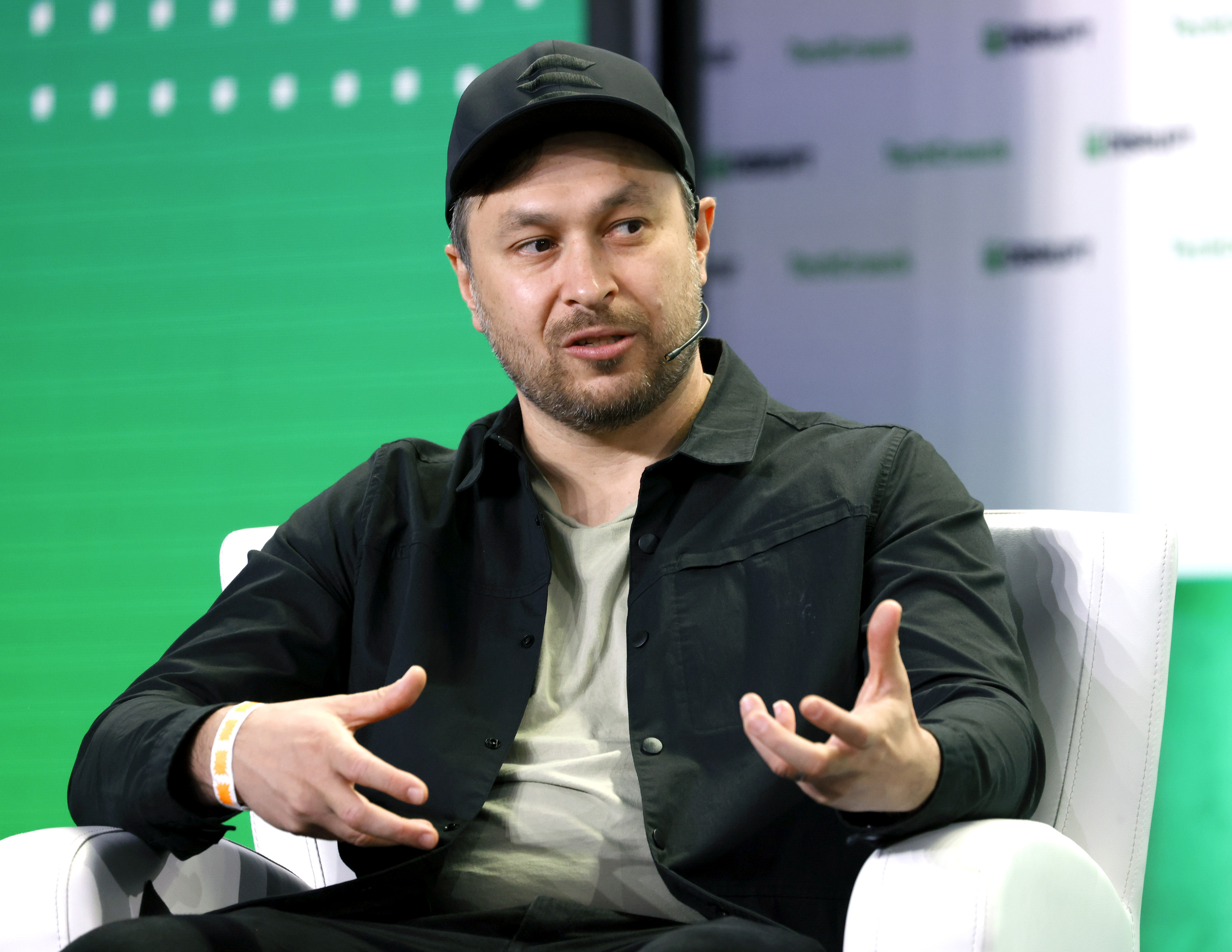
ANATOLY YAKOVENKO
Founded Solana, the fastest major blockchain. Former Qualcomm engineer who built the crypto network that processes 65,000 transactions per second.
Anatoly Yakovenko spent a decade at Qualcomm working on operating systems that nobody outside telecom ever heard of. Then he read the Bitcoin whitepaper, realized blockchains were absurdly slow, and invented Proof of History — a way to timestamp transactions that made blockchain 1,000x faster. He built Solana around it. Solana processes 65,000 transactions per second. Ethereum does about 15. The SOL token hit a $77 billion market cap. A telecom engineer from Ukraine outengineered every crypto team on the planet.
Net Worth
$1.2 Billion
Nationality
Ukrainian-American
Time Horizon
Long-Term
Risk Appetite
8 / 10
Net Worth Context
- · Still a billionaire — just the quiet kind at the end of the table.
CAREER & BACKGROUND
Anatoly Yakovenko was born in Ukraine in 1982 (then Soviet Union). His family immigrated to the United States when he was a child.
He studied computer science at the University of Illinois at Urbana-Champaign. After graduating, he joined Qualcomm, where he spent over a decade working on operating systems, embedded systems, and distributed systems.
He became deeply experienced in low-level system architecture — the kind of work that makes things fast and reliable at the hardware level. In 2017, he had the insight that would become Solana.
He realized you could use a cryptographic technique (a verifiable delay function using SHA-256 hashing) to create a trustworthy timestamp for blockchain transactions, eliminating the need for nodes to communicate with each other to agree on the order of events. He called it Proof of History.
He published a whitepaper in November 2017. He co-founded Solana Labs with Raj Gokal and Greg Fitzgerald (also ex-Qualcomm) in 2018.
Solana launched its mainnet in March 2020. By 2021, SOL was one of the top cryptocurrencies by market cap, peaking at over $77 billion.
After the FTX collapse in late 2022 (Sam Bankman-Fried had been a major Solana supporter), SOL crashed 97% from its peak. It recovered dramatically through 2023-2024.
COMPANIES & ROLES
Solana Labs is the primary entity — Yakovenko is co-founder and CEO. Solana Foundation is the nonprofit that supports the network's development and ecosystem.
Before Solana, he spent 12+ years at Qualcomm working on BREW (Binary Runtime Environment for Wireless), an operating system for mobile phones. He also worked briefly at Dropbox on their distributed storage system.
The Solana ecosystem now includes hundreds of projects across DeFi, NFTs, payments, and gaming.
INVESTING STYLE & PHILOSOPHY
Yakovenko is a technical founder who invests primarily through building, not through deciding where money goes. His "investment" was his time, reputation, and technical insight — betting that a fundamentally faster blockchain would capture market share from Ethereum and others.
He has a systems engineer's mentality: find the bottleneck, eliminate it, scale everything else. He doesn't chase financial trends in crypto.
He focuses on raw technical performance — transactions per second, latency, cost per transaction. His belief is that the blockchain that works the best at the infrastructure level will eventually win.
THE PLAYBOOK
Risk Approach
Yakovenko takes enormous technical and career risk. He left a stable career at Qualcomm to build a blockchain when the market was already crowded with competitors.
He chose a novel technical approach (Proof of History) that no one else had validated. The network experienced multiple outages in its early years, each one threatening its credibility.
The FTX collapse nearly killed Solana's ecosystem — SOL dropped from $260 to under $10. Yakovenko stayed, kept building, and the network recovered.
His risk tolerance is high for technical and market risk, but his approach to managing that risk is engineering-focused: fix the bugs, improve the architecture, ship the upgrade.
Money Habits
Yakovenko lives in the San Francisco Bay Area. He is described as deeply technical and somewhat introverted — more comfortable explaining hash functions than doing media tours.
He is not known for flashy spending. His lifestyle appears modest relative to his paper wealth, most of which is in SOL tokens.
He attends crypto conferences primarily to discuss technical architecture, not to promote the token price.
BIGGEST WIN
Solana's recovery and growth. After SOL crashed 97% following FTX's collapse, many wrote the network off as dead.
Yakovenko and the team kept shipping. They improved network stability, attracted new developers, and launched innovations like compressed NFTs and Firedancer (a second validator client built by Jump Trading).
By 2024, SOL recovered to over $150, and Solana became the leading blockchain for new consumer crypto applications, especially payments and mobile (Solana Mobile/Saga phone). The network now processes more daily transactions than Ethereum.
BIGGEST MISTAKE
Solana's network outages. The network went down completely several times in 2022 and 2023 — once for over 17 hours.
For a blockchain that's supposed to be a reliable financial infrastructure, going offline is catastrophic for credibility. Critics called Solana a "centralized database that pretends to be a blockchain." Yakovenko has acknowledged the outages were unacceptable and has invested heavily in network reliability.
The tight association with FTX and Sam Bankman-Fried also damaged Solana's reputation, though Yakovenko had no involvement in FTX's fraud.
FINANCIAL PHILOSOPHY
Yakovenko believes that blockchain adoption depends on performance, not ideology. He thinks most crypto projects are too slow, too expensive, and too complicated for mainstream use.
He believes the winning blockchain will be the one that's fast enough and cheap enough to support real-world applications at internet scale. He thinks of blockchain as infrastructure — like building a faster internet, not a political movement.
He also believes strongly in open-source development and decentralized governance.
FAMILY & PERSONAL LIFE
Yakovenko is private about his personal life. He was born in Ukraine and immigrated to the US as a child.
He is married and has a family, but details are not public. His co-founders at Solana — Raj Gokal and Greg Fitzgerald — are long-time friends and former Qualcomm colleagues.
The founding team's shared background in low-level systems engineering is reflected in Solana's performance-first architecture.
EDUCATION
University of Illinois at Urbana-Champaign (B.S., Computer Science). UIUC's CS program is one of the best in the world and has produced numerous systems engineering breakthroughs.
Yakovenko credits the rigorous systems curriculum with shaping his thinking about performance and scalability.
BOOKS & RESOURCES
Yakovenko hasnt authored a book
His Solana whitepaper (2017) is the foundational document
Covers the scaling debates that motivated Solana's approach
Covers the early Bitcoin story that inspired Yakovenko
As an Amazon Associate, Netfigo earns from qualifying purchases. Book links above may be affiliate links.
QUOTES (5)
The winning blockchain will be the one that's fast enough and cheap enough for real-world use. Not the one with the best narrative.
Blockchains should be as fast as the hardware allows. Anything less is a design failure.
Proof of History is just a clock. A really, really accurate clock for a blockchain. That's what was missing.
We didn't die after FTX. We shipped code. That's all that matters in the end.
I spent a decade at Qualcomm making systems fast. Blockchain is just another system to make fast.
NETFIGO SCORE
Proprietary 5-dimension investor rating
Risk Appetite
Contrarian Index
Track Record
Accessibility
Time Horizon
Related Profiles
Head-to-Head
Compare Anatoly Yakovenko vs another investor.