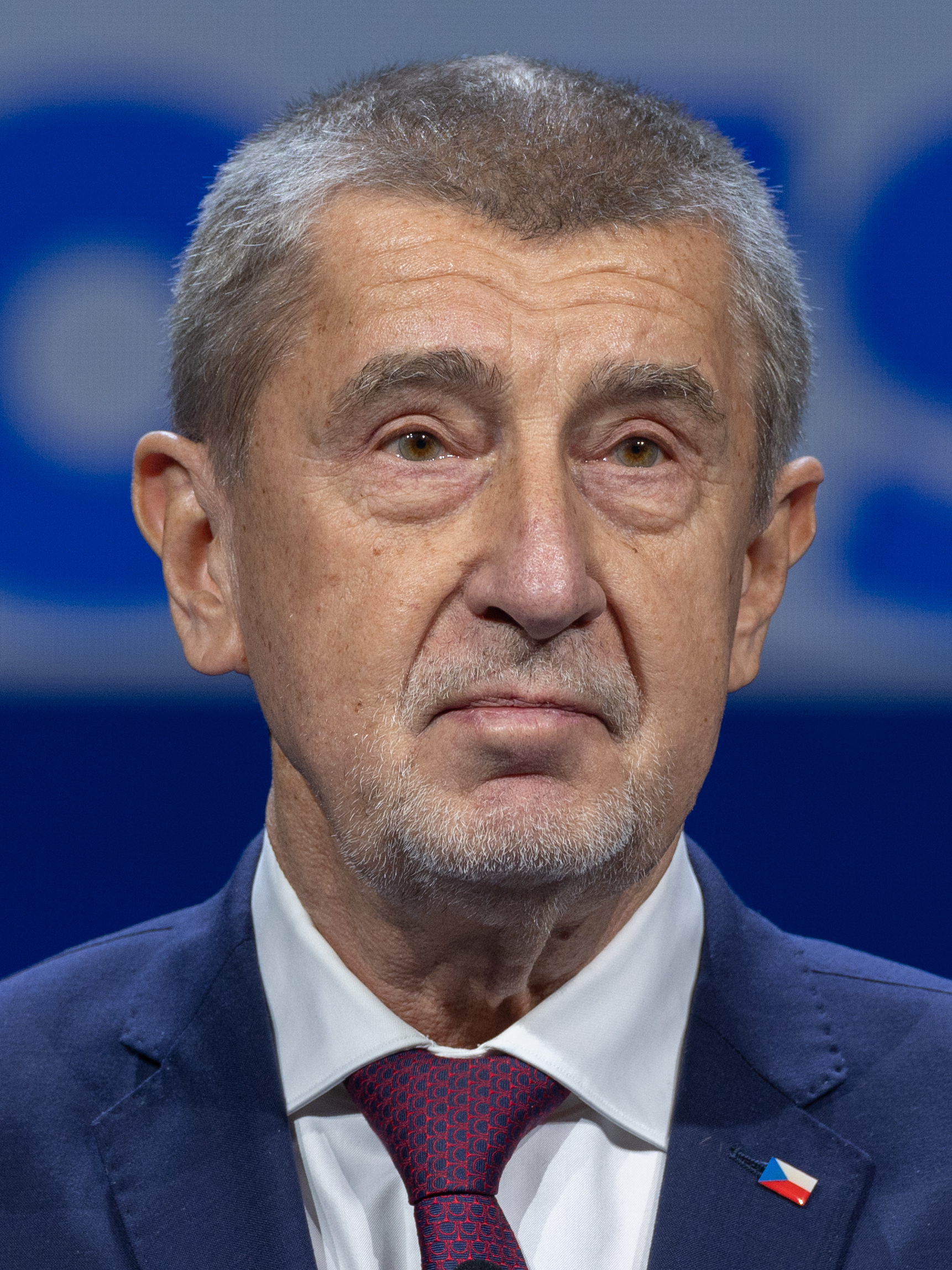
ANDREJ BABIŠ
Building Agrofert into a European agricultural giant before twice becoming Prime Minister of the Czech Republic.
He turned a defunct state chemical plant into a $3.5 billion empire and then walked into Prague to run a country. Most billionaires treat politics like a hobby. He treats government like a failing subsidiary he can restructure. His playbook is simple. Cut waste. Ignore the noise. Get it done. You either think running a nation like a boardroom is genius or you think it is completely backwards.
Net Worth
$3.5 billion
Nationality
Czech
Time Horizon
Generational
Risk Appetite
8 / 10
Net Worth Context
- · Still a billionaire — just the quiet kind at the end of the table.
CAREER & BACKGROUND
He started as a foreign trade officer in Bratislava during the late seventies. It was a standard state job until he got posted to Morocco.
He spent six years selling chemicals for Petrimex and learning how emerging markets operate. When the Iron Curtain fell most state companies folded overnight.
He saw it differently. He returned to Central Europe in the early nineties and bought a dying chemical distributor called Agrofert.
He spent seven years turning it into a legitimate business. The transition from state employee to corporate chairman was seamless for him.
He then pivoted entirely. He founded the ANO movement in 2012 and won a parliamentary seat in 2013.
The businessman became a lawmaker. He quickly moved into the deputy prime minister and finance minister roles by 2014.
After leading the country through a turbulent period he returned as prime minister in 2025. It is a rare arc.
Most industrialists stay on the sidelines. He stepped directly into the arena.
COMPANIES & ROLES
You cannot compare his empire to a Silicon Valley startup. Agrofert is a heavy industrial machine.
He took over a fertilizer and chemical distribution network and systematically bought every piece of the supply chain. It now spans more than 230 subsidiaries.
The group handles everything from crop protection and soil nutrients to bakery products and pharmaceuticals. Over thirty thousand people work for these companies across Central Europe.
He does not manage them day to day anymore. EU regulations forced him to divest his management rights once he entered high office.
He still owns the holding structure. The company operates as a single massive ecosystem.
If Agrofert were public it would be a classic value conglomerate. It produces actual things rather than trading digital assets.
That makes it completely unique among modern billionaire portfolios.
INVESTING STYLE & PHILOSOPHY
He does not look at stock charts. His strategy is industrial acquisition.
He buys distressed physical assets and forces them to work together. Think of it like assembling a puzzle where every piece makes the others cheaper to run.
He focuses on food security and agricultural infrastructure. These are recession resilient industries.
People always need to eat and farmers always need fertilizer.
He ignores speculative markets entirely. His capital stays locked in factories, warehouses, and supply networks.
He leverages economies of scale the old fashioned way. Cut middlemen.
Own the logistics. Control the pricing power.
It is boring until you realize how predictable the returns actually are.
THE PLAYBOOK
Risk Approach
He took enormous risks when nobody else would. Buying collapsing state enterprises in the nineteen nineties required nerves of steel.
Most buyers ran from the debt. He bought it and restructured it.
When he entered politics he risked everything he built on a much more volatile stage. Political careers can destroy reputations faster than bankruptcies do.
He faced intense scrutiny over EU agricultural subsidies and potential conflicts of interest. Most politicians would retreat to private life at that pressure.
He kept pushing forward. He treats setbacks like operational problems to solve.
He does not hedge his bets. He doubles down on his own conviction.
That is either extreme courage or extreme stubbornness. The market for political influence is just as unforgiving as the market for commodities.
Money Habits
His wealth is completely concentrated. He does not diversify into global tech stocks or buy private jets.
His balance sheet looks exactly like his company structure. It is tied to Czech agriculture and chemical production.
He lives at the Průhonice estate near Prague. It is substantial and historic.
He keeps a deliberately low public profile about his spending.
You will not find yacht purchases or viral luxury car collections. His capital is deployed into farmland, processing plants, and logistics.
It is an unglamorous but highly functional way to preserve wealth. He bets on the Czech economy itself.
That concentration means he wins big when the local industry thrives. It also means he absorbs the full impact when regional politics turn hostile.
BIGGEST WIN
The Agrofert acquisition itself is the masterstroke. He bought into a post Soviet chemical sector that Western analysts had completely written off.
Everyone else saw dead debt and collapsing infrastructure. He saw distribution networks and market share.
He spent two decades integrating fragmented operations. He turned a dying network into a multi billion dollar conglomerate.
The valuation sits comfortably around $3.5 billion today. That is thirty thousand jobs preserved.
It is a dominant market position in Central Europe. He proved that heavy industry can scale in an era obsessed with software.
He bought the factories when they were cheap. He made them efficient when they were overlooked.
That is wealth creation at its most fundamental.
BIGGEST MISTAKE
Blurring the line between his private empire and his public office backfired spectacularly. European institutions do not appreciate leaders who maintain massive private holdings while directing public funds.
The subsidy investigations triggered years of legal battles. Frozen funding and political protests created massive uncertainty for Agrofert.
The financial cost runs into tens of millions in legal fees and frozen grants.
The reputational damage stalled his political agenda for years. He should have divested complete ownership long before entering parliament.
The lesson is harsh. You cannot play two different games at once.
In the modern political landscape ownership transparency is a requirement rather than an option. Trying to keep both hats guarantees endless scrutiny.
FINANCIAL PHILOSOPHY
His entire worldview comes down to one simple comparison. A country should run like a business.
He believes governments waste money because they lack accountability. In his mind you cut the fat.
You focus on efficiency. You measure results instead of promises.
He applies this to public spending exactly as he applies it to corporate payroll. He dislikes subsidies that prop up failing operations.
He prefers investments that generate tangible output. He thinks the state should operate at a fraction of its current cost.
It is a brutally pragmatic approach. It leaves very little room for idealism.
If it does not make financial sense he cuts it loose. That philosophy wins boardrooms.
It divides parliaments.
FAMILY & PERSONAL LIFE
His personal life plays out quietly behind a very public career. He was first married to Beata Adamovičová and they had two children together.
That marriage ended in the two thousands. He later married Monika Herodesová in 2017.
They have two more children.
The couple announced a separation in April 2024. He keeps his family out of the daily political fray.
He raised four kids while building an agricultural monopoly and later governing a country. The split in 2024 showed that even empire builders face standard human complications.
It grounds him in reality. He operates in Prague but lives at the Průhonice estate.
It is a traditional setup that balances public duty with private life.
EDUCATION
He studied foreign trade at the University of Economics in Bratislava in the mid seventies. He also spent time at high school in Geneva.
That early exposure internationalized his perspective long before the Cold War ended.
The degree gave him a solid grasp of import export mechanics and state trade operations. He did not study theoretical economics.
He learned the mechanics of moving goods across borders. That practical foundation served him perfectly when the Czechoslovak economy privatized in the nineties.
It is the only formal business education he needed. The rest was learned on factory floors during a massive economic transition.
BOOKS & RESOURCES
He has not published any books and rarely discusses a formal reading list in public
His philosophy emerges from his actions rather than academic theory. If you want to understand how he operates you need to look at industrial strategy rather than finance manuals
As an Amazon Associate, Netfigo earns from qualifying purchases. Book links above may be affiliate links.
QUOTES (4)
The U.S. foreign policy is like throwing a grenade and then dealing with it
We should stay in the EU. Czexit would be a disaster.
If the state really functioned like a company then I believe it would need one quarter of the workers and one tenth of the money to operate
Business is in many respects much simpler than politics
NETFIGO SCORE
Proprietary 5-dimension investor rating
Risk Appetite
Contrarian Index
Track Record
Accessibility
Time Horizon
Related Profiles
Head-to-Head
Compare Andrej Babiš vs another investor.