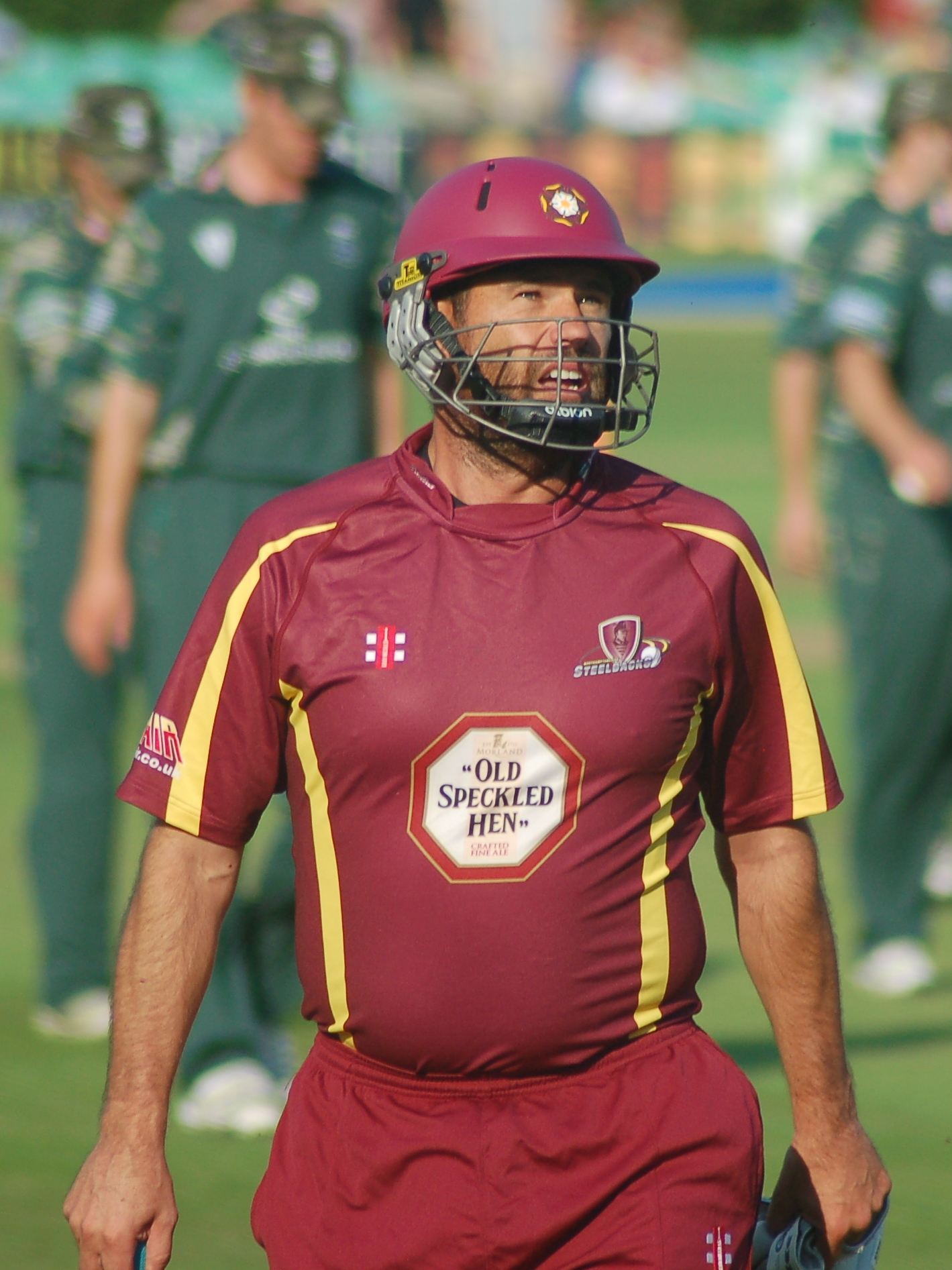
ANDREW HALL
Legendary oil trader who ran Phibro and once earned a $100 million bonus that caused a public firestorm
Andrew Hall is the oil trader who made Citigroup so much money they couldn’t afford to pay him. His $100 million bonus in 2009 — earned legally, contractually guaranteed — became a political scandal because the bank had just taken a government bailout. He then left to run his own fund and bet that oil prices would stay high. They didn’t. The man who was too expensive for Wall Street ended up closing his fund in 2017.
Net Worth
$1.5 billion
Nationality
British-American
Time Horizon
Long-Term
Risk Appetite
9 / 10
Net Worth Context
- · Still a billionaire — just the quiet kind at the end of the table.
CAREER & BACKGROUND
Hall was born in England and studied chemistry at Oxford before deciding that trading commodities was more exciting than laboratory work. He started at British Petroleum in the 1970s, then moved to Phibro, the legendary commodities trading arm that had been passed around Wall Street like a profitable hot potato — from Salomon Brothers to Travelers to Citigroup.
At Phibro, Hall became one of the most successful oil traders in history. His strategy was simple in concept: take large, long-dated positions in crude oil based on fundamental supply and demand analysis.
In practice, this meant betting billions that oil prices would go up — and for most of the 2000s, he was spectacularly right.
The $100 million bonus controversy in 2009 changed everything. Phibro had earned Citigroup over $2 billion in the previous five years.
Hall’s contract entitled him to a percentage of the profits. But Citigroup had just taken $45 billion in government bailout money.
Paying a single trader $100 million while taxpayers were on the hook was politically radioactive. Citigroup sold Phibro to Occidental Petroleum largely to make the problem go away.
Hall then ran Astenbeck Capital, his own commodities fund, from 2010 to 2017. He bet on oil prices staying above $60.
When oil crashed to $26 in 2016, the fund got hammered and eventually shut down.
COMPANIES & ROLES
Phibro was his kingdom. One of the oldest commodity trading houses in the world, originally founded in 1901.
Under Hall’s leadership as CEO, Phibro generated billions in profits for its parent companies. After Citigroup sold it, Phibro operated under Occidental Petroleum.
Astenbeck Capital Management was his personal hedge fund, launched in 2010 with about $5 billion under management. It specialized in oil and energy commodity trading.
The fund closed in 2017 after sustained losses from the oil price collapse.
Hall is also a significant art collector and owns a 1,000-year-old castle in Germany called Schloss Derneburg, which he converted into a private art museum.
INVESTING STYLE & PHILOSOPHY
Hall was a fundamentals-based commodity trader. He didn’t use algorithms or high-frequency strategies.
He studied oil supply and demand — how much was being pumped, how much was being consumed, what OPEC was doing, what wars were brewing — and made big directional bets.
His positions were concentrated and long-dated. He’d buy oil futures years into the future, betting on where prices would be in 2, 3, even 5 years.
This gave him an edge because most traders are focused on the next quarter. But it also meant he couldn’t easily cut and run if the thesis went wrong.
In other words, he was the anti-day-trader. Patient, conviction-driven, and willing to sit in pain.
THE PLAYBOOK
Risk Approach
Extremely high. Hall routinely held positions worth billions of dollars in a single commodity.
When oil was going his way, this was genius. When it wasn’t, the losses were staggering.
His fund reportedly lost over 30% in 2016 alone.
He didn’t use much hedging. His philosophy was that if you truly understood the supply-demand fundamentals, you didn’t need to hedge — you just needed to be right.
This worked for about 15 years and then didn’t.
Money Habits
Hall lives large. He bought Schloss Derneburg, a 1,000-year-old castle in Lower Saxony, Germany, and converted it into a private contemporary art museum.
His art collection is reportedly worth hundreds of millions and includes works by Georg Baselitz, Julian Schnabel, and Anselm Kiefer.
He also owns a historic estate in Southbury, Connecticut. The man who traded oil for a living spent the profits surrounding himself with art and medieval architecture.
There are worse ways to spend a billion dollars.
BIGGEST WIN
The 2003-2008 oil bull run. Hall positioned Phibro for a sustained rise in crude oil prices based on his analysis that global demand was growing faster than supply, especially with China’s industrial boom.
Oil went from $30 to $147 per barrel. Phibro’s profits during this period were estimated at over $2 billion.
Hall’s personal earnings from these trades made him the highest-paid person on Wall Street for several consecutive years. In 2008 alone, he reportedly earned $250 million.
BIGGEST MISTAKE
Betting on oil prices after the shale revolution. From 2014 onward, Hall’s thesis that oil would stay above $60 was destroyed by American shale oil production, which flooded the market with supply he hadn’t anticipated.
Oil crashed from over $100 to $26 in early 2016. Astenbeck Capital lost approximately 30% of its value in 2016, and investors pulled their money.
The fund closed in 2017 with roughly $3 billion in losses from its peak. Hall essentially missed the biggest supply-side revolution in oil markets since OPEC.
FINANCIAL PHILOSOPHY
Hall believed that commodity prices are ultimately determined by physical supply and demand, not by financial engineering or trader sentiment. He thought the market systematically underestimated long-term trends — like peak oil or Chinese demand growth — and overreacted to short-term noise.
His fatal flaw was not updating this model when the shale revolution fundamentally changed the supply equation. He was right about oil for 15 years and then wrong for 3 years, and the 3 wrong years erased most of the goodwill.
FAMILY & PERSONAL LIFE
Hall is married to Christine Hall and they live between Connecticut and Germany. He’s intensely private about family matters.
The public knows him as a trader and art collector. Everything else stays behind the castle walls — literally.
EDUCATION
Oxford University, where he studied chemistry. The science background gave him a framework for thinking about physical commodities that most financial traders lack.
Understanding how oil is extracted, refined, and consumed informed his trading in ways that a pure finance background wouldn’t. He later studied at the London Business School.
BOOKS & RESOURCES
Makes the case for commodities as an asset class — a thesis Hall lived and breathed for decades
As an Amazon Associate, Netfigo earns from qualifying purchases. Book links above may be affiliate links.
QUOTES (5)
Art and oil have more in common than people think. Both are finite resources whose value depends entirely on what someone is willing to pay.
Oil prices are ultimately determined by geology and thermodynamics, not by what traders think on any given Tuesday.
The bonus was in my contract. I earned it. The political optics were someone else’s problem.
I missed the shale revolution. Anyone who says they saw it coming at scale is lying or got lucky.
The best commodity trades take years to play out. If you need to see results this quarter, you’re in the wrong business.
NETFIGO SCORE
Proprietary 5-dimension investor rating
Risk Appetite
Contrarian Index
Track Record
Accessibility
Time Horizon
Related Profiles
Head-to-Head
Compare Andrew Hall vs another investor.