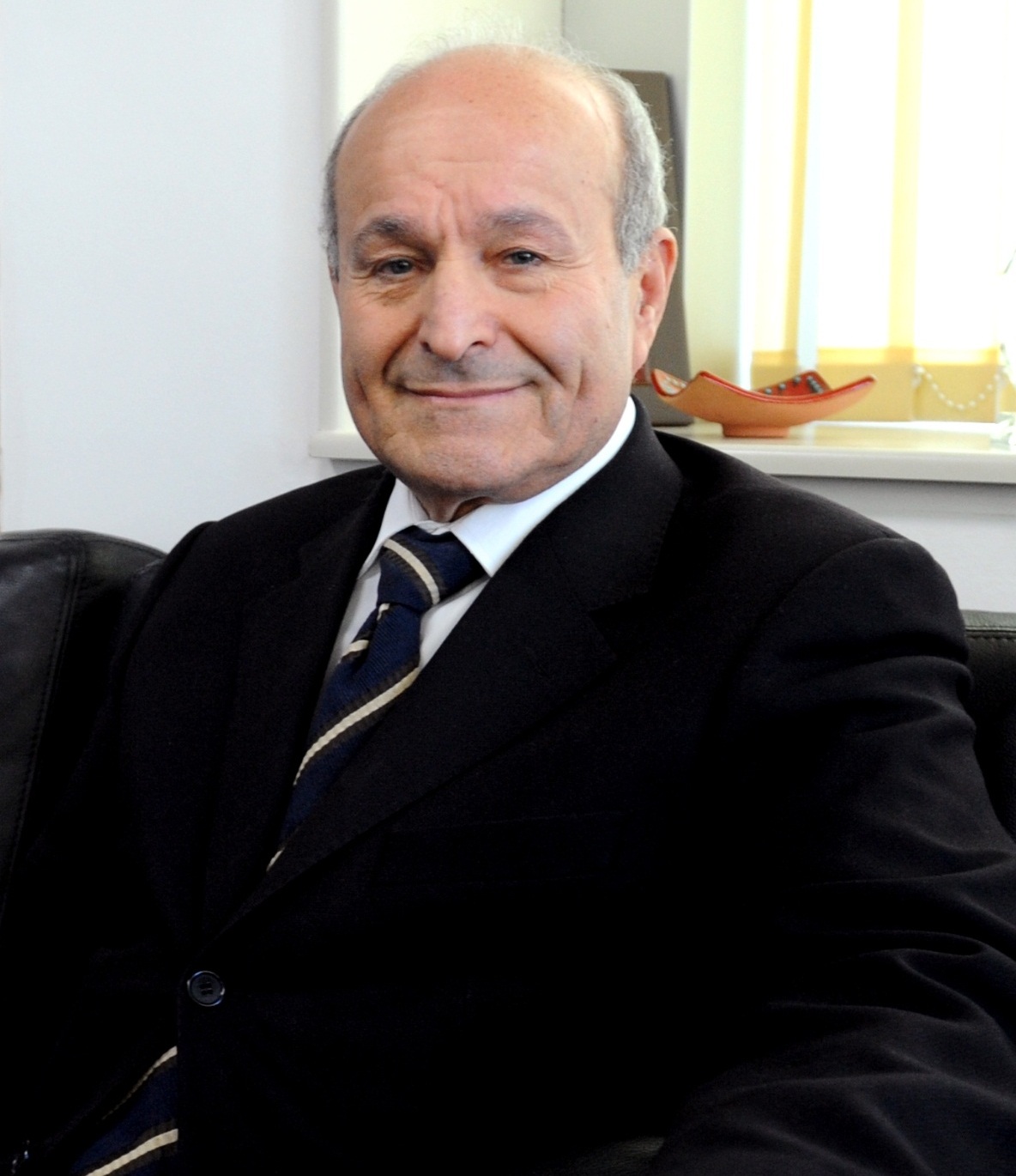
ISSAD REBRAB
Founding Cevital Group and building Algeria's largest private industrial conglomerate from steel mills to the world's largest sugar refinery.
He built a three point six billion dollar industrial empire from an accounting desk in the nineteen sixties. Rebrab started buying steel mills in post-independence Algeria, watched his main plants get destroyed in a terrorist attack in 1995, walked away, then came back in 1998 to found Cevital. He turned that comeback into the largest private employer in the country by betting on heavy industry and food processing when everyone else chased easier exits. The Algerian courts eventually banned him from managing his own company, but the factories never stopped running. A blue-collar capitalist who proved you can still build real things in a turbulent economy.
Net Worth
$3.6 billion
Nationality
Algerian
Time Horizon
Generational
Risk Appetite
8 / 10
Net Worth Context
- · Still a billionaire — just the quiet kind at the end of the table.
CAREER & BACKGROUND
He started out teaching accounting and commercial law in the mid nineteen sixties. It was a stable job, but numbers clearly bored him in a classroom.
He quit in 1968 and opened his own accounting firm. That move gave him the capital and the Rolodex to make his first serious industrial bet.
He bought a twenty percent stake in a metallurgical construction company in 1971. By 1975 he had launched Profilor in the steel sector.
He kept acquiring heavy assets through the nineteen eighties and fully took control of his joint ventures by 1979.
The nineties were brutal. Terrorist activity in 1995 destroyed his main steel installations.
He temporarily left Algeria and stepped back from the daily grind. But he did not stay away forever.
He returned in 1998 and launched Cevital with a clear focus on agribusiness and mass production. The company grew at an astonishing pace.
He bought French window maker Oxxo in 2013, rescued the struggling French home appliance company Groupe Brandt in 2014, and picked up an Italian steel mill called Luccini the next year. He stayed aggressive through the twenty tens.
The twenty twenty era brought the fight home. Algerian authorities arrested him in April 2019 over corruption, tax, and customs charges.
He spent over a year in custody before receiving a six-month sentence and a multi-million dollar fine. He maintains he did nothing wrong.
A court later barred him from management duties at Cevital in May 2023, but the empire he built kept operating under his family's direction.
COMPANIES & ROLES
He built Cevital into Algeria's largest private industrial conglomerate. It operates twenty-six subsidiaries across steel, food processing, electronics, home appliances, media, and automobiles.
Think of it as a domestic engine that tries to control the entire supply chain. Cevital runs the world's largest sugar refinery with a two million ton annual capacity.
It also holds the exclusive Algerian agency for Hyundai Motors and Europcar.
Before Cevital, he built Metal Sider and Profilor. Those were pure steel plays that formed the foundation of his manufacturing expertise.
Later he expanded abroad. He bought Groupe Brandt to secure European home appliance manufacturing.
He picked up Luccini to keep Italian steelmaking under his roof. He also bought the El Khabar media group for forty-five million dollars in 2016 to give his empire a public voice.
He does not collect passive minority stakes. He buys controlling interests and runs the floor.
INVESTING STYLE & PHILOSOPHY
He does not play the stock market. He buys factories.
His entire approach is built around vertical integration. He wants to own the raw material extraction, the manufacturing floor, the distribution network, and the retail outlet.
It is a heavy, capital-intensive strategy, but it removes dependency on foreign suppliers and protects margins.
Think of it like building a house from the lumber up. Most investors just buy the finished property and hope the neighborhood stays good.
Rebrab buys the sawmill, the trucking fleet, and the local zoning permits. He reinvests every available dollar back into machinery, land, and supply chain security.
He prefers long-term control over short-term liquidity. He is comfortable with illiquid assets because they build real national infrastructure.
THE PLAYBOOK
Risk Approach
He operates with a massive appetite for operational and political risk. Losing his primary installations to terrorism in 1995 would have buried most business owners.
He walked away, learned the lesson, and came back with a bigger playbook. He is not reckless with financial leverage.
He is incredibly stubborn about asset retention. He prices political friction into his models.
When the Algerian legal system fined him over eleven million dollars in 2019 and stripped his management rights in 2023, the company survived. He absorbs systemic shocks by keeping debt manageable and diversifying across essential goods like sugar, steel, and consumer appliances.
He bets on long-term infrastructure, not market timing.
Money Habits
Public records do not track his personal spending, real estate portfolio, or luxury purchases. His capital clearly lives inside his companies.
The known cash flows go into factory expansions, European acquisitions, and legal defenses. He paid an eleven point six million dollar state fine in 2020 without liquidating the business.
He funds family succession planning by handing operational control to his son Malik.
He treats wealth as industrial equity rather than a lifestyle budget. The $3.6 billion valuation reflects factory floors, refinery pipes, and global distribution networks.
He reinvests profits into heavy machinery and international stakes instead of luxury assets. His spending is measurable through corporate growth, not private consumption metrics.
BIGGEST WIN
Building Cevital from the ground up in 1998 and scaling it into a multi-billion dollar global player. The crown jewel is the sugar refinery.
It processes two million tons per year and stands as one of the largest in the world. He bought it during a period when Algerian food security was heavily dependent on imports.
That single move transformed him from a local steel operator into a global agribusiness heavyweight.
The European acquisitions amplified the win. Buying Groupe Brandt gave him instant access to French manufacturing standards.
Rescuing Luccini secured Italian steel capacity in Europe. The combined portfolio proved his core thesis.
You can start in post-conflict Algeria and buy your way into European industrial markets if you control costs and refuse to sell. The strategy built his entire net worth.
BIGGEST MISTAKE
The 2019 corruption and tax investigation that led to his arrest, a ten-month incarceration, and an eleven point six million dollar fine. The financial sting was recoverable.
The operational damage lasted years. The state eventually barred him from all commercial management duties at Cevital in May 2023.
He lost direct control of the empire he spent five decades constructing. The lesson is brutal.
Building heavy industry in politically volatile markets guarantees state scrutiny. Capital controls and opaque regulatory frameworks can strip your authority overnight.
He maintained his innocence throughout the ordeal, but the legal process proved that even the largest private employer is vulnerable to systemic power plays.
FINANCIAL PHILOSOPHY
He believes in controlling the value chain. You cannot build industrial strength by importing everything and assembling it at home.
You have to produce the raw inputs yourself. He pushes for upstream production like sugar cane for extraction and oleaginous seeds for oil.
He wants downstream control too. He started with basic glass and moved into ready-made PVC and aluminum windows for the local market.
He sees bureaucracy as the primary enemy of job creation. Industrial projects drown in paperwork and land access restrictions.
He argues that currency restrictions trap local capital and prevent Algerian firms from becoming true multinationals. His philosophy is blunt.
Buy foreign technology, absorb the skills, export the finished product, and keep the economy moving away from hydrocarbon dependency.
FAMILY & PERSONAL LIFE
His son Malik Rebrab stepped into the spotlight in July 2022. The government appointed him CEO of Cevital as legal pressures mounted on Issad.
The transition kept operational control inside the bloodline. Malik has been groomed to navigate the regulatory maze while maintaining European supply chains.
The family treats succession as an industrial continuity project rather than a public celebration. Private life remains tightly guarded.
EDUCATION
No formal university degree has been publicly documented. His professional foundation started in vocational professional school where he studied accounting and commercial law.
He immediately began teaching those subjects in the nineteen sixties. That early exposure to financial law and double-entry bookkeeping shaped his entire career.
He learned to read balance sheets before he learned to operate a blast furnace. He is a self-made industrialist who replaced academic credentials with decades of factory-floor experience and cross-border deal-making.
BOOKS & RESOURCES
Issad Rebrab has not published books or publicly curated a personal reading list
His industrial approach speaks for itself. If you want to understand the mindset that drives global emerging-market manufacturing, you should look at structural industrial strategy rather than traditional business biographies
Tells the story of an American furniture manufacturer who fought off offshoring by doubling down on automation and lean production. It captures the heavy-metal reality of keeping domestic factories profitable in a globalized economy
As an Amazon Associate, Netfigo earns from qualifying purchases. Book links above may be affiliate links.
QUOTES (5)
To encourage the industrial sector to climb up the value chain, Algeria must permit the acquisition of industrial actors abroad and in turn allow certain local firms to become proper multinationals.
According to the current law, transferring local currency outside of the country is not allowed, which significantly limits the ability of Algerian companies to execute direct investments abroad.
Investing is also an administrative challenge, as it requires many bureaucratic processes. This poses a problem for a variety of reasons and, most of all, limits the potential for job creation that industrial projects would normally generate.
There are still several elements that slow the expansion of the industrial sector in Algeria. The problem of access to land is one of them and it remains a significant issue, as land is still expensive and scarce.
Algerian industry needs to focus more on vertical integration in the upstream and downstream segments if it is to create more added value.
NETFIGO SCORE
Proprietary 5-dimension investor rating
Risk Appetite
Contrarian Index
Track Record
Accessibility
Time Horizon
Related Profiles
Head-to-Head
Compare Issad Rebrab vs another investor.