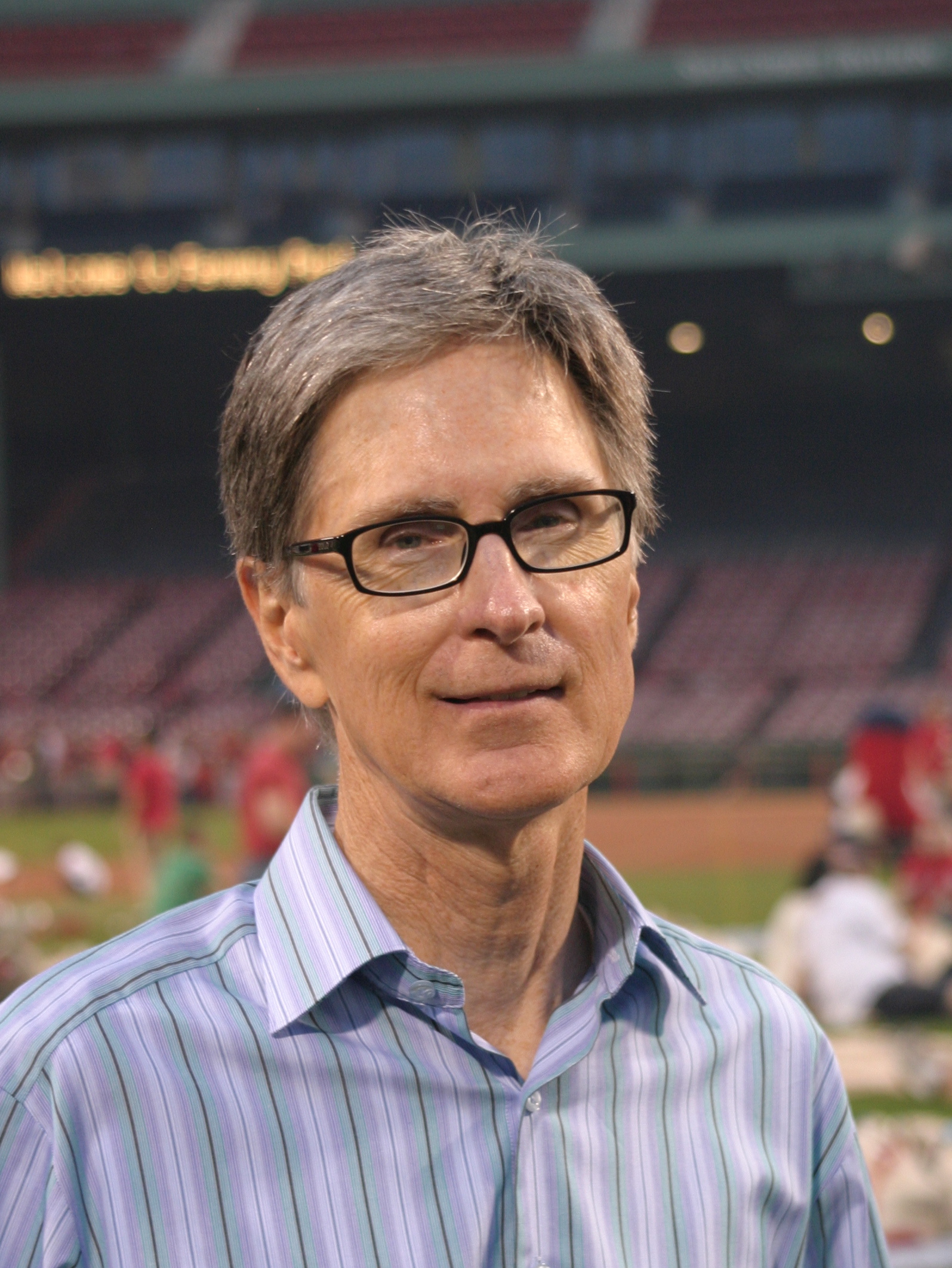
JOHN HENRY
Trend-following trader who bought the Boston Red Sox, broke an 86-year curse, and now owns the Boston Globe and Liverpool FC
John Henry made his fortune using a math formula to trade commodity futures, then used that money to buy the Boston Red Sox for $380 million, break the Curse of the Bambino, win four World Series, and build a sports empire now worth over $10 billion across baseball, soccer, and media. The man basically proved that if you’re good enough at math, you can buy happiness — and also Liverpool Football Club.
Net Worth
$7 billion
Nationality
American
Time Horizon
Long-Term
Risk Appetite
6 / 10
Net Worth Context
- · Still a billionaire — just the quiet kind at the end of the table.
CAREER & BACKGROUND
Henry grew up on a farm in Arkansas and didn’t go to college. He started trading commodity futures in the late 1970s, teaching himself a systematic trend-following approach.
He literally studied price data on soybean and corn futures while running the family farm.
In 1981, he founded JWM Associates (later John W. Henry & Company), a commodity trading firm.
His approach was purely systematic — mathematical models identified trends in commodity and financial futures, and the system traded without emotional interference. The fund delivered consistent returns through the 1980s and 1990s, growing to manage over $4 billion.
In 2002, he bought the Boston Red Sox for $380 million. Two years later, the Sox won the World Series for the first time since 1918 — breaking the Curse of the Bambino.
They’ve won four titles since. He also bought Liverpool FC in 2010 for about $470 million, the Boston Globe newspaper in 2013, and various other sports assets through Fenway Sports Group.
Today, Fenway Sports Group is valued at over $10 billion. Henry went from farm kid to the owner of some of the most iconic sports franchises on earth.
COMPANIES & ROLES
Fenway Sports Group (FSG) is the crown jewel. It owns the Boston Red Sox, Liverpool FC, the Pittsburgh Penguins (partial), NASCAR’s RFK Racing team, and Fenway Sports Management.
The group is valued at over $10 billion.
John W. Henry & Company was his trading firm.
It managed over $4 billion at its peak using systematic trend-following strategies in commodity and financial futures. The firm wound down its trading operations in the 2010s as Henry focused on sports.
The Boston Globe is his media property, acquired in 2013 for $70 million from the New York Times Company. In an era of declining newspapers, buying the Globe was more civic duty than investment thesis.
INVESTING STYLE & PHILOSOPHY
In trading, Henry was a pure systematic trend follower. His models identified trends in futures markets and automatically entered and exited positions.
No fundamental analysis, no gut feelings, no CNBC watching. Just math.
The approach is conceptually simple: if a market is going up, buy it. If it’s going down, sell it.
The magic is in the details — how you define a trend, when you enter, how much you bet, when you exit. Henry’s models were exceptionally good at managing these parameters.
In sports, he takes a data-driven approach similar to his trading. The Red Sox were early adopters of Moneyball-style analytics.
He applies the same philosophy at Liverpool FC.
THE PLAYBOOK
Risk Approach
Moderate in trading, aggressive in sports and real estate. His trading systems were designed to limit drawdowns — trend following naturally cuts losses by exiting when trends reverse.
But the systems could have extended losing periods when markets were choppy and trendless.
Buying the Red Sox for $380 million and Liverpool for $470 million were huge, concentrated bets. Sports team ownership is illiquid and subject to all kinds of risks — injuries, regulatory changes, fan backlash.
Henry’s risk tolerance clearly expanded once he had billions to play with.
Money Habits
Henry lives in a $25 million mansion in Brookline, Massachusetts, and owns a $65 million yacht named Iroquois. He’s not shy about spending on things he loves — sports teams, yachts, and art.
He’s also donated millions to Democratic political causes and to various charities in the Boston area.
His spending on sports is partly passion, partly business. The Red Sox games are date night.
Liverpool matches are strategic planning meetings. The line between hobby and investment disappeared years ago.
BIGGEST WIN
The Red Sox purchase for $380 million in 2002. The team is now worth over $4.8 billion.
Four World Series championships. Breaking the Curse of the Bambino.
It’s a 10x+ return that also produced some of the most memorable moments in sports history.
Liverpool FC might be even better. Bought for about $470 million in 2010, the club won the Premier League in 2020 and the Champions League in 2019.
It’s now worth over $5 billion.
BIGGEST MISTAKE
His trading firm had some tough years in the 2010s when trend-following strategies broadly struggled. Markets were whipsawing without sustained trends, which is the worst environment for a trend follower.
Assets under management dropped from over $4 billion to under $1 billion before he wound down the trading business.
The Boston Globe acquisition has also been questioned. He bought it for $70 million when newspapers were a declining industry.
It hasn’t been a financial home run, though Henry argues the civic value justifies the investment.
FINANCIAL PHILOSOPHY
Henry believes that markets trend, and that systematic models can capture those trends better than human intuition. His entire trading career was built on the idea that removing emotion from investment decisions produces better outcomes.
In sports, he applies a similar philosophy — use data to make decisions, not tradition or gut feeling. The Red Sox’s adoption of analytics under Henry was revolutionary in baseball.
He brought the same mindset to Liverpool.
FAMILY & PERSONAL LIFE
Henry is married to Linda Pizzuti Henry, who serves as CEO of The Boston Globe. They have a son together.
He was previously married twice. Linda is a significant figure in her own right, running the Globe and appearing at major media events.
The Henrys are one of Boston’s most prominent couples.
EDUCATION
Henry attended a few colleges but never graduated. He’s a college dropout who taught himself trading from books and price charts while running the family farm in Arkansas.
The fact that a farm kid with no degree built a $7 billion empire on math formulas is one of the best underdog stories in finance.
BOOKS & RESOURCES
Profiles Henry’s approach and the broader trend-following community
Captures the data-driven philosophy Henry brought to the Red Sox
Features the kind of systematic traders who influenced Henry’s approach
As an Amazon Associate, Netfigo earns from qualifying purchases. Book links above may be affiliate links.
QUOTES (5)
I didn’t go to college. I went to the futures pit. Turns out, one of those teaches you more about risk.
The trend is your friend until it isn’t. The system tells you when it isn’t. Your emotions don’t.
Buying the Red Sox wasn’t a business decision. It was a dream. That it turned out to be a great business decision is a bonus.
Data doesn’t care about tradition. The Red Sox won because we trusted the numbers, not the old way of doing things.
NETFIGO SCORE
Proprietary 5-dimension investor rating
Risk Appetite
Contrarian Index
Track Record
Accessibility
Time Horizon
Related Profiles
Head-to-Head
Compare John Henry vs another investor.