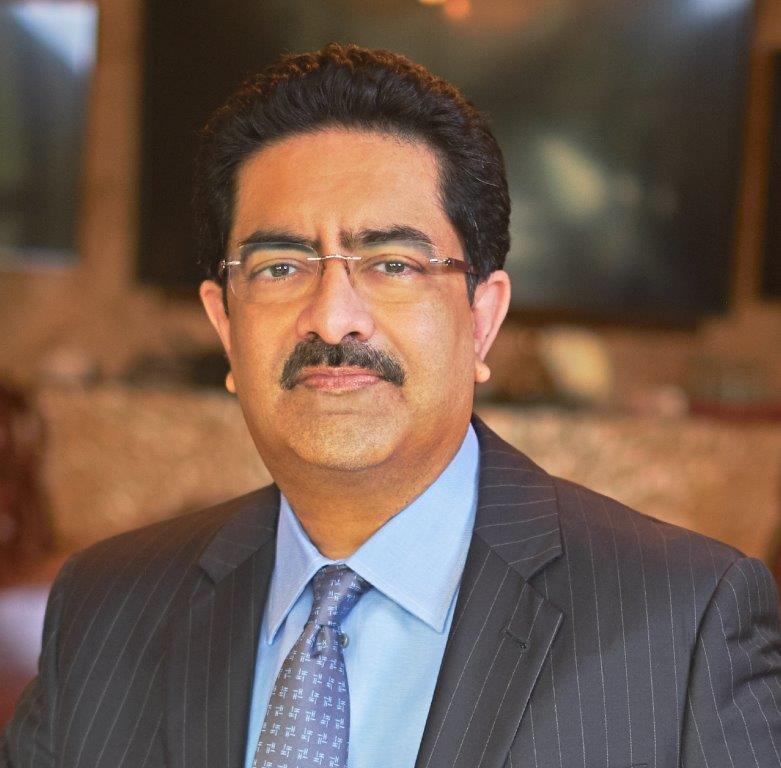
KUMAR MANGALAM BIRLA
Chairman of the Aditya Birla Group, one of the largest and oldest conglomerates in India, spanning cement, metals, telecom, and financial services.
Kumar Mangalam Birla took over a sprawling Indian conglomerate at 28 years old when his father died suddenly, and turned it into a $60 billion global empire. Aditya Birla Group is the world's largest producer of viscose staple fiber, top 3 in cement, and has operations in 36 countries. He merged his telecom company with Vodafone to create India's largest mobile operator, then watched it get crushed by Mukesh Ambani's Jio. He offered to give Vodafone Idea to the government for free rather than inject more capital. That is one way to cut your losses.
Net Worth
$18 billion
Nationality
Indian
Time Horizon
Generational
Risk Appetite
7 / 10
CAREER & BACKGROUND
Kumar Mangalam Birla was born in 1967 in Kolkata. His grandfather founded the Birla business empire in the early 1900s, making it one of the oldest business dynasties in India.
His father, Aditya Vikram Birla, modernized and internationalized the group.
When Aditya Vikram died in 1995, Kumar took over at just 28. The succession was sudden and unplanned.
Skeptics doubted whether a young, MBA-educated heir could manage a traditional Indian conglomerate.
He proved them wrong quickly. He restructured the group around clear business lines: cement (UltraTech), metals (Hindalco/Novelis), financial services (Aditya Birla Capital), telecom (Idea Cellular), and fashion (ABFRL).
He aggressively expanded internationally, acquiring Novelis, the world's largest aluminum rolling company, for $6 billion in 2007.
The Novelis acquisition was a bold move. An Indian company buying one of the largest aluminum processors in the world, with plants in North America, Europe, and Asia.
It was the biggest overseas acquisition by an Indian company at the time.
In telecom, he merged Idea Cellular with Vodafone India in 2018 to create Vodafone Idea, India's largest mobile operator. But the merger coincided with Reliance Jio's entry, which offered free data and crushed the entire telecom industry.
Vodafone Idea accumulated over $25 billion in debt and losses. In 2021, Birla offered to give his stake to the government for free rather than invest more.
The government declined.
Despite the telecom disaster, the rest of the Aditya Birla Group thrived. UltraTech Cement became India's largest cement producer.
Hindalco/Novelis became a global aluminum leader. The group's revenue exceeds $60 billion across operations in 36 countries.
COMPANIES & ROLES
UltraTech Cement is India's largest cement company with capacity of over 130 million tonnes per annum. Cement is India's growth story in a bag.
Hindalco Industries is one of the world's largest aluminum producers. Its subsidiary Novelis is the global leader in aluminum rolling and recycling.
Aditya Birla Fashion and Retail (ABFRL) owns brands like Louis Philippe, Van Heusen, Allen Solly, and Peter England. India's largest branded fashion company.
Aditya Birla Capital is a diversified financial services platform covering lending, insurance, mutual funds, and wealth management.
Vodafone Idea is the troubled telecom joint venture. Still operating but heavily indebted and losing market share to Jio and Airtel.
INVESTING STYLE & PHILOSOPHY
Conglomerate builder. Birla doesn't invest in stocks or make venture bets.
He builds and acquires operating businesses within the Aditya Birla Group framework.
His approach is distinctly Indian: vertical integration, geographic diversification, and playing the long cycle. Buy commodities businesses when they're cheap.
Build manufacturing capacity when others are cutting back. Wait for India's growth to fill the capacity.
International acquisitions at scale. The Novelis deal showed Birla was willing to pay a premium for global assets that would transform the group from an Indian company into a multinational.
THE PLAYBOOK
Risk Approach
High. The Novelis acquisition was a $6 billion bet at a time when Indian companies didn't make overseas acquisitions that large.
The Vodafone merger was a bet-the-company move in telecom.
But Birla is not reckless. His core businesses, cement, metals, financial services, are all cash-generating and relatively stable.
The telecom adventure was the exception, not the rule.
Money Habits
Birla lives in Mumbai and maintains the lifestyle of Indian old money. He's known as a low-key, thoughtful leader rather than a flashy billionaire.
He doesn't do social media stunts or public confrontations.
He's a cricket fan and has been involved in IPL team ownership. He's also a significant art collector, focusing on Indian contemporary art.
Philanthropy is substantial. The Aditya Birla Group runs schools, hospitals, and vocational training centers across India.
The family's Birla temples are among the most famous in India.
BIGGEST WIN
The Novelis acquisition in 2007 for $6 billion. At the time, skeptics called it overpaying.
An Indian aluminum smelter buying a global aluminum rolling company with operations in 11 countries seemed ambitious.
But Novelis became a cash machine. As demand for recycled aluminum surged (driven by the auto and beverage can industries), Novelis's position as the world's largest recycler became enormously valuable.
The company now generates billions in revenue and is worth many multiples of what Birla paid.
UltraTech Cement's consolidation of India's fragmented cement market was another quiet masterpiece. Through a series of acquisitions, Birla built the largest cement company in India, perfectly positioned for the country's infrastructure boom.
BIGGEST MISTAKE
Vodafone Idea. The merger with Vodafone to create India's largest telecom operator looked smart on paper.
But Reliance Jio entered the market with free data and voice calls, subsidized by Mukesh Ambani's oil money, and destroyed the economics of every other telecom company in India.
Vodafone Idea accumulated over $25 billion in debt and losses. Birla's offer to give his stake to the government for free was an admission of total defeat.
It was the most expensive mistake of his career, though the blame is arguably shared with regulators who allowed Jio's predatory pricing.
FINANCIAL PHILOSOPHY
Build for India's growth. India is adding the equivalent of a major European country's GDP every few years.
Every ton of cement, every aluminum sheet, every insurance policy will find a buyer.
Diversify across industries but maintain market leadership in each one. Birla's companies are typically number one or two in their sectors.
He doesn't do number five.
Cut your losses. The offer to give away his Vodafone Idea stake was controversial but rational.
He recognized that throwing good money after bad in telecom was irrational when the rest of the group needed capital for growth.
FAMILY & PERSONAL LIFE
Birla married Neerja Kasliwal in 1989. They have three children.
His son Ananya Birla is a singer-songwriter and entrepreneur. His daughter Advaitesha Birla is involved in the family businesses.
The Birla family has been in business for over a century, making it one of India's oldest industrial dynasties. The family's legacy includes building iconic temples, schools, and hospitals across India.
Kumar's grandfather GD Birla was a close associate of Mahatma Gandhi.
EDUCATION
Birla holds a bachelor's degree in commerce from the University of Mumbai and an MBA from the London Business School. He is also a chartered accountant, which gives him a financial rigor that many Indian industrialists lack.
BOOKS & RESOURCES
Birla has not written a personal memoir
The Birla family's story is covered in several books about Indian business dynasties
Business Maharajas by Gita Piramal profiles the Birla family and other Indian industrial dynasties.
Indias Richest by Gita Piramal covers the modern generation of Indian billionaires including Birla.
QUOTES (5)
I took over at twenty-eight because life did not give me a choice. You grow up fast when you have to.
India adds a new Germany in GDP every few years. Building capacity for that growth is the simplest investment thesis in the world.
Cutting your losses is not admitting failure. It is preserving capital for the next fight.
A conglomerate is only as strong as its weakest business. If one division is bleeding, it drains everything.
Global scale is not optional for Indian companies anymore. You either compete worldwide or you get bought.
NETFIGO SCORE
Proprietary 5-dimension investor rating
Risk Appetite
Contrarian Index
Track Record
Accessibility
Time Horizon
Related Profiles
Head-to-Head
Compare Kumar Mangalam Birla vs another investor.