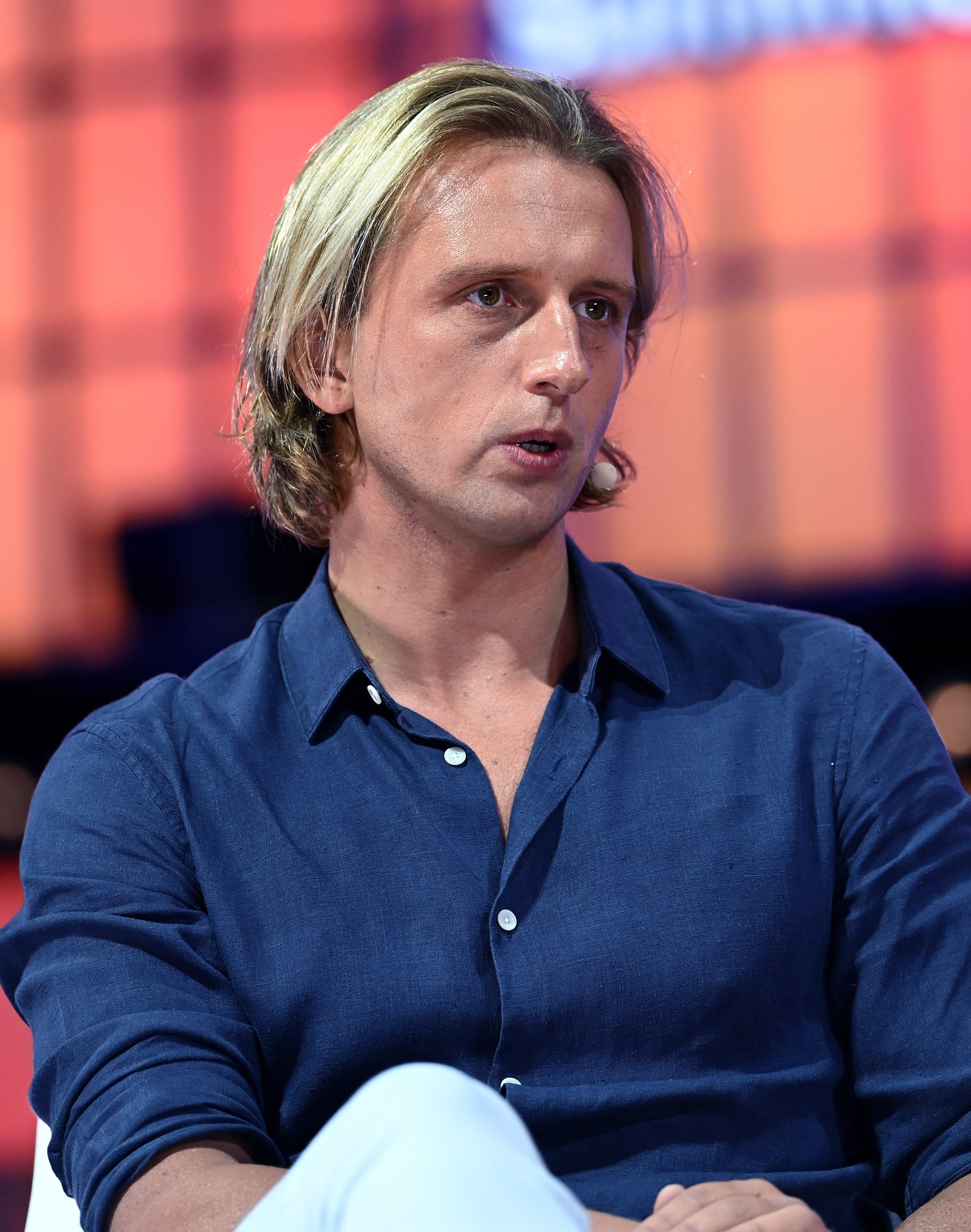
NIK STORONSKY
Revolut founder — built Europe's most valuable fintech from a currency exchange app
A former Credit Suisse trader who got so angry about being ripped off on foreign exchange fees during a trip that he built an entire bank to fix it. Revolut now has 45 million customers, a $45 billion valuation, and a UK banking license that took five years of regulatory pain to obtain. Storonsky runs the company like a trading floor — intense, data-obsessed, and with a turnover rate that would make most HR departments cry. The results speak for themselves, even if the Glassdoor reviews don't.
Net Worth
$7 billion
Nationality
Russian-British
Time Horizon
Medium-Term
Risk Appetite
9 / 10
Net Worth Context
- · Still a billionaire — just the quiet kind at the end of the table.
CAREER & BACKGROUND
Born in 1984 in Russia. Studied physics at the Moscow Institute of Physics and Technology, then finance at the New Economic School in Moscow.
Moved to London and worked as a trader at Lehman Brothers (yes, that Lehman Brothers — he was there during the collapse). Then moved to Credit Suisse as an equity derivatives trader.
Founded Revolut in 2015 with Vlad Yatsenko after getting frustrated with hidden FX fees while traveling. Launched with a prepaid card offering interbank exchange rates.
Grew from zero to 45 million customers across 38 countries. Revolut received its UK banking license in 2024 after a five-year application process.
Valued at $45 billion in a 2024 funding round, making it Europe's most valuable private fintech.
COMPANIES & ROLES
Revolut (co-founder and CEO). Previously a trader at Lehman Brothers and Credit Suisse.
Revolut's product suite now includes banking, crypto trading, stock trading, insurance, travel bookings, and business accounts.
INVESTING STYLE & PHILOSOPHY
Storonsky runs Revolut like a hedge fund, not a bank. Every decision is data-driven.
Every feature is tested, measured, and killed if it doesn't hit metrics. He's obsessed with speed of execution — Revolut ships features faster than banks can hold committee meetings about them.
His approach to competition is aggressive: enter a market, undercut everyone on price, iterate until you win, then move to the next market. He doesn't invest externally — his entire focus is building Revolut into a global financial super-app.
THE PLAYBOOK
Risk Approach
Extremely high. Storonsky left a lucrative trading career to build a fintech startup with no banking experience.
He expanded Revolut into crypto, stock trading, insurance, and business banking simultaneously — any one of those expansions could have failed and drained the company. He entered the US market despite brutal competition from established neobanks.
His management style is famously intense — former employees describe unrealistic targets and a "perform or leave" culture.
Money Habits
Storonsky is known for working extremely long hours and expecting the same from his team. He's described as intense, direct, and occasionally abrasive.
He tracks everything with data — even internal meetings are measured for productivity. Despite his wealth, he doesn't have a flashy public lifestyle.
He's focused almost entirely on Revolut and has said the company is essentially his life. He keeps a low personal media profile compared to other fintech founders.
BIGGEST WIN
Revolut's growth path is staggering. From a prepaid travel card in 2015 to 45 million customers and a $45 billion valuation in under a decade.
The UK banking license — obtained in 2024 after years of regulatory scrutiny — unlocked deposit-taking and lending, transforming Revolut from a payments app into an actual bank. Revenue hit $2.2 billion in 2023 with the company's first full year of profitability.
That's not a fintech startup anymore — it's a bank that actually makes money.
BIGGEST MISTAKE
The workplace culture controversies have been a persistent problem. Reports of extreme working hours, unrealistic KPIs, high turnover, and a "toxic" culture have appeared in multiple publications.
In 2019, a whistleblower alleged compliance failings, and regulators scrutinized the company. While Storonsky has addressed some concerns and brought in senior hires, the cultural issues have made recruiting harder and contributed to the unusually long UK banking license process.
The reputational cost has been real.
FINANCIAL PHILOSOPHY
Storonsky believes financial services should be commoditized. Banks charge too much for simple things — currency exchange, international transfers, account fees — because customers have no alternatives.
His philosophy is: strip out the fees, automate everything, pass savings to customers, and make money on volume and premium subscriptions. He's said "banks are essentially technology companies with bad technology." His goal is to replace traditional banks entirely, not supplement them.
FAMILY & PERSONAL LIFE
Very private. Has a partner but keeps his personal life completely separate from his public role.
Born in Russia, lives in London.
EDUCATION
Studied physics at the Moscow Institute of Physics and Technology. Earned a Master's in finance from the New Economic School in Moscow.
His physics and trading background gives him a quantitative, data-first approach to business.
BOOKS & RESOURCES
As an Amazon Associate, Netfigo earns from qualifying purchases. Book links above may be affiliate links.
QUOTES (6)
I got ripped off on foreign exchange fees during a holiday trip and thought — this is insane, why is this still happening in 2015? So I built a company to fix it. The best businesses come from personal frustration.
Banks are essentially technology companies with bad technology. We're fixing that. Every bank charges you fees for things that should cost nothing. Currency exchange should be free. Transfers should be instant. We make them so.
We ship features faster than banks can schedule meetings about them. Speed is our moat. By the time a traditional bank decides to build something, we've already launched it, tested it, and iterated three times.
I was at Lehman Brothers when it collapsed. I watched a 158-year-old bank disappear overnight. That taught me two things: institutions are fragile, and complacency kills. I run Revolut like it could die tomorrow.
People say our culture is intense. It is. We are trying to replace a trillion-dollar industry. That is not a 9-to-5 job. If you want comfortable, go work at a bank — the ones we're replacing.
Getting a UK banking license took five years. Five years of regulators, audits, compliance reviews, and paperwork. It nearly broke us. But now we can take deposits and lend money — we're a real bank now, not just an app.
NETFIGO SCORE
Proprietary 5-dimension investor rating
Risk Appetite
Contrarian Index
Track Record
Accessibility
Time Horizon
Related Profiles
Head-to-Head
Compare Nik Storonsky vs another investor.