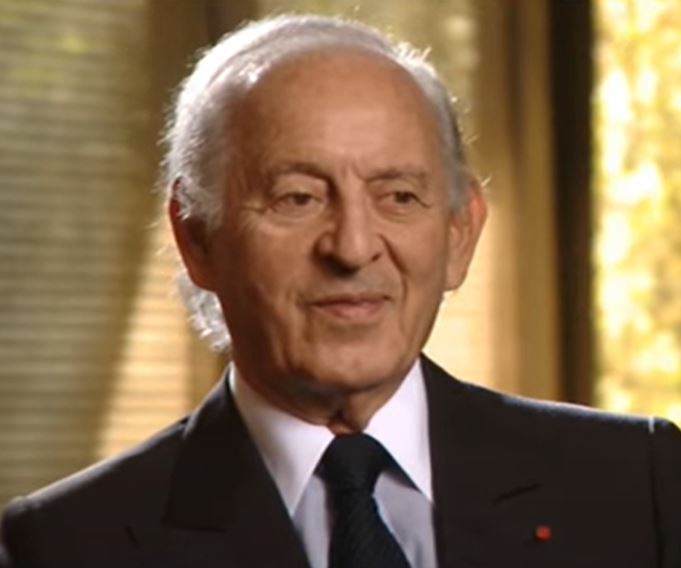
OTHMAN BENJELLOUN
Building BMCE Bank into a pan-African banking network across 20 countries and running RMA Insurance, making him Morocco's most influential private-sector financier for over six decades.
He trained as a pharmacist in Paris, came back to Morocco, and spent the next 60 years running the country's banking and insurance sector. BMCE Bank — now branded Bank of Africa — operates across more than 20 African countries under his leadership. He has been chairman through four Moroccan kings and every economic cycle since independence. His net worth is $2.4 billion. He is in his nineties. The patience required to build something like this is not a strategy. It is a personality.
Net Worth
$2.4 billion
Nationality
Moroccan
Time Horizon
Generational
Risk Appetite
6 / 10
Net Worth Context
- · Still a billionaire — just the quiet kind at the end of the table.
CAREER & BACKGROUND
Othman Benjelloun was born in 1932 in Fez, Morocco, into a prominent family with established business connections. He studied pharmacology in Paris at a time when Morocco's professional class was trained in France, returned after independence in 1956, and entered banking and insurance in the 1960s as Morocco was building its independent financial infrastructure.
He became chairman of BMCE Bank — Banque Marocaine du Commerce Extérieur — which had been established as a state bank to finance Morocco's foreign trade. Through privatization in the 1990s, he acquired majority control and transformed it from a government trade bank into a full-service commercial institution.
FinanceCom, his holding company, controls both BMCE Bank and RMA Insurance.
The strategic move that defined his legacy came from the 1990s onward: expanding BMCE Bank across sub-Saharan Africa when most North African capital was cautious about investing south of the Sahara. He acquired and invested in banks across 20 African countries, rebranding much of the African network as Bank of Africa in 2010.
Today, Bank of Africa is one of the most geographically distributed banking networks on the continent.
For six decades, Benjelloun was the most connected private-sector figure in Morocco. His relationship with the Moroccan royal family and successive governments has been close and mutually beneficial.
He remains chairman into his nineties, with his daughter Leila Benjelloun managing increasing strategic responsibilities within FinanceCom.
COMPANIES & ROLES
FinanceCom is the holding company. It controls BMCE Bank of Africa, which operates in Morocco and across more than 20 sub-Saharan African countries under the Bank of Africa brand.
The bank has total assets exceeding $30 billion and is Morocco's second-largest private bank by assets. RMA Insurance — Royale Marocaine d'Assurances — is the other major holding, one of Morocco's largest insurers across life, general, and corporate lines.
The two pillars are integrated: banking and insurance distributed across every major Moroccan city, with Africa as the long-term growth engine. His daughter Leila heads key strategic functions within the group.
INVESTING STYLE & PHILOSOPHY
Benjelloun is a long-duration institution builder, not a trader. He acquires financial businesses and holds them for decades.
His strategic insight — that sub-Saharan African banking was severely underserved and that Morocco was the natural corridor between European capital and African growth — drove the Bank of Africa expansion. He moves slowly and methodically.
He does not make headlines with bold trades or public activism. His edge is proximity to Moroccan power structures and a relationship-driven approach to acquiring and integrating African banking franchises over time.
The kind of financier who builds over generations and measures success in decades rather than quarters.
THE PLAYBOOK
Risk Approach
Benjelloun has always operated in environments where political risk is part of the business landscape, not a variable to be eliminated. Running a major bank in Morocco requires navigating relationships with the monarchy, government regulators, and powerful business families — across four kings and 60 years of political change.
His approach to risk is relational: mitigate political exposure by being indispensable. He built financial institutions the state needed.
His biggest bet — pan-African banking — was genuinely contrarian when he made it in the 1990s, when African risk made most investors nervous. It has since been validated by Morocco's deepening economic ties with the continent.
Money Habits
Benjelloun belongs to the generation of Moroccan business elites who built wealth quietly over decades without the media attention that modern billionaires attract. He is known for a serious art collection, gathering Moroccan and European art over many decades.
He lives in Casablanca and Rabat in residences that reflect Morocco's particular blend of Islamic architecture and modern luxury. He is a patron of culture and education, funding various initiatives in Morocco including schools and cultural foundations.
He does not have the public financial transparency of Western billionaires — his spending habits are largely inferred from his philanthropy.
BIGGEST WIN
Expanding BMCE Bank into sub-Saharan Africa beginning in the 1990s was the defining strategic call of Benjelloun's career. When most North African capital was cautious about investing south of the Sahara, he moved in — acquiring stakes in banks across 20 countries, rebranding the network as Bank of Africa in 2010, and creating one of the continent's most geographically distributed banking franchises.
That bet has been worth billions. It also positioned Morocco as Africa's financial hub and made Benjelloun one of the most influential private voices in pan-African development.
The timing, with hindsight, was nearly perfect.
BIGGEST MISTAKE
The Bank of Africa expansion was geographically bold but operationally uneven. Some sub-Saharan African subsidiaries have had persistent non-performing loan problems, regulatory friction, and lower-than-expected profitability.
Critics have argued that Benjelloun expanded into too many countries without building the local infrastructure to manage them effectively from Casablanca. The bank's return on equity in parts of the network has been disappointing, and some analysts believe the group is spread too thin across too many markets.
Building 20 countries of banking is not the same as building 20 good banks.
FINANCIAL PHILOSOPHY
Benjelloun believes in financial services as a long-term nation-building exercise, not a quarterly earnings story. He has said repeatedly that banking in Africa is fundamentally about access — getting capital to people and businesses that traditional systems exclude.
His approach in Africa mirrored what he did in Morocco: build a real institution with deep local relationships, then expand carefully and hold. He is skeptical of short-term thinking in banking and has been an advocate for long-term commitments to African markets even when African sovereign risk made other investors pull back.
Patience is not a tactic for him. It is a worldview.
FAMILY & PERSONAL LIFE
Benjelloun married and raised a family in Morocco. His daughter Leila Benjelloun has taken on major leadership responsibilities within FinanceCom and is one of Morocco's most recognized businesswomen.
The family's management of the empire across generations reflects a deliberate succession approach, though Benjelloun himself has remained chairman longer than almost anyone would have predicted. He has been a patron of cultural and educational life in Morocco for decades, funding institutions consistent with the values of a family that has been part of Morocco's establishment since independence.
EDUCATION
Benjelloun studied pharmacology in Paris — a reminder that Morocco's first generation of post-independence business leaders often came from professional rather than financial backgrounds. The Parisian education gave him fluency in French-language business culture, which was essential for navigating the Moroccan commercial world of the 1960s and 1970s.
He learned banking by building it from within, not by studying it in a classroom. That practical immersion, combined with the relationships built over 60 years, is his real curriculum.
BOOKS & RESOURCES
Benjelloun has not maintained a public reading list, but the intellectual tradition he embodies — patient institution building in developing markets — is well documented elsewhere.
Captures the long-duration, margin-of-safety thinking that Benjelloun has demonstrated across six decades of Moroccan finance
Essential reading for understanding the mental models behind building durable businesses that compound over generations
For context on the African banking opportunity Benjelloun was one of the first to see clearly, The Fastest Billion by Charles Robertson explains the demographic and economic thesis that has been validated across the continent since 2000.
As an Amazon Associate, Netfigo earns from qualifying purchases. Book links above may be affiliate links.
QUOTES (6)
Banking in Africa is not a risk. It is an opportunity. The real risk is not being there.
I studied pharmacy, not finance. Business is about understanding what people need. That is the same skill whether you are in a laboratory or a boardroom.
Morocco's future is linked to Africa's future. We built Bank of Africa because we believe deeply in that link.
Patience is the most underrated quality in business. We have been building for 60 years. That is our competitive advantage.
The best protection against political risk is to build something the country needs. That has been our strategy everywhere we operate.
Financial inclusion is not charity. It is the most powerful economic development tool available to a society.
NETFIGO SCORE
Proprietary 5-dimension investor rating
Risk Appetite
Contrarian Index
Track Record
Accessibility
Time Horizon
Related Profiles
Investors
Aliko Dangote
Two of Africa's most influential long-term builders who bet on their home continents when international capital was cautious, and have spent decades proving the thesis right.
Mo Ibrahim
Both are North African business leaders who built major enterprises and then became influential voices on governance, development, and the long-term future of the African continent.
Head-to-Head
Compare Othman Benjelloun vs another investor.