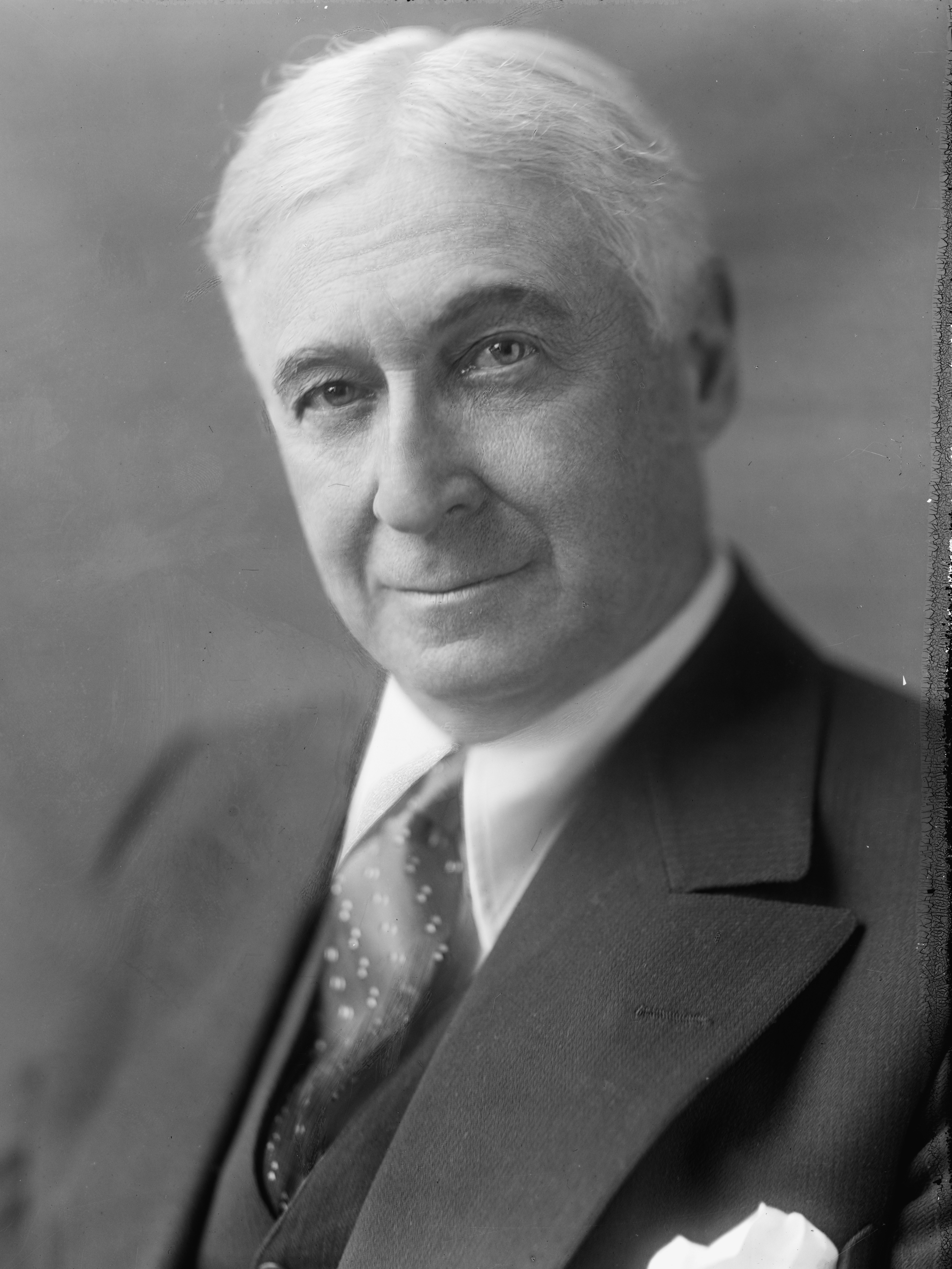
BERNARD BARUCH
Wall Street legend who made a fortune in the early 1900s, advised six US presidents, and coined the term "Cold War." Known for selling before the 1929 crash.
Bernard Baruch made millions on Wall Street in the early 1900s by doing what almost nobody could: reading the room and getting out before the crash. He sold most of his stocks before the 1929 collapse and walked away rich while everyone else was ruined. He then spent four decades advising presidents from Wilson to Eisenhower on everything from wartime economics to nuclear policy. He literally coined the term "Cold War" in a 1947 speech. A speculator who became a statesman. The smartest park bench in New York.
Net Worth
$16 Million (at death, 1965)
Nationality
American
Time Horizon
Medium-Term
Risk Appetite
7 / 10
CAREER & BACKGROUND
Bernard Mannes Baruch was born in Camden, South Carolina in 1870. His father was a German-Jewish immigrant and Confederate Army surgeon.
The family moved to New York City when Bernard was 11. He graduated from City College of New York at 19 and got a job as an office boy on Wall Street.
By his mid-20s, he was making serious money as a speculator in sugar, railroads, and commodities. By 33, he had made his first million.
By 1903, he bought a seat on the New York Stock Exchange and opened his own brokerage. He made a fortune in copper, rubber, sulfur, and other commodity plays.
When World War I broke out, President Wilson appointed him chairman of the War Industries Board in 1918 — essentially making him the economic czar of the American war effort at age 47. He became one of the most powerful civilians in America.
After the war, he advised at the Paris Peace Conference. He then returned to investing and, crucially, sold most of his stock positions in the late 1920s — before the crash that destroyed everyone else.
During World War II, FDR brought him back as an advisor on rubber and synthetic materials. In 1946, he presented the Baruch Plan for international control of atomic energy to the United Nations.
He spent his later years sitting on a bench in Central Park, holding court with politicians, journalists, and businessmen who came to seek his advice.
COMPANIES & ROLES
Baruch operated mostly as an individual speculator and investor, not through a company. He had his own brokerage firm on Wall Street in the early 1900s.
His major government roles included: Chairman of the War Industries Board (1918), US Representative to the UN Atomic Energy Commission (1946), and unofficial advisor to Presidents Wilson, Harding, Coolidge, Hoover, Roosevelt, Truman, and Eisenhower. He invested heavily in commodities — sulfur, rubber, copper, gold — and in railroads and industrial companies.
He also owned Hobcaw Barony, a 17,500-acre estate in South Carolina.
INVESTING STYLE & PHILOSOPHY
Baruch was a speculator in the truest sense. He studied industries deeply, made concentrated bets on companies or commodities he understood, and sold when he thought prices had run ahead of reality.
He was one of the first investors to truly combine fundamental research with market timing. He'd visit mines, factories, and farms before investing.
He believed in buying when blood was in the streets and selling when everyone was euphoric. He traded his own money, never managed other people's funds, and kept his positions relatively concentrated.
He famously said, "I made my money by selling too soon" — meaning he left gains on the table but never got caught in crashes.
THE PLAYBOOK
Risk Approach
Baruch had a contrarian's relationship with risk. He took big, concentrated positions but was always ready to exit.
He never fell in love with a stock. He never held on hoping for recovery.
He set mental stop-losses and honored them. His whole approach was designed around limiting downside.
He once said that anyone who claimed to understand the market was either lying or about to lose their money. He survived multiple panics — 1907, 1920, 1929 — because he respected risk more than he respected returns.
Money Habits
Baruch was wealthy but used his money primarily for influence and philanthropy rather than luxury. He was famous for sitting on a park bench in Central Park, where powerful people came to him rather than the other way around.
He owned Hobcaw Barony, a massive 17,500-acre estate in South Carolina, where he entertained presidents and dignitaries. He was a significant philanthropist, donating to medical research, education, and Jewish causes.
He gave $1 million to City College of New York (his alma mater) and funded medical research programs at multiple universities. He dressed well but lived modestly by tycoon standards.
BIGGEST WIN
Getting out of the stock market before the 1929 crash. While most of Wall Street was leveraged to the eyeballs, Baruch sold his positions in 1928 and early 1929, converting to cash and bonds.
When the market collapsed in October 1929, he was sitting on cash while millionaires were jumping out of windows. He then bought assets at depression prices.
He reportedly made money during the Depression while the country suffered the worst economic collapse in history. Earlier, his bet on Texas Gulf Sulphur in the 1900s made him a fortune when sulfur prices exploded.
BIGGEST MISTAKE
Supporting the Treaty of Versailles reparations at the Paris Peace Conference in 1919. The harsh economic terms imposed on Germany — which Baruch helped design — contributed to the economic devastation that fueled the rise of the Nazis.
Baruch later acknowledged that the reparations were too punitive. On the investment side, he lost money in the 1907 panic before learning the lessons that would save him in 1929.
He also admitted to being wrong about many individual trades, saying his success came from cutting losses quickly, not from being right most of the time.
FINANCIAL PHILOSOPHY
Baruch believed the market was driven by human psychology more than by fundamentals. He thought crowds were almost always wrong at extremes — too optimistic at tops, too pessimistic at bottoms.
He believed in doing your own research, not listening to tips. He believed in selling before you needed to, not after.
And he believed that the most important quality in investing was the willingness to admit you were wrong and change course immediately. "The main purpose of the stock market is to make fools of as many men as possible" — that's Baruch.
FAMILY & PERSONAL LIFE
Baruch married Annie Griffen in 1897. They had three children: Belle, Bernard Jr., and Renee.
He was known for extramarital affairs, which were an open secret in New York society. His daughter Belle Baruch became a noted equestrian and donated Hobcaw Barony to a nature conservancy.
Baruch was deeply connected to the Jewish community and was a major supporter of Jewish causes throughout his life. He died in 1965 at age 94.
EDUCATION
City College of New York (B.A., 1889). No graduate degree.
He went straight to Wall Street at 19 and learned by doing. He later said his real education happened on the trading floor, not in a classroom.
BOOKS & RESOURCES
Essential context
Jr. captures the Wall Street culture Baruch navigated
As an Amazon Associate, Netfigo earns from qualifying purchases. Book links above may be affiliate links.
QUOTES (5)
Whatever failures I have known, whatever errors I have committed, have been the consequence of action without thought.
The main purpose of the stock market is to make fools of as many men as possible.
NETFIGO SCORE
Proprietary 5-dimension investor rating
Risk Appetite
Contrarian Index
Track Record
Accessibility
Time Horizon
Related Profiles
Head-to-Head
Compare Bernard Baruch vs another investor.