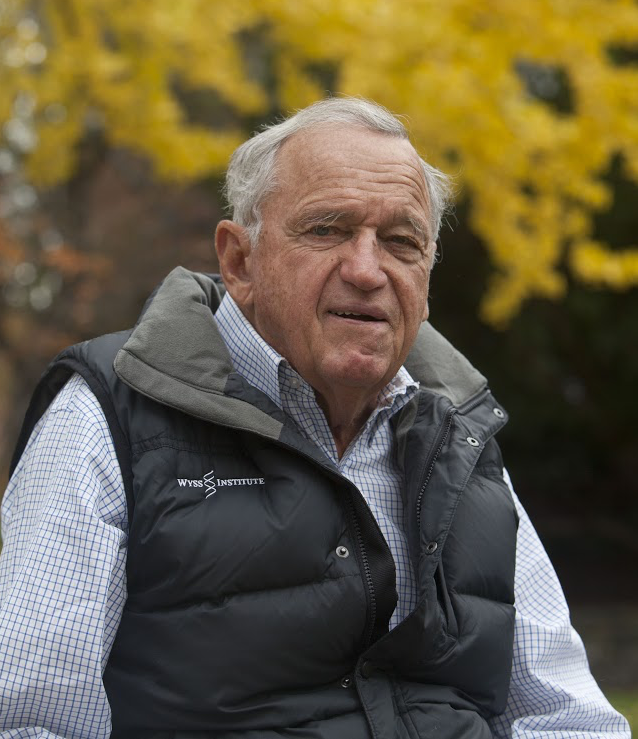
HANSJOERG WYSS
Medical device billionaire who sold Synthes to Johnson & Johnson for $21 billion and became a major conservation philanthropist
Hansjoerg Wyss took a small Swiss medical device company called Synthes and grew it into the global leader in orthopedic trauma equipment, then sold it to Johnson & Johnson for $21.3 billion. He’s since spent over $2 billion buying and protecting land — more than 40 million acres worldwide. He’s basically the man who fixed your broken bone and then used the profits to save entire ecosystems. A billionaire who actually likes spending money on things that aren’t yachts.
Net Worth
$7 billion
Nationality
Swiss-American
Time Horizon
Generational
Risk Appetite
5 / 10
Net Worth Context
- · Still a billionaire — just the quiet kind at the end of the table.
CAREER & BACKGROUND
Wyss was born in Bern, Switzerland, in 1935. He studied civil engineering at the Swiss Federal Institute of Technology (ETH Zurich) and then got an MBA from Harvard Business School.
In 1977, he joined Synthes, a Swiss company that made surgical implants for broken bones. Over the next 35 years, he built it into the world’s leading maker of orthopedic trauma devices.
Synthes’s products — plates, screws, and fixation systems for fractures — were used in hospitals worldwide.
The company was known for its close relationship with surgeons. Wyss personally cultivated relationships with orthopedic surgeons globally, ensuring that Synthes products were designed based on actual clinical feedback.
This surgeon-centric approach gave Synthes an unmatched reputation in the field.
In 2012, Johnson & Johnson acquired Synthes for $21.3 billion — one of the largest medical device acquisitions in history. Wyss personally received billions from the sale.
Since then, he’s become one of the world’s most prolific conservation philanthropists. Through the Wyss Foundation, he’s committed to protecting 30% of the planet’s land and oceans by 2030.
He’s also donated hundreds of millions to universities, including Harvard and Dartmouth.
COMPANIES & ROLES
Synthes was the crown jewel — the world’s largest maker of orthopedic trauma implants. Sold to Johnson & Johnson in 2012 for $21.3 billion.
Under Wyss, it grew from a small Swiss company to a global leader with operations in over 40 countries.
The Wyss Foundation is his philanthropic vehicle, focused on conservation, scientific research, and education. It has committed over $2 billion to various initiatives.
The Wyss Institute for Biologically Inspired Engineering at Harvard is a research center he funded with $131 million, developing technologies inspired by nature — from soft robotics to synthetic biology.
INVESTING STYLE & PHILOSOPHY
Wyss was a long-term business builder, not a financial trader. He invested 35 years in a single company, growing it methodically through product innovation and surgeon relationships.
There was no diversification strategy — it was all Synthes, all the time.
Post-sale, his investing has shifted to philanthropy and impact investing. He treats conservation land purchases like business investments — finding undervalued properties with high ecological importance and protecting them permanently.
THE PLAYBOOK
Risk Approach
Moderate during the Synthes years — medical devices are a relatively stable business once you have surgeon relationships and regulatory approvals. The real risk was concentration — his entire fortune was tied to one company.
Post-sale, his risk appetite shifted entirely to philanthropy. He’s willing to spend billions on conservation with no financial return, which is either the most altruistic or the most reckless use of money depending on your perspective.
Money Habits
Wyss lives between Switzerland and Wyoming. He owns a ranch in Wyoming and reportedly loves the American West.
His spending is overwhelmingly philanthropic — conservation, universities, and medical research.
He’s also been a political donor in the United States, contributing to Democratic causes and environmental advocacy groups. Some Republicans have questioned whether a Swiss citizen should be spending so much on American politics.
Wyss holds permanent residency but not citizenship.
BIGGEST WIN
The sale of Synthes to Johnson & Johnson for $21.3 billion. Wyss built the company over 35 years and sold it at what many considered a premium price.
J&J was willing to pay because Synthes’s surgeon relationships and product portfolio were essentially impossible to replicate. It was a masterclass in building a company so dominant that acquirers had to overpay.
BIGGEST MISTAKE
Synthes faced a major scandal in 2009 when the company was convicted of conducting unauthorized clinical trials — testing a bone cement product called Norian XR on patients without proper FDA approval. Three patients died.
Four Synthes executives were sentenced to prison. Wyss was not personally charged, but the scandal tarnished the company’s reputation and raised questions about his oversight.
The incident happened while Wyss was still leading the company. Critics argued he should have been held accountable.
The fact that J&J still acquired Synthes for $21 billion three years later suggests the market forgave the scandal, even if the families affected never could.
FINANCIAL PHILOSOPHY
Wyss believes in building businesses for the long term. Synthes wasn’t built to be flipped — it was built to be the best in its field.
The sale to J&J happened only because the price was extraordinary and Wyss was ready to focus on philanthropy.
His post-wealth philosophy is that money is a tool for protecting the planet. He’s publicly argued that billionaires have a moral obligation to deploy their wealth for environmental conservation.
He puts his money where his mouth is — over $2 billion and counting.
FAMILY & PERSONAL LIFE
Wyss is divorced and has children. He splits his time between Switzerland and the American West.
He’s private about family matters but public about his environmental commitments. His children are reportedly supportive of the massive philanthropic giving that will consume much of their potential inheritance.
EDUCATION
ETH Zurich (Swiss Federal Institute of Technology) for civil engineering, then Harvard Business School for his MBA. The Swiss engineering discipline combined with Harvard’s business training was the perfect combination for running a precision medical device company.
BOOKS & RESOURCES
The foundational text of the environmental movement that inspires Wyss’s conservation work
Makes the scientific case for protecting 50% of the planet — Wyss’s 30x30 campaign is a pragmatic step toward that goal
The Innovator’s Dilemma by Clayton Christensen captures the kind of disruptive innovation that Synthes practiced in medical devices.
As an Amazon Associate, Netfigo earns from qualifying purchases. Book links above may be affiliate links.
QUOTES (5)
Synthes succeeded because we listened to surgeons, not to consultants. The people using the product know what it needs.
I made my money fixing broken bones. Now I’m trying to fix a broken planet. The second job is harder.
Protecting 30% of the earth’s land and ocean by 2030 isn’t charity. It’s survival math.
Billionaires who don’t use their money for the planet are just renting their spot on the Forbes list.
$21 billion for a company I built with my hands over 35 years. Johnson & Johnson got a bargain.
NETFIGO SCORE
Proprietary 5-dimension investor rating
Risk Appetite
Contrarian Index
Track Record
Accessibility
Time Horizon
Related Profiles
Head-to-Head
Compare Hansjoerg Wyss vs another investor.