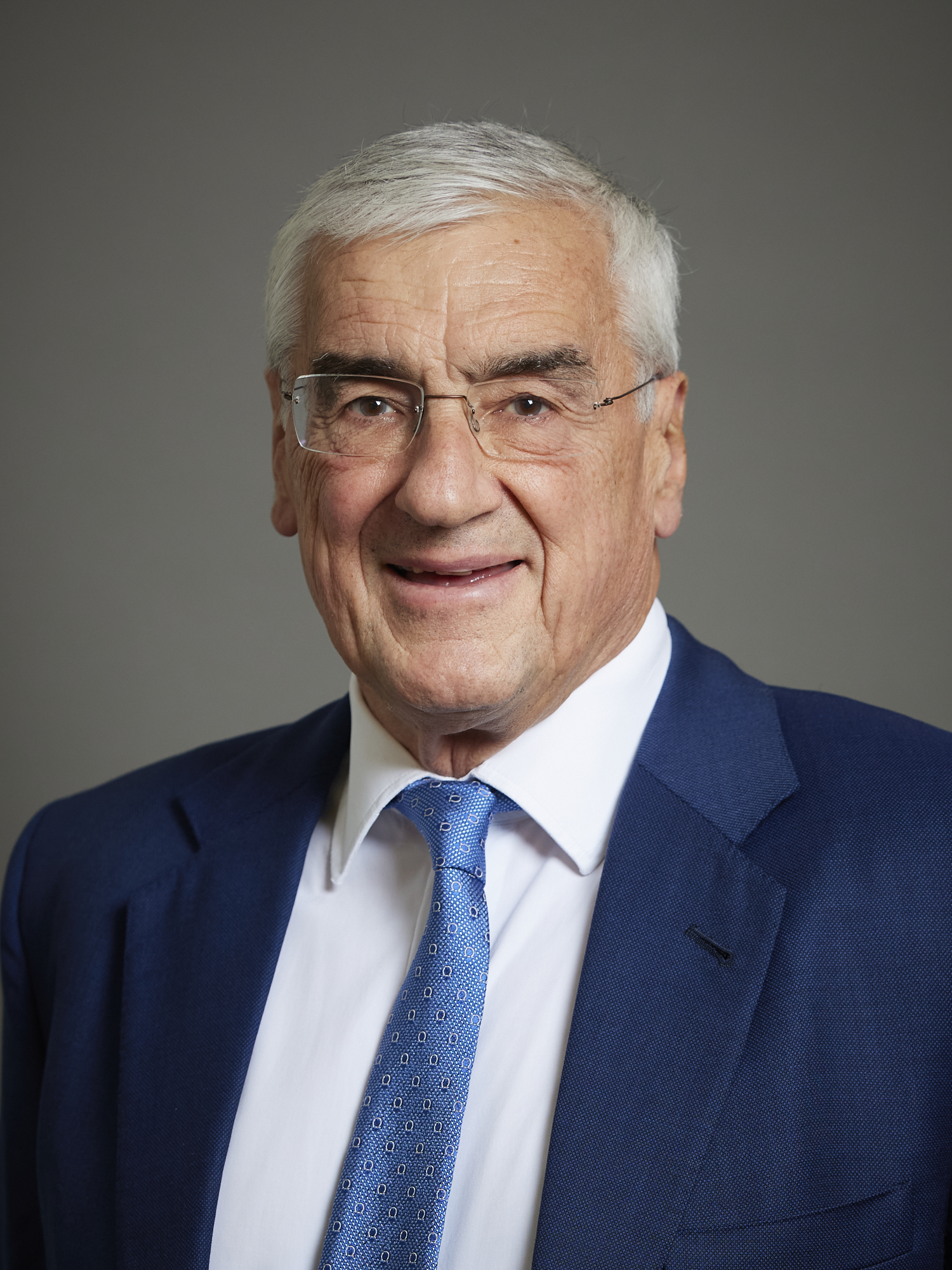
MICHAEL HINTZE
Founded CQS, one of Europe's largest multi-strategy hedge funds managing $25 billion
Michael Hintze went from the Australian Army to Goldman Sachs to running one of Europe's biggest hedge funds. CQS managed $25 billion at its peak, specializing in credit markets — which is basically betting on whether companies can pay their debts. He also happens to be one of the UK's most prolific art collectors, with a collection worth hundreds of millions. Not bad for a guy who started his career carrying a rifle in the outback.
Net Worth
$1.9 billion
Nationality
Australian-British
Time Horizon
Medium-Term
Risk Appetite
6 / 10
Net Worth Context
- · Still a billionaire — just the quiet kind at the end of the table.
CAREER & BACKGROUND
Hintze was born in China to Russian-German parents, raised in Australia, and ended up conquering London's hedge fund scene. His path was anything but conventional.
He served as an officer in the Royal Australian Army, which gave him the discipline and pressure tolerance that would later define his trading career.
After the army, he got an MBA at Harvard Business School. From there, he went straight to Goldman Sachs in New York, where he worked in convertible bonds and credit trading.
He was good — good enough that Credit Suisse poached him to run their global credit business in the mid-1990s.
In 1999, he founded CQS (which stands for his initials — C Q S, or Convertible, Quantitative, and Strategy). He launched it with a focus on credit and convertible bond trading.
The fund grew steadily, managing $25 billion at its peak. CQS became known as one of the most sophisticated credit-focused hedge funds in the world.
The 2008 crisis hit CQS hard — the fund lost significant money when credit markets froze. But Hintze survived and rebuilt.
The fact that he's still running CQS over 25 years after founding it tells you everything about his resilience.
COMPANIES & ROLES
CQS is the centerpiece — a London-based multi-strategy hedge fund that Hintze has run since 1999. At its peak, the firm managed $25 billion across credit, convertibles, asset-backed securities, and multi-strategy funds.
It employs over 300 people across London, New York, Hong Kong, and other offices.
Before CQS, he held senior roles at Goldman Sachs and Credit Suisse First Boston. At CSFB, he ran the global convertible bond business, which was one of the most profitable desks on the street in the late 1990s.
He also sits on multiple boards and advisory committees in the financial world. He's been a significant donor to the Conservative Party in the UK, which has made him a politically connected figure in British finance.
INVESTING STYLE & PHILOSOPHY
Hintze is a credit specialist at heart. While most famous hedge fund managers trade stocks, Hintze trades debt — corporate bonds, convertible bonds, asset-backed securities, distressed credit.
His edge is understanding the fine print of credit agreements better than almost anyone.
His approach is fundamentally analytical. He uses quantitative models to identify mispricings in credit markets, then takes positions that profit when the market corrects.
Think of it like finding a house that's underpriced because the realtor made a math error — except the house is a $500 million bond issue.
He also runs multi-strategy portfolios, meaning CQS doesn't just do one thing. They trade credit, convertibles, equities, and structured products.
This diversification is deliberate — when one strategy is losing money, another should be making it.
THE PLAYBOOK
Risk Approach
Hintze's risk tolerance is moderate-to-high for a hedge fund manager. Credit trading inherently involves taking on default risk — you're betting that companies won't go bankrupt.
When you're right, the returns are steady and predictable. When you're wrong, you can lose everything on that position.
He learned the hardest lesson about risk in 2008. When Lehman Brothers collapsed, credit markets essentially stopped functioning.
CQS suffered major losses because positions that were theoretically safe became illiquid and unsellable. The experience made him much more conservative about liquidity management.
Post-2008, CQS built out more sophisticated risk management systems. Hintze became obsessive about understanding tail risks — the unlikely but catastrophic scenarios that can destroy a fund overnight.
Money Habits
For a billionaire, Hintze is best known for what he spends money on: art. His personal art collection is one of the most significant private collections in the UK, heavy on contemporary and modern works.
He's a major patron of the Victoria and Albert Museum, the Tate, and the Royal Academy. He was knighted in 2013, making him Sir Michael Hintze — partly for his financial career, partly for his cultural philanthropy.
He's also a major donor to the Catholic Church and conservative political causes. He's given millions to the UK Conservative Party, which has made him a politically controversial figure in some circles.
He lives in London in one of Mayfair's most expensive properties. His lifestyle is definitively upper-class British — art galleries, charity galas, and country estates.
BIGGEST WIN
The 2020 COVID crash was actually a great period for CQS's credit strategies. When corporate bond markets panicked in March 2020, Hintze loaded up on investment-grade and high-yield bonds at distressed prices.
When the Fed stepped in with unprecedented bond-buying programs, those positions snapped back hard. CQS reportedly made several hundred million dollars in the space of a few months.
His earlier career wins include building the convertible bond franchise at CSFB into one of the most profitable desks on Wall Street, generating hundreds of millions in annual revenue. That track record is what gave him the credibility to launch CQS with serious institutional backing from day one.
BIGGEST MISTAKE
The 2008 financial crisis was Hintze's worst period. CQS's flagship fund lost approximately 40% as credit markets seized up completely.
Positions that were theoretically hedged became correlated — everything went down together, and the hedges didn't work as modeled.
He also faced significant investor redemptions, which forced him to sell positions at the worst possible time. The fund shrank from its peak substantially.
It took years to rebuild both the performance track record and investor trust. The experience fundamentally changed how he thinks about portfolio construction and liquidity management.
FINANCIAL PHILOSOPHY
Hintze believes credit markets are the backbone of the global economy and the most inefficient major asset class. His core insight: equity investors get all the attention, but debt investors control whether companies live or die.
The bondholder has power that the stockholder doesn't.
He's also a strong believer in discipline over brilliance. He's said repeatedly that the difference between a good trader and a great one isn't intelligence — it's the ability to follow your process when everything around you is chaos.
The army taught him that.
Transparency matters to him more than most hedge fund managers admit. CQS has been relatively open about its strategies and processes, which is unusual in the secretive world of credit hedge funds.
FAMILY & PERSONAL LIFE
Hintze is married to Dorothy Hintze, who shares his passion for art and philanthropy. They are prominent figures in London's cultural and charitable scene.
He was knighted as Sir Michael Hintze AM in 2013 for services to the arts and philanthropy.
He has children but keeps them out of public life. His family life revolves heavily around London's art world and Catholic community — he's a Knight Commander of the Order of St.
Gregory the Great, one of the highest honors the Pope can bestow on a layperson.
EDUCATION
Hintze has a unique educational background. He holds an engineering degree from the University of Sydney, then served as an officer in the Royal Australian Army before pivoting to business.
He earned his MBA from Harvard Business School in the mid-1980s. The combination of engineering, military, and business training is unusual on Wall Street — but it produced a trader who thinks in systems, stays calm under fire, and understands risk mathematically.
BOOKS & RESOURCES
Hintze is well-read in both finance and military strategy.
Reflects his military background and belief that markets, like warfare, are about managing uncertainty and maintaining discipline under pressure
Informs his understanding of behavioral biases in credit markets — why investors consistently misprice default risk during panics
As an Amazon Associate, Netfigo earns from qualifying purchases. Book links above may be affiliate links.
QUOTES (5)
Credit is the most important market in the world and the least understood by the average investor.
Art and finance have more in common than people think. Both require patience, an eye for value, and the courage to trust your own judgment.
The army taught me one thing that Harvard didn't — how to make decisions when you don't have all the information and the consequences are real.
In a crisis, the only thing that matters is liquidity. You can be right about every position and still go bankrupt if you can't meet margin calls.
Discipline beats talent. I've seen brilliant traders blow up because they couldn't follow their own rules when it mattered.
NETFIGO SCORE
Proprietary 5-dimension investor rating
Risk Appetite
Contrarian Index
Track Record
Accessibility
Time Horizon
Related Profiles
Head-to-Head
Compare Michael Hintze vs another investor.