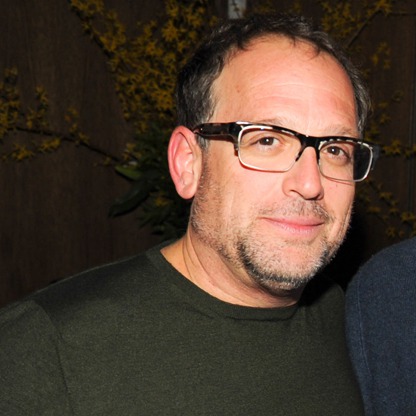
NOAM GOTTESMAN
Co-founded GLG Partners, once Europe's largest hedge fund managing $30 billion
Noam Gottesman co-founded GLG Partners in 1995 and built it into Europe's biggest hedge fund at $30 billion before selling it to Man Group for $1.6 billion in 2010. He pocketed roughly $500 million from that deal alone. Since then he's been quietly compounding through TOMS Capital, his family office, without a single press interview. The man turned hedge fund management into a fortune and then basically disappeared.
Net Worth
$4 billion
Nationality
Israeli-British
Time Horizon
Long-Term
Risk Appetite
6 / 10
Net Worth Context
- · Still a billionaire — just the quiet kind at the end of the table.
CAREER & BACKGROUND
Gottesman was born in Israel and raised partly in Switzerland. He started his career at Goldman Sachs in London during the 1980s, working in the fixed income division.
Goldman in the '80s was basically a finishing school for future billionaires, and Gottesman was paying attention.
In 1995, he co-founded GLG Partners with Pierre Lagrange and Jonathan Green. GLG started as a long/short equity fund but quickly expanded into credit, macro, emerging markets, and quantitative strategies.
By the mid-2000s, it was managing $30 billion — making it the largest hedge fund in Europe.
GLG went public on the New York Stock Exchange in 2007, which was either brilliant timing or lucky timing depending on who you ask. The IPO valued the firm at over $3 billion.
Then the financial crisis hit, assets shrank, and in 2010 Man Group acquired GLG for $1.6 billion. Gottesman and his co-founders walked away with enormous payouts.
After the sale, Gottesman launched TOMS Capital as his personal investment vehicle. He manages his own multi-billion dollar fortune with a small team.
No outside investors, no quarterly letters, no conference appearances. He went from running Europe's biggest hedge fund to being one of its most private billionaires.
COMPANIES & ROLES
GLG Partners was the main event. Co-founded in 1995, it grew into a $30 billion multi-strategy hedge fund and became the largest in Europe.
GLG was known for its aggressive talent recruitment — they'd poach top traders from Goldman, Morgan Stanley, and Deutsche Bank with huge guaranteed bonuses. The firm went public on NYSE in 2007 before being acquired by Man Group in 2010.
TOMS Capital is his current vehicle — a London-based family office that manages his personal fortune. TOMS invests across public equities, private equity, venture capital, and real estate.
It's made significant investments in technology companies including Deliveroo and other European tech startups.
He also holds significant real estate, including properties in London, Geneva, and the south of France. His investment footprint is global but deliberately quiet.
INVESTING STYLE & PHILOSOPHY
At GLG, Gottesman ran a multi-strategy approach — spreading capital across long/short equity, credit, macro, and quantitative strategies. He believed the best way to generate consistent returns was to have multiple uncorrelated strategies running simultaneously.
If equities were down, credit might be up. If macro was flat, quant might be printing money.
His personal investing through TOMS Capital is more concentrated. He makes bigger bets on fewer things — particularly tech companies and real estate.
He backed Deliveroo early, which turned into a significant win when the company went public.
Gottesman is fundamentally a talent picker. His success at GLG wasn't about his own trading — it was about recruiting and retaining the best traders in Europe and giving them capital to work with.
THE PLAYBOOK
Risk Approach
At GLG, risk tolerance was calibrated by strategy — each pod had its own risk limits, and the central risk team monitored exposure across the whole firm. Gottesman was conservative at the firm level even while individual traders might be aggressive in their books.
Personally, he's become more conservative since selling GLG. TOMS Capital makes concentrated bets but with permanent capital — there are no outside investors to worry about, no redemption risk, no quarterly performance pressure.
That freedom lets him take a longer view.
He survived 2008 with GLG intact, which required aggressive risk reduction in mid-2007. The firm cut exposure before the worst of the crisis, which saved billions in potential losses.
Not everyone at GLG agreed with the risk cuts at the time — but Gottesman overruled them.
Money Habits
Gottesman is wealthy in the quiet European way, not the flashy American way. He owns significant properties across London, Geneva, and the French Riviera.
He's a known art collector with a focus on contemporary works.
He's one of the UK's most generous philanthropists, though he keeps donations mostly anonymous. He's reportedly given tens of millions to educational and cultural causes.
He doesn't do charity galas or press releases about his giving.
He drives nice cars, wears good suits, and lives in one of London's most expensive neighborhoods — but he's not on Instagram and you won't see him on a yacht influencer's account.
BIGGEST WIN
The GLG IPO and subsequent sale to Man Group was Gottesman's masterpiece. Taking GLG public in 2007 at a $3 billion valuation, then selling to Man Group in 2010 for $1.6 billion — after the financial crisis had already hit — still resulted in an enormous personal payout of approximately $500 million.
The real genius was the timing of the IPO. Going public in 2007, just before the crisis, meant GLG locked in maximum value.
If they'd waited even six months, the IPO would have been worth half as much or might not have happened at all. Whether that was foresight or luck, Gottesman doesn't say — but the money was real either way.
His early bet on Deliveroo through TOMS Capital also paid handsomely. He invested before the IPO and saw significant returns when the food delivery company went public on the London Stock Exchange.
BIGGEST MISTAKE
GLG's post-crisis performance was the hardest period. After the 2008 crash, assets under management dropped significantly as investors redeemed.
Some of GLG's strategies underperformed their benchmarks for several years running. The sale to Man Group in 2010, while profitable for the founders, was essentially an admission that the independent model had gotten harder.
The Deliveroo investment, while ultimately profitable, also had a rocky IPO in 2021. The stock dropped 26% on its first day of trading — one of the worst London IPOs in history.
Gottesman held through the drop, and the position eventually recovered, but the initial optics were brutal.
FINANCIAL PHILOSOPHY
Gottesman believes that investing is fundamentally a people business. The best strategy in the world fails with the wrong person running it.
The worst strategy sometimes works with the right person. His career is built on that insight.
He's deeply skeptical of the idea that markets are efficient. His view: markets are made by humans, humans are emotional, and emotional humans make predictable mistakes.
The job of a hedge fund is to exploit those mistakes systematically.
He also believes in getting paid and getting out. The GLG sale to Man Group wasn't sentimental — it was the right price at the right time.
Building something and then selling it at peak value is a skill most founders never master.
FAMILY & PERSONAL LIFE
Gottesman is married and has children. He and his family split time between London and Geneva.
He keeps his family life almost completely private — you won't find photos of his kids online or mentions of his wife in interviews.
He's known in London's financial circles as someone who's generous at dinner, quick-witted, and absolutely unwilling to discuss his portfolio. Friends describe him as the most private billionaire they know.
EDUCATION
Gottesman studied at the University of Geneva before starting his career. He doesn't have an MBA or any of the typical American business school credentials.
He learned finance at Goldman Sachs, where he spent the better part of a decade before co-founding GLG. He's proof that in European finance, pedigree comes from your track record, not your diploma.
BOOKS & RESOURCES
Aligns with Gottesman's belief that investing success comes down to the individual, not the strategy
Captures the Goldman Sachs culture of the 1980s that shaped Gottesman's early career
Reflects his view that understanding risk is more important than chasing returns
As an Amazon Associate, Netfigo earns from qualifying purchases. Book links above may be affiliate links.
QUOTES (5)
The best time to sell is when everyone wants to buy from you. That's a lesson most founders learn too late.
Investing is a people business disguised as a numbers business. Get the people right and the numbers follow.
Markets are made by humans. Humans are emotional. Emotional humans make predictable mistakes. That's the entire hedge fund business model.
Privacy is the most undervalued asset a wealthy person can own.
I don't need outside investors telling me when to buy and when to sell. Permanent capital is the ultimate competitive advantage.
NETFIGO SCORE
Proprietary 5-dimension investor rating
Risk Appetite
Contrarian Index
Track Record
Accessibility
Time Horizon
Related Profiles
Head-to-Head
Compare Noam Gottesman vs another investor.