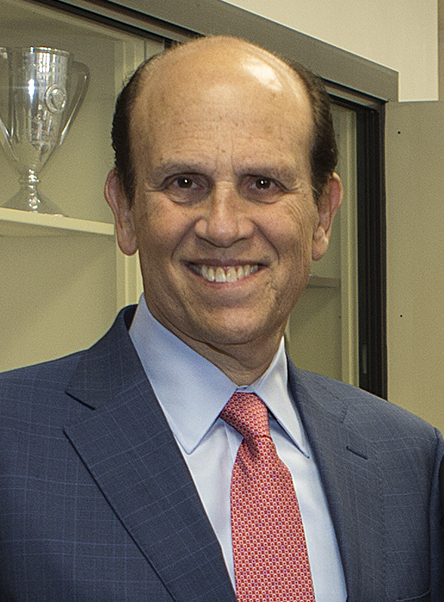
MICHAEL MILKEN
The "Junk Bond King" who revolutionized corporate finance, went to prison for securities fraud, then reinvented himself as one of America's most influential philanthropists.
Michael Milken essentially invented the high-yield bond market, made Drexel Burnham Lambert the most powerful firm on Wall Street, financed the 1980s leveraged buyout boom, got indicted on 98 counts of racketeering and fraud, pled guilty to six felonies, served 22 months in prison, got banned from the securities industry for life, survived prostate cancer, built a $6 billion fortune anyway, received a presidential pardon in 2020, and is now primarily known for funding medical research. If that is not the most American biography ever written, nothing is.
Net Worth
$6 billion
Nationality
American
Time Horizon
Medium-Term
Risk Appetite
9 / 10
CAREER & BACKGROUND
Michael Milken was born in 1946 in Encino, California. He studied at UC Berkeley during the student protests of the 1960s but was more interested in bond markets than politics.
He went to Wharton for his MBA, where he became obsessed with a simple insight: high-yield bonds, then called "fallen angels," defaulted far less often than their low ratings suggested. The risk premium was too high.
In other words, junk bonds were underpriced.
He joined Drexel Burnham Lambert in 1969 and started trading high-yield bonds from a now-legendary X-shaped trading desk in Beverly Hills. By the early 1980s, he had basically created a new market.
Companies that couldn't get investment-grade ratings could now raise capital through Milken's network.
This mattered enormously. Before Milken, if you weren't a Fortune 500 company, getting capital was nearly impossible.
Milken's junk bonds financed Ted Turner's CNN, Steve Wynn's casinos, MCI Communications (which challenged AT&T's monopoly), and hundreds of other companies.
Then came the leveraged buyout boom. Raiders like Carl Icahn, Nelson Peltz, and Ron Perelman used Milken's junk bonds to finance hostile takeovers of public companies.
Milken became the most powerful man on Wall Street. Drexel's annual Predators' Ball conference in Beverly Hills was where the biggest deals got done.
In 1989, it all collapsed. Milken was indicted on 98 counts of racketeering and securities fraud.
He pled guilty to six felonies including securities fraud and tax evasion. He was sentenced to 10 years in prison, paid $600 million in fines, and was permanently banned from the securities industry.
He served 22 months.
After prison, Milken was diagnosed with prostate cancer and given 12-18 months to live. He survived and pivoted entirely to philanthropy, medical research, and education.
He founded the Milken Institute, which became one of the most influential economic think tanks in America. He funded prostate cancer research that has saved thousands of lives.
He created the Milken Educator Awards. In 2020, President Trump granted him a full pardon.
COMPANIES & ROLES
Drexel Burnham Lambert was his power base. Under Milken, Drexel went from a second-tier firm to the most profitable investment bank on Wall Street.
The firm collapsed in 1990 after Milken's indictment, filing for bankruptcy.
The Milken Institute is his post-prison creation. A nonprofit economic think tank that hosts the annual Milken Institute Global Conference, arguably the most influential gathering of business leaders, policymakers, and investors in the world.
Milken Family Foundation funds education programs including the Milken Educator Awards, which gives $25,000 prizes to outstanding teachers. Over 2,800 educators have received the award.
FasterCures, another Milken initiative, works to accelerate medical research. It has helped direct hundreds of millions in funding to cancer, melanoma, and epilepsy research.
Despite being banned from securities, Milken has served as an informal advisor to dozens of companies and investors. His network remains one of the most powerful in American finance.
INVESTING STYLE & PHILOSOPHY
Milken's core insight was about mispriced risk. He looked at data that everyone else could see and reached a conclusion that nobody else had: high-yield bonds defaulted less often than their ratings implied.
The spread between junk bonds and investment-grade bonds was wider than it needed to be. That spread was free money for anyone willing to take the perceived risk.
He applied the same thinking to companies. Businesses that Wall Street ignored because they were too small, too new, or in the wrong industry were often fundamentally sound.
They just needed capital. Milken gave them capital and earned enormous fees for doing so.
Post-prison, his investing shifted to real estate, healthcare, and education. He reportedly made most of his current $6 billion fortune through private investments in these sectors.
THE PLAYBOOK
Risk Approach
Extremely high risk tolerance with extremely deep research. Milken didn't gamble on junk bonds.
He studied the default data obsessively and concluded that the risk was lower than everyone assumed. His risk-taking was informed by homework that nobody else was doing.
But his willingness to push legal and ethical boundaries was also extreme. The line between aggressive deal-making and securities fraud turned out to be thinner than he thought.
He crossed it. Whether the punishment fit the crime is still debated.
Money Habits
Milken is famously health-conscious, a transformation driven by his cancer diagnosis in 1993. He follows a low-fat, plant-heavy diet and has funded extensive nutrition research.
He co-authored a cookbook focused on prostate health.
He lives in Los Angeles and maintains a relatively low profile for a man worth $6 billion. He doesn't own a mega-yacht or a sports team.
His spending goes overwhelmingly to philanthropy and the Milken Institute.
He's reportedly still one of the most sought-after advisors in finance, despite the lifetime ban from the securities industry. CEOs, politicians, and investors seek his counsel.
The annual Milken Conference brings together hundreds of the most powerful people in the world, all coming to see him.
The irony is thick. A convicted felon banned for life from Wall Street runs one of Wall Street's most important annual gatherings.
BIGGEST WIN
Creating the high-yield bond market itself. Before Milken, the junk bond market barely existed.
After Milken, it became a $1.5 trillion market that finances thousands of companies.
The companies he financed read like a who's who of American business. MCI Communications used Milken's bonds to challenge AT&T's telephone monopoly.
Ted Turner used them to build CNN and TBS. Steve Wynn used them to build the Mirage and transform Las Vegas.
McCaw Cellular used them to build the cellular network that became AT&T Wireless.
Millions of jobs were created by companies that only existed because Milken gave them access to capital that traditional banks wouldn't provide. Whether you approve of his methods or not, the economic impact was massive.
BIGGEST MISTAKE
The six felonies. Milken pled guilty to securities fraud, tax evasion, and related charges.
He paid $600 million in fines and restitution. He served 22 months in federal prison.
He was banned from the securities industry for life.
The specific violations involved parking securities (holding stocks in another person's name to hide ownership), helping a client evade taxes, and deceiving clients. His defenders argue these were technical violations that didn't hurt investors.
His critics argue he corrupted an entire market.
The broader mistake was hubris. Milken was making $550 million a year at Drexel.
He was the most powerful person on Wall Street. He believed the rules didn't apply to him, or at least that the grey areas were wide enough to operate in.
They weren't.
FINANCIAL PHILOSOPHY
Capital is the great equalizer. Milken genuinely believed that access to capital was the biggest barrier to economic opportunity.
If a good company couldn't get a loan because it didn't have an investment-grade rating, that was a market failure. He saw himself as fixing that failure.
He also believed in human capital above all else. After prison, he famously said that the most important form of capital is human capital, not financial capital.
His education and healthcare initiatives reflect this belief.
Data beats consensus. Milken's entire career was built on looking at the same data everyone else had and reaching different conclusions.
The market mispriced junk bonds for decades because nobody bothered to check the actual default rates.
FAMILY & PERSONAL LIFE
Milken married his high school sweetheart Lori Anne Hackel in 1968. They have three children.
The marriage survived his indictment, imprisonment, cancer diagnosis, and reinvention. They remain married.
His brother Lowell Milken was also indicted in the Drexel case but was never prosecuted. Lowell went on to co-found the Milken Family Foundation and has been a major figure in education reform.
The family lives in Los Angeles and is deeply embedded in the city's philanthropic community. Milken's cancer survival shaped his family's focus on medical research.
EDUCATION
Milken graduated from Birmingham High School in Van Nuys, California, where he was student body president. He earned a bachelor's degree from UC Berkeley in 1968 and an MBA from Wharton in 1970.
At Wharton, he wrote a thesis on high-yield bonds that essentially became the blueprint for his career. His professor reportedly told him the thesis was interesting but impractical.
Milken proved him wrong by about $1.5 trillion.
BOOKS & RESOURCES
Milken has not written a memoir, which is remarkable given the drama of his life
He has written extensively about nutrition and health
The definitive account of the insider trading scandals that brought down Milken and Drexel
Covers the rise of Milken's junk bond empire
Highly Confident by Jesse Kornbluth gives a more sympathetic account.
As an Amazon Associate, Netfigo earns from qualifying purchases. Book links above may be affiliate links.
QUOTES (5)
Access to capital is the great equalizer. Without it, talent and hard work mean nothing.
The most important form of capital is not financial capital. It is human capital.
I learned more about what matters in life from cancer than from all my years on Wall Street.
NETFIGO SCORE
Proprietary 5-dimension investor rating
Risk Appetite
Contrarian Index
Track Record
Accessibility
Time Horizon
Related Profiles
Head-to-Head
Compare Michael Milken vs another investor.