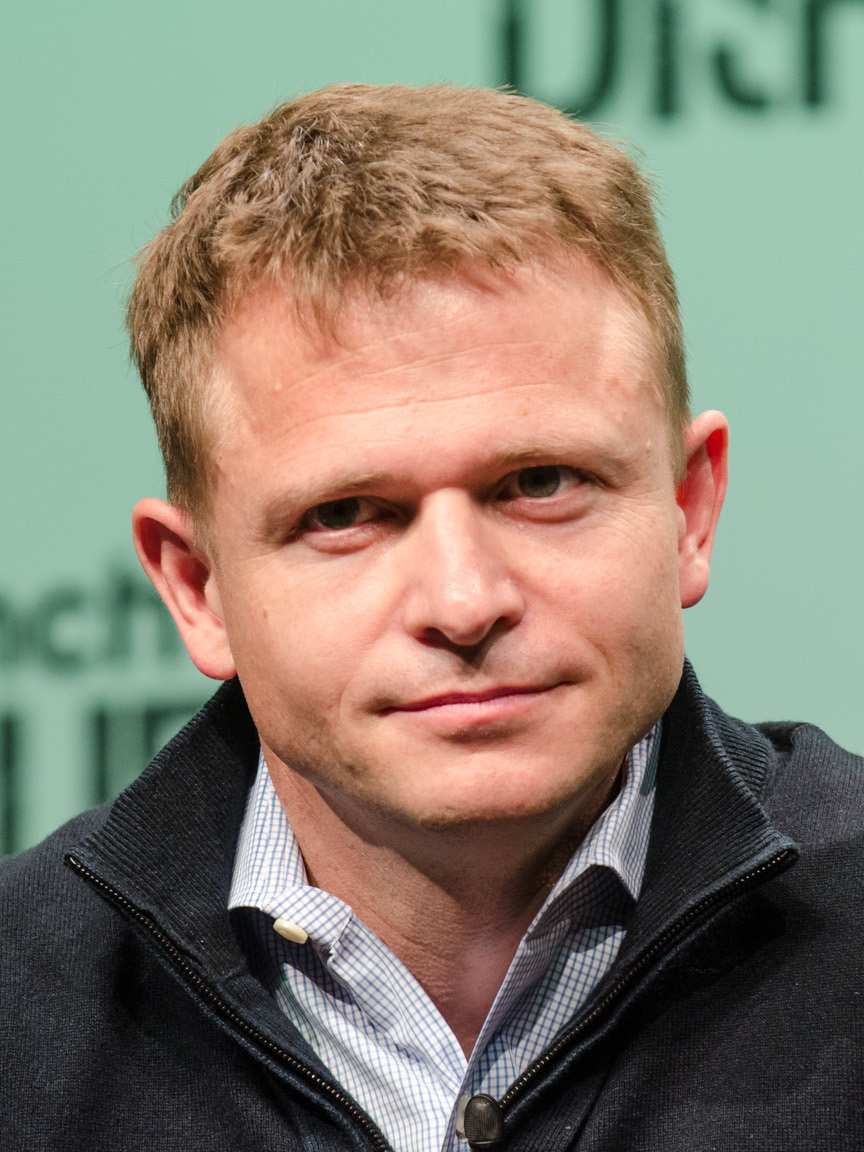
PETER FENTON
Benchmark Capital general partner who backed Twitter, Docker, Elastic, and Yelp — one of the best VC track records of his generation
Peter Fenton was an early investor in Twitter, Docker, Elastic, New Relic, Yelp, and Zendesk from his perch at Benchmark Capital. He’s the VC who sits on your board, says very little, and then gives you the one piece of advice that changes everything. Benchmark’s equal partnership model means no one gets rich off management fees — only carried interest. That means Fenton only makes money when his companies make money. Which they do. A lot.
Net Worth
$2 billion
Nationality
American
Time Horizon
Long-Term
Risk Appetite
7 / 10
Net Worth Context
- · Still a billionaire — just the quiet kind at the end of the table.
CAREER & BACKGROUND
Fenton studied philosophy at Stanford before joining Accel Partners, where he got his start in venture capital. In 2006, he joined Benchmark Capital — one of the most legendary VC firms in Silicon Valley.
At Benchmark, Fenton built a portfolio that reads like a who’s who of modern tech infrastructure. He led or co-led investments in Twitter, Docker, Elastic, New Relic, Yelp, Zendesk, Zuora, and Hortonworks.
He has a particular talent for identifying developer-focused tools that become enterprise infrastructure.
His Twitter investment was especially notable. Fenton joined Twitter’s board in 2009, during the company’s chaotic early growth phase.
He navigated multiple CEO changes and helped guide the company to its IPO in 2013. The stock opened at $45, valuing Twitter at about $25 billion.
Fenton is known for the Benchmark style — deeply engaged board member, small fund sizes, and conviction-based investing. Benchmark deliberately keeps its fund small (historically $425-500 million) so that each partner can focus on a few companies rather than managing a sprawling portfolio.
COMPANIES & ROLES
Benchmark Capital is his home. The firm is legendary for its equal partnership structure — all partners share profits equally, there’s no hierarchy, and the fund sizes are deliberately small.
Fenton’s portfolio companies include Twitter (social media), Docker (containerization platform), Elastic (search and analytics), New Relic (application monitoring), Yelp (local reviews), Zendesk (customer service software), and Zuora (subscription management).
The common thread is developer and enterprise infrastructure tools — software that other software companies depend on.
INVESTING STYLE & PHILOSOPHY
Fenton is a conviction investor who focuses on developer-centric and infrastructure companies. He looks for products that developers adopt organically — tools that spread through engineering teams before the CTO even knows they’re being used.
He’s deeply involved post-investment. At Benchmark, board seats are taken seriously — partners are expected to be genuinely useful, not just show up quarterly.
Fenton’s philosophy background gives him an unusual ability to ask foundational questions about strategy and purpose.
He invests early and stays long. Many of his biggest wins came from Series A or B investments where he held through the IPO.
THE PLAYBOOK
Risk Approach
High, but concentrated. Benchmark makes fewer investments per fund than most firms — roughly 5-8 per partner.
Each bet gets significant attention and support. This concentration means any single failure hurts more, but any single success creates fund-returning outcomes.
Fenton is willing to invest in messy, early-stage companies. Twitter was chaotic.
Docker was technically complex. His comfort with uncertainty in exchange for transformational upside defines his risk profile.
Money Habits
Fenton is modest by Silicon Valley VC standards. He’s not building a personal brand on Twitter or launching podcasts.
He lives in the Bay Area and keeps a low profile. The Benchmark culture of equal partnership and anti-hierarchy seems to extend to his personal life.
He’s involved in Stanford’s philosophy department as a donor and supporter — philosophy remains important to how he thinks about the world.
BIGGEST WIN
Twitter’s IPO in 2013 was the headline, valuing the company at $25 billion. But his Docker investment might have been more prescient — the containerization technology fundamentally changed how software is deployed worldwide, even though Docker the company had a rockier path.
Elastic’s IPO in 2018 was another major win. The company was valued at over $5 billion on day one, and Fenton had been an early backer and board member.
BIGGEST MISTAKE
Twitter’s post-IPO struggles could be seen as a partial miss. Despite the successful IPO, the company spent years struggling with product direction, user growth, and multiple CEO changes.
Fenton was on the board through much of this turbulence. The eventual sale to Elon Musk for $44 billion in 2022 vindicated the valuation, but the years of underperformance were painful.
Docker also had a complicated journey. The technology was revolutionary but the company struggled to monetize it.
Docker eventually sold its enterprise business and restructured. Fenton’s investment in the company was profitable but the path was bumpier than the technology deserved.
FINANCIAL PHILOSOPHY
Fenton believes that the best venture investments are in products that developers adopt before anyone tells them to. Bottom-up adoption is harder to fake than top-down sales.
If engineers are choosing your tool voluntarily, you have real product-market fit.
He also believes in the Benchmark model — small funds, equal partnerships, and deep involvement. This structure aligns incentives and forces discipline.
You can’t hide behind management fees when carried interest is the only path to wealth.
FAMILY & PERSONAL LIFE
Fenton lives in the Bay Area with his family. He’s private about personal matters.
His public identity is almost entirely professional — the Benchmark partner with the philosophy degree and the incredible portfolio.
EDUCATION
Stanford University, where he studied philosophy. Not computer science, not engineering, not business — philosophy.
He credits the discipline with teaching him to ask better questions, which he considers the most important skill in venture capital. He later got an MBA from Stanford GSB.
BOOKS & RESOURCES
As an Amazon Associate, Netfigo earns from qualifying purchases. Book links above may be affiliate links.
QUOTES (5)
The best products are adopted bottom-up by developers before the CTO even knows they exist. That’s real product-market fit.
Philosophy taught me to ask better questions. In venture capital, the quality of your questions determines the quality of your investments.
At Benchmark, we only make money on carried interest. No management fees to get rich off. That’s alignment.
Twitter was chaos. Three CEO changes, constant internal fights. But the product had something people needed. That’s what you bet on.
Small funds force discipline. You can’t hide bad bets behind 50 portfolio companies when you only have 15.
NETFIGO SCORE
Proprietary 5-dimension investor rating
Risk Appetite
Contrarian Index
Track Record
Accessibility
Time Horizon
Related Profiles
Head-to-Head
Compare Peter Fenton vs another investor.